

What to Do When Your Teen is Depressed: A Parent's Guide to Support in St. Petersburg
Updated: 3 days ago
You stand outside your child’s bedroom door in St. Petersburg, heart racing, wondering if a simple "how was your day" will offer comfort or trigger another silent withdrawal. It feels as though the vibrant, laughing child you once knew has drifted behind a heavy fog, leaving you unsure of what to do when your teen is depressed or how to reach them without making things worse. We understand that this sense of "losing" your child is one of the most painful experiences a parent can endure. It is important to remember that this struggle is not a reflection of your parenting, but rather a manifestation of a tricky brain that needs a gentle, compassionate approach to heal.
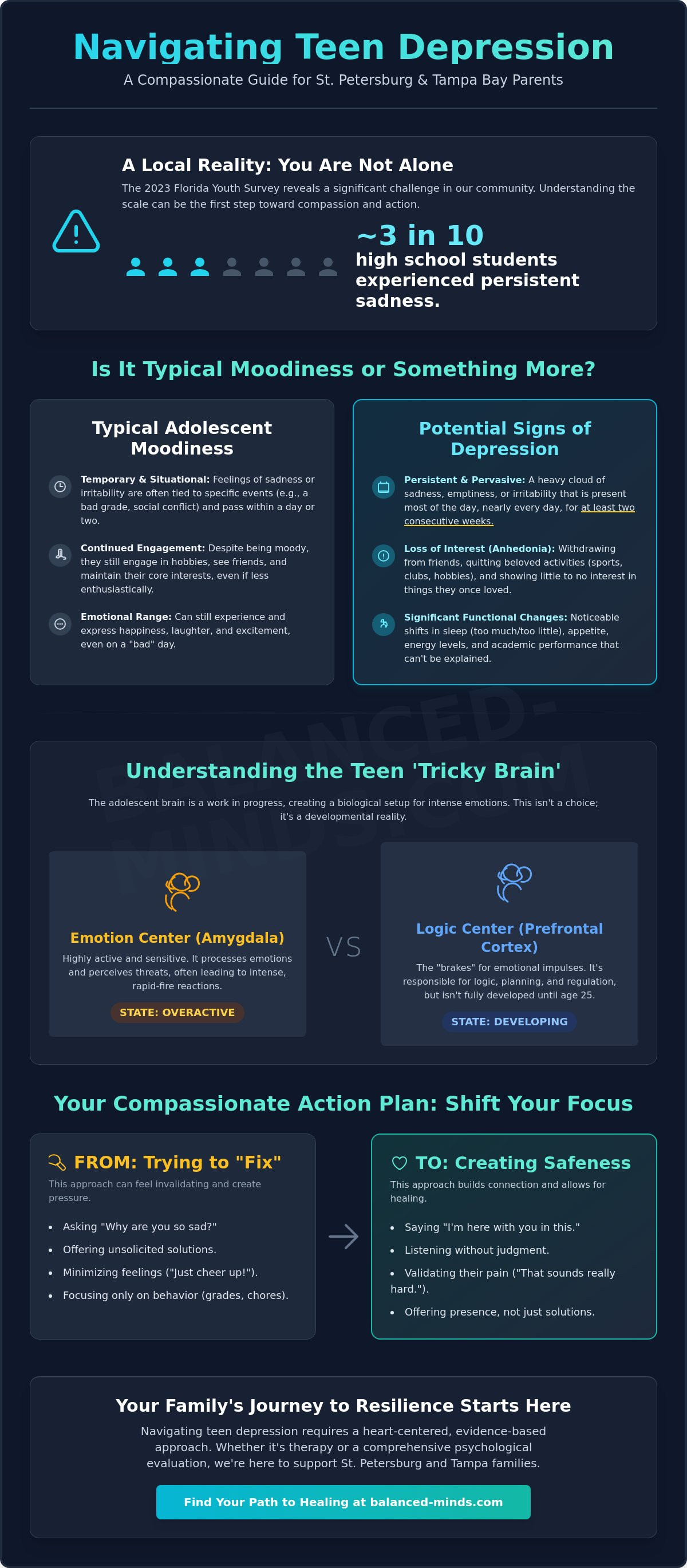
Recent data from the 2023 Florida Youth Survey indicates that nearly 30 percent of high school students in our region have experienced persistent feelings of sadness. You aren't walking this path alone. In this guide, we'll provide a clear action plan for nurturing communication at home while helping you understand the complexities of Pinellas and Hillsborough County school support systems. We will explore whether your teen needs specialized testing or therapy, ensuring you find a local expert in the Tampa Bay area who matches your family's needs. Together, we can move from a place of fear toward a journey of shared resilience and flourishing.
Key Takeaways
Learn to distinguish clinical depression from typical adolescent moodiness while identifying the unique social and academic stressors facing teens in the Tampa Bay area.
Gain a deeper understanding of what to do when your teen is depressed by exploring the concept of the "tricky brain" and learning how to move from a state of threat to one of soothing.
Shift your focus from "fixing" to "safeness" by practicing compassionate communication techniques that nurture a secure, non-judgmental connection within your home.
Navigate the complexities of local resources, including how to collaborate with St. Petersburg schools and the vital difference between therapy and comprehensive psychological evaluations.
Discover how a heart-centered, evidence-based approach can support your family’s collective journey toward healing and long-term resilience.
Table of Contents Recognizing the Signs of Teen Depression in the Tampa Bay Area Understanding the 'Tricky Brain': Why Teens Struggle What to Do Now: Cultivating Compassionate Connection at Home Navigating Support in St. Petersburg: Schools and Evaluations How Balanced Minds Supports St. Pete and Tampa Families
Recognizing the Signs of Teen Depression in the Tampa Bay Area
If you're noticing a shift in your child's energy, it's common to feel a sense of quiet alarm. We want you to know that your anxiety isn't a sign of failure, but a testament to the deep bond you share and your desire to nurture their wellbeing. In our St. Petersburg practice, we often help parents navigate the confusion of whether their child is just "being a teenager" or if something deeper is occurring. The adolescent "tricky brain" is navigating a complex developmental stage, but clinical depression is more than just a passing phase of moodiness. It's a significant health state that impacts how a young person thinks, feels, and functions in their daily life.
When we look at Depression in childhood and adolescence, research indicates it affects roughly 20% of teens before they reach age 18. This isn't a choice or a lack of willpower; it's a biological reality where the brain's soothing system feels out of reach, replaced by a persistent sense of threat or emptiness. If you're searching for what to do when your teen is depressed, the first step is grounding yourself in the specific facts of their experience rather than falling into self-blame.
Common Symptoms vs. Adolescent Development
Distinguishing between growth and illness requires a gentle, observant eye. While a teen might be grumpy after a long day at St. Petersburg High, depression brings a heavy, persistent cloud that doesn't lift with a good night's sleep or a fun weekend. We look for a duration of at least 14 consecutive days where the following symptoms are present:
Persistent Irritability: Instead of looking "sad," many Florida teens express their distress through constant snapping, hostility, or uncharacteristic anger.
Social Withdrawal: Moving away from long-term friend groups in the Tampa Bay area or losing interest in local sports, clubs, and hobbies they once loved.
Physical Changes: Significant shifts in appetite or sleeping 10 or more hours a day without ever feeling truly rested.
Academic Decline: A sudden, unexplained drop in grades or a refusal to attend school environments like Shorecrest or Northeast High.
When Stress Becomes Something More
Florida's academic and social landscape is notoriously high-pressure, with students often juggling advanced placement courses and intense social media expectations. This competitive environment can push a teen's nervous system into a state of chronic "high alert," leading to burnout that eventually collapses into depression. You might notice your teen complaining of frequent stomachaches or tension headaches that have no clear medical cause. These physical markers are often the body's way of communicating emotional pain that the mind isn't yet ready to put into words. Adolescent depression is a biological and emotional health state needing professional care to help the nervous system return to a place of safeness. When you're deciding what to do when your teen is depressed, remember that seeking support is a compassionate act that allows your child to flourish again.
Understanding the 'Tricky Brain': Why Teens Struggle
In Compassion Focused Therapy, we often speak about the "tricky brain." This concept helps us understand that our minds are the product of millions of years of evolution, designed primarily for survival rather than for constant happiness. For a teenager, this biological setup is even more complex. When you are wondering what to do when your teen is depressed, it helps to realize that their mind is navigating a perfect storm of neurological shifts. The "tricky brain" evolved for survival, but sometimes gets stuck in a threat loop. This isn't a choice your child is making; it's a biological response to an internal environment that feels fundamentally unsafe.
The Biology of the Adolescent Mind
The adolescent mind is a work in progress. During these years, the amygdala, which processes emotions and perceives threats, is highly active. However, the prefrontal cortex, the part of the brain responsible for logic and emotional regulation, won't finish developing until age 25. This developmental gap creates intense emotional spikes that can feel life-threatening to a teen. According to the National Institute of Mental Health in their guide Teen Depression: More Than Just Moodiness, these biological changes can make everyday social or academic stressors feel overwhelming. We view depression as an imbalance between the "threat system" and the "soothing system." In a depressed teen, the threat system is stuck in the "on" position, while their brain's natural capacity to nurture itself is still under construction.
Removing the Shame of a Diagnosis
Shame often prevents families from seeking the help they deserve. We must remember that depression is a universal human experience, not a personal flaw or a parenting failure. It's a sign that the brain's internal alarm system is working too hard. When a teen seems "lazy" or unmotivated, they are often actually exhausted by a brain that's constantly scanning for danger or criticism. By shifting our perspective to one of shared humanity, we can move away from blame and toward a journey of healing.
When we approach these challenges with compassion, we create a sense of safeness that allows the brain to begin its restorative work. If you feel overwhelmed by these changes, our team at Balanced Minds can help you and your teen develop the specific tools needed to activate that vital soothing system. Understanding what to do when your teen is depressed starts with recognizing that their struggle is a biological reality, not a lack of character. This shift in view is the first step toward helping them flourish again.
What to Do Now: Cultivating Compassionate Connection at Home
When you see your child struggling, your natural instinct is to rush in and repair the damage. It's a biological response rooted in love. However, the first step in knowing what to do when your teen is depressed is shifting your focus from "fixing" to "safeness." Our brains cannot process logic or solutions when they feel under threat. By creating a home environment that prioritizes emotional safety over immediate results, we help soothe their overactive threat system. This allows their soothing system to come online, which is essential for long-term healing.
We must also address the reality of compassion fatigue. Research suggests that caregivers of those with chronic mental health challenges experience significant stress, with many reporting symptoms similar to secondary traumatic stress. You cannot pour from an empty cup. Prioritizing your own self-care isn't a luxury; it's a clinical necessity that allows you to remain a steady, calm presence for your teen.
How to Talk So Your Teen Will Listen
Communication often feels like a minefield. We suggest using "I" statements, such as "I feel concerned when I see you're not eating," rather than "You're not eating enough." This reduces defensiveness and invites connection. Try the "10-minute walk" rule. Walking side-by-side reduces the intense pressure of eye contact, making it easier for them to open up. Avoid the interrogation style after school. Instead of asking "How was your day?", try "I'm just glad you're home." While you're learning these strategies, Recognizing the Signs of Teen Depression can help you understand the biological roots of their behavior, so you don't take their withdrawal personally.
Creating a Soothing Environment
A soothing environment isn't about grand gestures. It's about small, predictable anchors. Establish low-pressure routines, like a shared cup of tea at 7:00 PM or a brief check-in before bed. Manage social media by focusing on "digital hygiene" rather than punishment, as harsh restrictions often trigger the threat system. Encourage "flow" activities like drawing, gardening, or puzzles. These hobbies naturally engage the soothing system and provide a break from the "tricky brain" patterns of depression. If you're feeling overwhelmed by these changes, looking for parenting near me can connect you with local St. Petersburg resources that emphasize these compassionate approaches. Understanding what to do when your teen is depressed starts with these small, intentional shifts in how we inhabit our shared spaces.
Navigating Support in St. Petersburg: Schools and Evaluations
The school environment often becomes the primary stressor when you're figuring out what to do when your teen is depressed. In Pinellas County Schools (PCSB) and Hillsborough County Public Schools, the academic pressure can feel relentless for a "tricky brain" that's currently struggling with low energy and focus. We see many families feel torn between academic success and their child's immediate emotional safety. It's helpful to remember that Florida's education system provides specific pathways to support your teen's mental health while keeping their education on track.
Advocating for Your Teen at School
Your first point of contact should be the school counselor or the Exceptional Student Education (ESE) department. They serve as the bridge between your teen's clinical needs and the classroom. If your teen's depression impacts their ability to attend class or complete assignments, you may request an evaluation for a 504 plan or an Individualized Education Program (IEP). According to the National Center for Education Statistics, approximately 15 percent of all public school students receive special education services under the Individuals with Disabilities Education Act (IDEA). These legal frameworks can provide essential accommodations, such as extended deadlines or a "safe space" pass for when emotional overwhelm strikes.
Testing vs. Therapy: Which Comes First?
Parents often ask whether they should seek a teenage therapist near me or start with formal testing. While therapy offers immediate emotional soothing, comprehensive psychological evaluations provide the diagnostic roadmap. These assessments are vital because they uncover whether underlying issues like ADHD or learning disabilities are fueling the depressive symptoms. When we have a clear diagnostic picture, therapy becomes more targeted and effective.
A formal diagnosis for mood and anxiety disorders isn't about labeling your child; it's about validating their experience and securing the right resources. By understanding the specific architecture of their mind, we can move away from shame and toward a collaborative plan for healing. If you're feeling lost in the process of what to do when your teen is depressed, reaching out for a professional assessment is a courageous first step.
Ready to gain clarity on your teen's mental health needs? Connect with our compassionate team at Balanced Minds to discuss how an evaluation can support your family's journey.
How Balanced Minds Supports St. Pete and Tampa Families
At Balanced Minds, we recognize that the journey toward healing isn't a path your family should walk alone. Our St. Petersburg office serves as a sanctuary where evidence-based clinical practices meet heart-centered care. We utilize Compassion Focused Therapy to help teens understand their "tricky brains," effectively reducing the shame that often accompanies mood struggles. Knowing what to do when your teen is depressed starts with finding a team that understands the unique pressures of growing up in the Tampa Bay area.
Individual and Family Therapy: We offer tailored sessions in our St. Petersburg office to address both personal growth and family dynamics.
Telehealth Accessibility: We provide virtual options for families across Florida, ensuring that distance never prevents a teen from receiving high-quality care.
Compassionate Framework: Our methods are rooted in the science of mindfulness and self-compassion to build long-term resilience.
A Partnership for Your Teen’s Flourishing
Our practice focuses on creating a "safeness" focused therapeutic environment. This physiological state of safety is where the most profound healing occurs. We involve parents in the process through family therapy because we know that a supportive home environment is a teen's greatest asset. Since our inception, we've remained deeply committed to Pinellas County. We work to ensure our local community has access to sophisticated, nurturing mental health resources that help young people move from isolation to connection. We don't just treat symptoms; we nurture the capacity for a teen to truly flourish.
Taking the First Step
Reaching out for help is a profound act of courage. We keep our initial connection low-pressure to ensure you feel comfortable and heard. During the first intake session, which typically lasts 60 minutes, we'll discuss your concerns and begin building a compassionate roadmap for your teen's recovery. This session is about listening, understanding, and validating your family's experience while deciding what to do when your teen is depressed. We're here to provide the steady, guiding presence your family needs right now. Contact us today to find a path forward for your teen.
Moving Toward Hope and Healing Together
Watching your child struggle is one of the hardest experiences a parent can face, yet you don't have to navigate this journey alone. Understanding how a tricky brain functions and prioritizing compassionate connection at home are vital first steps in supporting your child's emotional wellbeing. When you're wondering what to do when your teen is depressed, seeking a combination of therapeutic support and comprehensive testing can provide the clarity your family needs to move forward.
Our team provides expert therapy and diagnostic evaluations at our St. Petersburg office or through secure Telehealth sessions, ensuring your family feels safe and supported throughout the process. We're deeply committed to helping your teen rediscover their unique resilience so they can flourish in their daily life. This path to wellness is a collective journey, and we're here to provide the clinical expertise and heart-centered care your family deserves.
There is a path toward safeness and light. We're honored to walk it alongside you as you find your way back to connection and peace.
Frequently Asked Questions
Is it just a phase or is my teen actually depressed?
Clinical depression lasts at least two consecutive weeks and interferes with daily functioning; typical mood swings usually resolve within a few days. According to the CDC's 2021 Youth Risk Behavior Survey, 42% of high school students reported feeling persistently sad or hopeless. We view these struggles as part of our tricky brain's response to stress. If your child loses interest in hobbies or withdraws from friends for 14 days or more, it's time to explore professional support.
What should I do if my teen refuses to go to therapy in St. Pete?
You should start by validating their feelings and reframing the first visit as a low-pressure consultation rather than a permanent commitment. Many families in St. Petersburg find success by offering their teen a choice between three different local providers to restore a sense of autonomy. We often suggest attending an initial parent session first. This allows us to develop a collaborative plan to help your teen feel safe and heard during their own journey toward wellness.
How can I tell the difference between anxiety and depression in my teenager?
Anxiety typically manifests as excessive worry about future events, while depression often appears as a heavy sense of hopelessness or a loss of interest in the present. While 70% of teens with depression also experience anxiety, the key difference lies in energy levels; anxious teens are often hyper-vigilant, whereas depressed teens may feel physically weighed down. Knowing what to do when your teen is depressed involves observing if their primary struggle is fear-based or rooted in profound sadness.
Do I need a referral to see a child psychologist in St. Petersburg, FL?
You don't typically need a formal medical referral to schedule an appointment with a private child psychologist in St. Petersburg. Most Florida PPO insurance plans allow for direct access to mental health specialists without a primary care physician's authorization. However, about 20% of HMO plans still require a written referral to cover the cost of care. We recommend calling the number on the back of your insurance card to confirm your specific plan's requirements before your first visit.
Can school stress in Pinellas County cause clinical depression?
Chronic academic pressure within Pinellas County Schools can certainly trigger clinical depression by overwhelming a teenager's natural coping mechanisms. The 2023 Florida Youth Substance Abuse Survey indicates that high academic expectations contribute to significant psychological distress for local students. When the tricky brain stays in a state of high alert due to testing or social competition, it can eventually shut down. This leads to the emotional exhaustion and withdrawal characteristic of a depressive episode.
What happens during a psychological evaluation for a teenager?
A psychological evaluation involves a 90 minute clinical interview followed by standardized assessment tools to understand your teen's unique emotional landscape. We gather information from parents, the teenager, and sometimes teachers to create a comprehensive 360 degree view of their wellbeing. This process isn't about labeling; it's about identifying the specific ways their brain is trying to protect them. By the end, we provide a clear roadmap for nurturing their resilience and supporting their growth.
How long does teen depression therapy usually last?
Most teenagers begin to show measurable improvement within 12 to 20 weekly sessions of evidence-based therapy. Research from the American Psychological Association shows that 50% of patients see significant symptom reduction after 15 to 20 appointments. Every journey is unique. Some teens may benefit from longer-term support to maintain their flourishing. We focus on building sustainable skills that help them navigate life's challenges long after our formal sessions have concluded.
Is telehealth effective for treating teen depression in Florida?
Telehealth is highly effective for treating teen depression, with a 2021 study in the Journal of Affective Disorders finding it just as successful as in-person care. Many Florida teens feel more comfortable opening up from the safety of their own bedroom. When considering what to do when your teen is depressed, virtual sessions offer a convenient way to maintain consistency. This flexible format reduces the stress of commuting across St. Petersburg, allowing more energy for the healing process itself.


