

How to Talk to Your Child About Therapy: A Compassionate Parent’s Guide
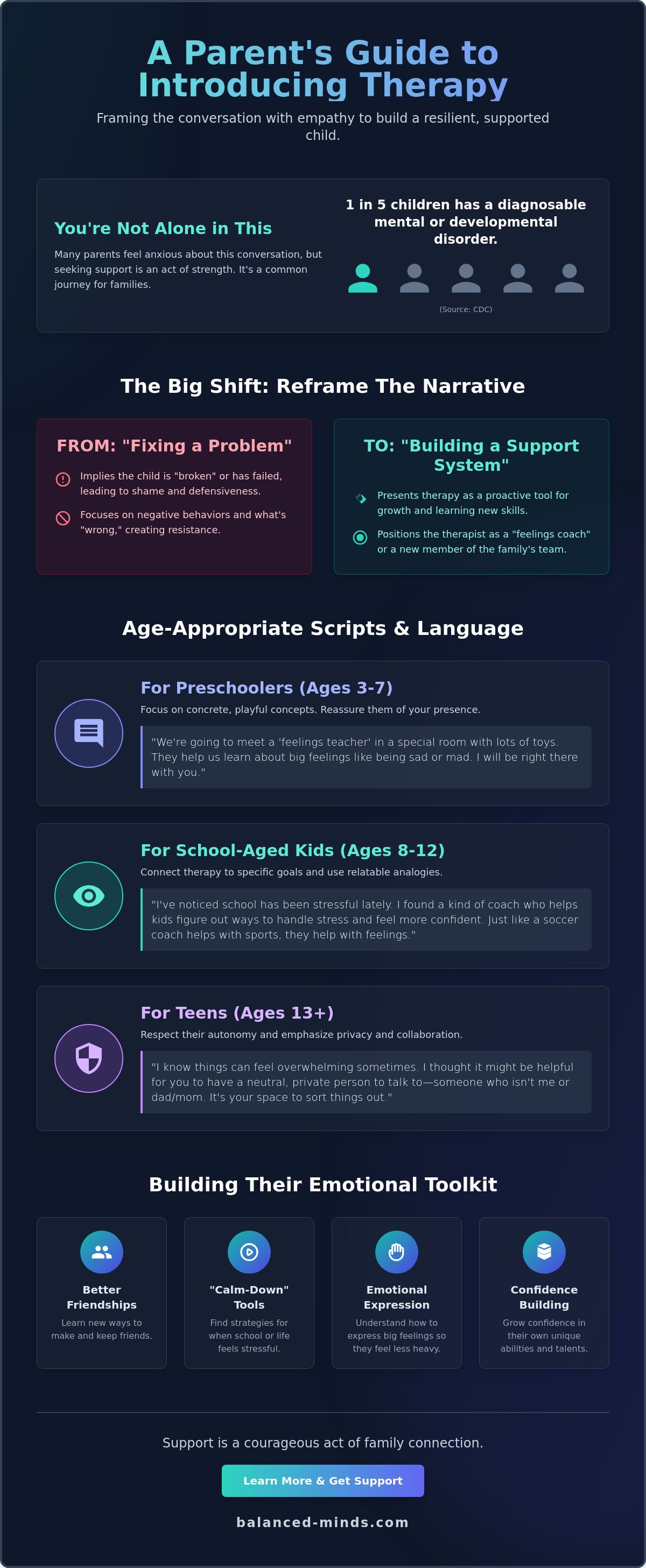
What if we viewed a therapist not as a clinical expert who "fixes" things, but as a feelings coach who helps our children navigate the complex experience of growing up? Many parents find themselves frozen when they realize their little one needs extra support. It's common to feel stuck wondering how to talk to my child about therapy without making them feel like they've failed or that something is fundamentally broken. According to the CDC, 1 in 5 children aged 3 to 17 has a diagnosable mental or developmental disorder, yet the fear of being the "bad guy" often prevents us from starting the very conversation that leads to healing.
We understand that this moment feels high stakes, and it's completely natural to feel a sense of anxiety about your child's reaction. We believe that seeking support is a courageous act of family connection rather than a sign of a problem. You'll learn how to introduce the concept of therapy with empathy, age-appropriate language, and the quiet confidence that comes from being prepared. We'll provide a clear plan for your first appointment and explore ways to reduce stigma within your home, ensuring your child feels held and supported throughout this collective journey toward wellness.
Key Takeaways
Learn to reframe therapy as a proactive partnership for emotional growth, shifting the narrative from "fixing a problem" to building a resilient toolkit for life's challenges.
Discover how to talk to my child about therapy using age-appropriate language and "I" statements that foster connection rather than defensiveness or shame.
Gain practical tools to navigate common objections by validating your child's frustration while gently emphasizing the benefits of having a neutral, supportive space.
Prepare for the logistics of the first appointment, whether in our St. Petersburg office or via telehealth, to help lower your family's anxiety and set clear expectations.
Understand how an evidence-based, heart-centered approach can de-stigmatize mental health support and promote a sense of shared humanity within your home.
Table of Contents
Understanding the 'Why' and Normalizing the Conversation
Before you begin the conversation, it is vital to check in with your own internal state. Children are remarkably attuned to our emotional frequencies; if we approach the topic with a sense of heavy worry or hidden shame, they will likely mirror that distress. We want to acknowledge that feeling nervous is a completely natural part of being a loving, protective parent. You might worry about being seen as the "bad guy" or feel a sense of failure, but we invite you to reframe this moment. Choosing to seek support is a profound act of family strength. It signals that your home is a place where emotional wellness is prioritized and where no one has to carry their burdens alone.
When considering how to talk to my child about therapy, the most effective approach is to shift the focus from "fixing a problem" to "building a support system." We view therapy as a proactive partnership for emotional and cognitive growth. A foundational step in this journey is Understanding Child Psychotherapy as a specialized branch of care that prioritizes the unique developmental needs of young people. By grounding ourselves in this perspective, we can present therapy as a collaborative space for self-discovery and resilience where every individual's strengths are the starting point for growth.
Reducing the Stigma of Mental Health Support
We can demystify the therapeutic process by using accessible metaphors that resonate with a child's daily life. Think of a therapist as a "feelings coach" or a "navigator for big emotions." Just as a soccer coach helps a player refine their kick or a music teacher guides a student through a difficult sonata, a therapist provides the tools to manage the complexities of the human mind. We often compare mental wellness to physical fitness; just as we eat well and exercise to keep our bodies strong, we talk to professionals to keep our hearts and minds healthy. It is helpful to remind your child that everyone, including the adults they look up to, benefits from having a safe person to talk to when life feels overwhelming.
Framing Therapy as a Skill-Building Partnership
The conversation becomes much more tangible when we link it to specific, positive goals that matter to the child. Rather than focusing on what is "wrong," we can highlight how how to talk to my child about therapy involves discussing the skills they want to gain. This might include:
Learning new ways to make and keep friends.
Finding "calm-down" tools for when school feels stressful.
Understanding how to express big feelings so they don't feel so heavy.
Building confidence in their own unique abilities and talents.
By positioning the therapist as a new member of the "family team," we reduce the sense of isolation. This isn't something being done "to" the child; it is a partnership where the child, the parents, and the therapist work together toward a happier, more balanced life.
Age-Appropriate Scripts for Every Stage of Development
Timing is a cornerstone of a successful conversation. We recommend avoiding "the talk" during high-stress windows, such as the chaotic morning rush, immediately after school when their social battery is drained, or right before bed when fatigue sets in. Instead, choose a calm, neutral moment like a weekend walk or a quiet drive. When you begin, use "I" statements to share your heart without sounding accusatory. For example, "I've noticed that your heart seems a bit heavy lately" feels much safer than "You've been acting out." Keeping this initial dialogue brief and open-ended allows your child the space to process and ask questions at their own pace.
Talking to Preschoolers and Young Children (Ages 3-7)
For our youngest ones, the concept of a "doctor for feelings" can feel abstract. We find it most helpful to describe the therapist as a "feelings teacher" who helps us understand what is happening inside our hearts. You can explain that they will visit a special room filled with toys and games, often referred to as play therapy. Reassure them by saying, "We are going to meet a new friend who has a whole room of toys to help us talk about big feelings, and I will be right there with you." This approach aligns with expert advice on How to Talk to Kids About Starting Therapy, ensuring the experience feels like an invitation rather than a punishment.
Explaining Therapy to School-Aged Kids and Tweens (Ages 8-12)
At this stage, children are often navigating specific stressors, such as the pressure of Pinellas County school testing or shifting social dynamics. If your child is neurodivergent, they may feel a unique sense of frustration. When considering how to talk to my child about therapy in the context of ADHD or giftedness, frame the therapist as a "neutral coach" who helps solve tricky brain puzzles. You might say, "Sometimes your brain moves so fast it's hard to keep up; this coach helps us find the right buttons to push." It's also vital to discuss privacy, explaining that the therapist's office is a "safe vault" for their thoughts. If you're looking for specialized support, finding a psychologist for adhd diagnosis can be a helpful first step in this collaborative journey.
Navigating the Conversation with Teens and Young Adults
Teens value autonomy above all else. The conversation should feel like a partnership where they have a significant say in the process. Use a collaborative tone: "I’ve noticed things have been heavy lately, and I want to help you find more support than I can provide on my own." Address their desire for independence by explaining how therapy supports self-advocacy and provides a space that is entirely their own. Let them know they can participate in choosing a therapist who feels like a good fit, which reinforces that they are the primary driver of their own wellbeing.
Overcoming Resistance and Addressing Common Worries
Resistance is often the brain's natural way of protecting itself from the unknown. When we consider how to talk to my child about therapy, we must prepare for the almost inevitable response: "I'm not crazy." This phrase usually stems from a place of fear or a misunderstanding of what mental health support actually looks like. We can respond by validating their frustration immediately. We might say, "I hear that you're feeling frustrated, and it's okay to feel that way; it doesn't mean anything is wrong with you." We don't back down on the need for support, but we do shift the narrative. We explain that therapy is about mental fitness, much like an athlete works with a trainer to stay at the top of their game.
If your child has had a negative experience with a counselor in the past, it's vital to acknowledge that hurt without defensiveness. We can explain that different professionals use different tools, and just because one "fit" didn't work doesn't mean the whole process is flawed. Perhaps a previous approach felt too clinical or talk-heavy for their personality. We can highlight that a more modern approach might include play-based methods or specialized ADHD coaching that feels more like active skill-building than a traditional doctor's visit. We also need to clarify the difference between privacy and safety. We promise them that their words stay in the room, but we also explain that if their safety is ever at risk, we have a responsibility to step in as a protective team.
What to Do if Your Child Says 'No'
It's difficult to hear a flat "no" from your child, but we can turn this into a moment of empowerment rather than a power struggle. We often suggest a three-session trial period before making any final decisions. This gives your child a sense of control and a clear window to experience the environment without feeling trapped. Ask them what they're specifically afraid of and listen with your full heart, avoiding the urge to interrupt or correct their feelings. We've found that when parents offer their child a role in the selection process, such as looking at a therapist's bio or office photos together, the child feels more like a partner and less like a passenger in their own care.
Addressing the 'Broken' Myth
We must actively dismantle the idea that therapy is only for when things are "broken." Therapy is a powerful tool for high-performers, athletes, and gifted students who want to master their internal world and manage the unique pressures they face. Neurodivergence like ADHD requires different tools and strategies to navigate a world not always built for fast-moving brains, not a "fix" for a faulty system. We emphasize that the whole family is committed to this journey of growth. This isn't just about changing a child's behavior; it's about how we all learn to communicate, connect, and support one another more effectively as a unit.
Practical Logistics: Preparing for the First Appointment in Tampa Bay
Once you've navigated the initial dialogue on how to talk to my child about therapy, the focus shifts to the gentle rhythm of the day itself. We offer support both at our welcoming St. Petersburg office and through secure telehealth platforms, allowing you to choose the environment that feels most restorative for your family. The first session is fundamentally different from ongoing work; it's a time for connection, curiosity, and establishing a sense of shared safety. We encourage you to use the drive through Tampa or St. Petersburg for light, unrelated conversation rather than a heavy rehearsal. Whether you're crossing the Howard Frankland or driving through the brick streets of Old Northeast, keep the atmosphere light. For our younger visitors, packing a favorite stuffed animal or a familiar comfort item can provide a grounding anchor in a new space.
Timing the Conversation for Success
Timing is a vital element of emotional safety. We suggest choosing a neutral moment when everyone is well-fed and emotionally regulated. It's vital to avoid bringing up the appointment during a heated conflict or as a consequence for difficult behavior, as this can inadvertently frame support as a punishment. Giving your child two to three days of notice provides them with enough time to process the idea without allowing anxiety to build into an overwhelming obsession. This window allows them to ask questions and settle into the idea at their own pace.
What to Expect at our St. Petersburg Office
The space at Balanced Minds Psychology & Wellness is designed to feel like a sanctuary rather than a clinical environment, intentionally softening the "doctor's office" anxiety that many children feel. During this first visit, our team focuses on getting to know your child’s unique personality and strengths. We believe that the relationship between the child and the therapist is the primary vehicle for healing. If your child feels hesitant about being in the room alone, we often suggest looking for family therapy near me to ensure they feel the steadying presence of their parents during those initial steps. If you feel ready to take this first step toward wellness, we invite you to schedule a visit with our team to begin this collaborative journey.
Partnering with Balanced Minds Psychology & Wellness for Your Child’s Wellbeing
At Balanced Minds Psychology & Wellness, we believe that every child possesses an innate capacity for growth and resilience. Led by Dr. Jennifer Katzenstein, our team brings together rigorous, evidence-based standards with a soft, heart-centered delivery. We recognize that while you're the expert on your child's heart, we provide the clinical framework to help them thrive. Our team specializes in comprehensive support, including finding a psychologist for adhd diagnosis and managing the delicate complexities of childhood anxiety. We're committed to seeing the "whole child" beyond a list of symptoms, ensuring our therapeutic plans are as unique as the children they serve. As you reflect on how to talk to my child about therapy, remember that you are not alone in this process.
Our Collaborative Philosophy
We strive to bridge the gap between clinical expertise and your invaluable parental intuition. This partnership is essential because you see the daily nuances that a diagnostic tool might miss. Our focus extends deep into the greater Tampa Bay community. We maintain a close understanding of local school systems to better support your child's academic and social life. We invite you to explore our resources on child psychologist st petersburg fl services to see how our local expertise can benefit your family unit. Knowing how to talk to my child about therapy is just the beginning. Having a local team that understands the specific pressures of our community makes a world of difference.
Taking the Next Step Together
Taking the first step toward professional support is often the most difficult. You don't have to carry the weight of having all the answers right now. We provide a low-pressure, restorative environment where your family's needs are heard and validated without judgment. The journey to wellness is a marathon, not a sprint. We're honored to walk alongside you as a steady, guiding presence. If you feel ready to explore how we can support your child's development, we invite you to reach out for an initial consultation. Together, we can create a clear, compassionate plan that honors your child's individuality and fosters a sense of lasting psychological safety for everyone involved.
Embracing the Next Step in Your Family’s Journey
Choosing to initiate this conversation is a profound act of love that signals to your child that their emotional world is worth exploring. We've discussed how to reframe therapy as a collaborative partnership for growth and the importance of using age-appropriate scripts that honor your child's developmental stage. By focusing on skill-building rather than "fixing" problems, you've already begun the vital work of reducing stigma. You now have a clear path for how to talk to my child about therapy with empathy and quiet confidence.
Our team, led by Board-Certified Pediatric Neuropsychologist Dr. Jennifer Katzenstein, is here to provide the clinical expertise and heart-centered care your family deserves. We specialize in ADHD evaluations, anxiety support, and gifted testing, offering both in-person visits at our St. Petersburg office and secure telehealth options for your convenience. You don't have to navigate this transition alone. We invite you to schedule a compassionate consultation for your child today and take the first step toward a more balanced, resilient future. Your family possesses an incredible capacity for growth, and we're honored to support you on that path.
Frequently Asked Questions
How do I explain therapy to a child who thinks nothing is wrong?
Explain that therapy is like having a specialized coach for your brain who helps you sharpen the tools you already possess. You don't need to be "broken" to benefit from extra support; even the best athletes and students use coaches to reach their full potential. When considering how to talk to my child about therapy, focus on the desire to make their daily life feel easier and more joyful.
Should I tell my child’s school that they are starting therapy?
Sharing this information with the school is entirely your choice, though it can help foster a more cohesive support system for your child. If your child is navigating specific academic challenges or requires a 504 plan, coordinating with a school counselor ensures a consistent environment. However, you have the right to maintain your family's privacy if you feel that protects your child's sense of emotional security.
What if my child refuses to talk to the therapist during the session?
Silence is a natural part of the therapeutic journey and is never viewed as a failure or a waste of time. Skilled therapists use play, art, or gentle observation to build rapport without the pressure of direct conversation. We understand that trust takes time to cultivate. Over several sessions, most children begin to feel safe enough to share their internal world at a pace that feels comfortable.
Is it okay to tell other family members that my child is in therapy?
Deciding whether to share this news with extended family depends on your child's comfort level and your family's specific dynamics. We encourage you to protect your child's privacy to ensure they don't feel like a "topic of conversation" during family gatherings. If you do choose to share, frame it as a proactive, positive step toward wellness to help reduce any lingering stigma within the family unit.
How long does a typical therapy session last for a child?
Most individual therapy sessions for children and adolescents last between 45 and 60 minutes. This timeframe is carefully designed to be long enough for meaningful connection but short enough to respect a child's natural attention span and energy levels. Some sessions might be slightly shorter for very young children, focusing on high-engagement play that keeps them focused and comfortable throughout the entire visit.
What is the difference between a child psychologist and a school counselor?
A child psychologist typically provides in-depth clinical treatment and comprehensive evaluations in a private setting, while a school counselor focuses on academic success and immediate school-based challenges. While school counselors are wonderful resources for day-to-day navigation, a psychologist offers specialized interventions for long-term emotional and cognitive growth. Both roles are valuable components of a child's overall support team and often work in harmony.
Can I stay in the room with my child during their therapy session?
You can often participate in the initial stages of a session, especially with younger children who need the steadying presence of a parent to feel safe. As children grow older, they benefit from having a private space to develop autonomy and practice self-advocacy. When you're learning how to talk to my child about therapy, reassure them that you'll always be close by and that their safety is always our priority.
How do I know if the therapist is a good fit for my child?
You'll know a therapist is a good fit when your child feels seen, heard, and respected during their time together. While it might take several sessions to establish deep rapport, your child should generally feel a sense of ease or healthy curiosity about returning. Trust your intuition as a parent; a strong therapeutic relationship is built on a foundation of mutual comfort, professional integrity, and genuine heart-centered care.


