

How to Prepare My Child for a Psychological Evaluation: A Compassionate Guide for Parents
Updated: 1 day ago
What if the upcoming assessment isn't a test for your child to "pass," but a collaborative journey to discover how their unique mind truly works? It's natural to feel a heavy sense of worry, wondering if you're doing the right thing or if a label will change how the world sees your little one. We understand that learning how to prepare my child for a psychological evaluation is about more than logistics; it's about protecting your child's spirit while seeking the clarity they deserve. You want them to feel supported rather than scrutinized, especially when one in five children in the United States lives with a diagnosable developmental or behavioral disorder.
We are here to help you ease your child's anxiety and ensure the process yields the most accurate, supportive results possible. By shifting the narrative from "testing" to "discovery," we can work together to ensure your child feels safe and even curious about the session. This guide will walk you through gentle ways to explain the evaluation, the key differences between school and private assessments, and how to build a lasting partnership with your clinician to support your child's brilliant, evolving self.
Key Takeaways
View the evaluation as a helpful roadmap for growth rather than a label, which helps ensure the findings reflect your child's true strengths.
Discover how to prepare my child for a psychological evaluation using gentle, age-appropriate scripts that prioritize both honesty and emotional security.
Master practical day-of logistics, such as grounding nutritional choices and sensory comfort tools, to keep your child feeling safe and focused.
Learn to navigate your own emotions and release the pressure of perfection, allowing you to show up as a steady, guiding presence for your little one.
Gain insight into the compassionate, evidence-based process at Balanced Minds, where we turn clinical insights into a collaborative plan for flourishing.
Table of Contents
Why Preparation is the First Step Toward Clarity and Connection
Age-Appropriate Scripts: How to Explain Testing to Your Child
The Logistics of Comfort: Practical Steps for the Day of the Evaluation
The Parent’s Journey: Navigating Your Own Emotions and Expectations
What to Expect at Balanced Minds: Our Compassionate St. Pete Process
Why Preparation is the First Step Toward Clarity and Connection
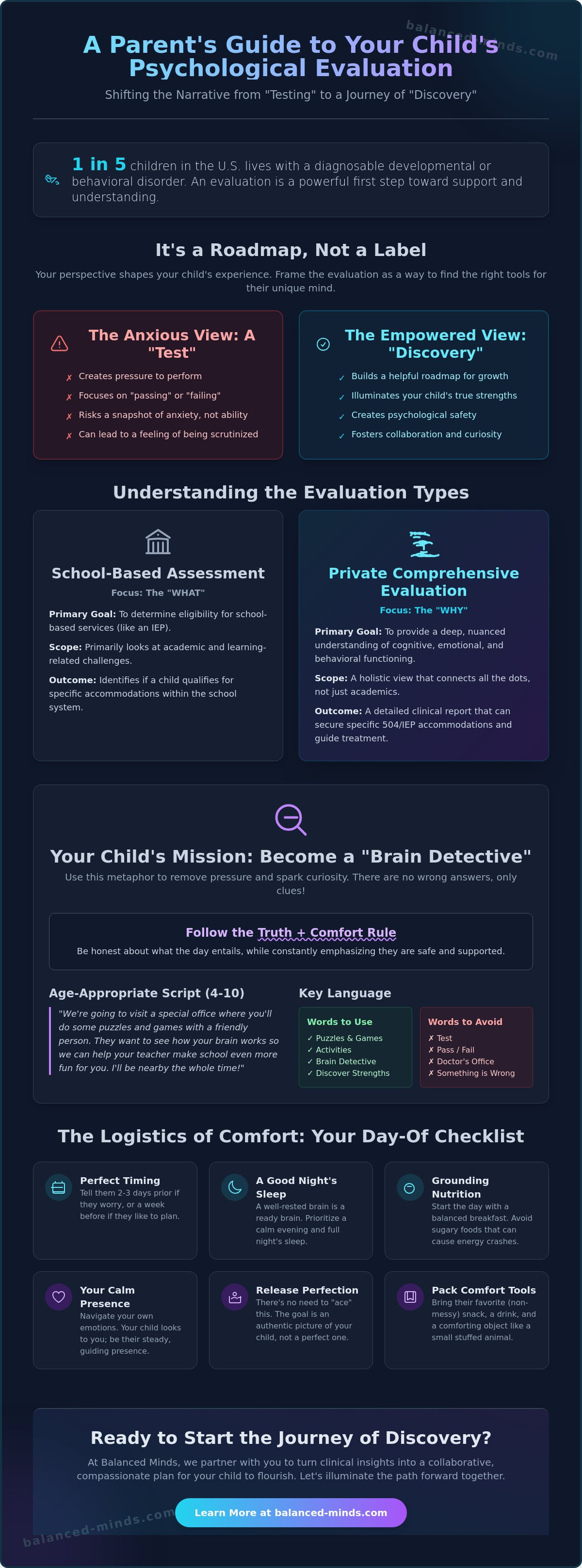
Think of this process as a collaborative roadmap rather than a final judgment or a restrictive label. When parents approach us, they often carry a heavy weight of worry, fearing that an evaluation might somehow define their child by their struggles. We choose to see it differently. A comprehensive assessment is a way to illuminate the unique architecture of your child's mind. Understanding how to prepare my child for a psychological evaluation starts with shifting your own perspective. When you are calm and prepared, you create a sense of psychological safety that allows your child to show up as their authentic self. This ensures the data we collect isn't just a snapshot of their anxiety, but a true reflection of their actual abilities and potential.
Shame often thrives in the unknown, so we frame this journey as a search for the right tools. We believe that every brain has a unique profile of strengths and challenges. By choosing a psychology near me approach that prioritizes the family bond, you're telling your child that you are on this team together. This partnership helps demystify the clinical setting and makes the path to wellbeing feel attainable and grounded in daily life.
Understanding the Diagnostic Journey
It's helpful to distinguish between the screenings your child might receive at school and a private evaluation. While school-based assessments are designed to determine eligibility for services, a private comprehensive evaluation goes much deeper. Our specialists look at the "why" behind the behaviors, providing a nuanced view of cognitive and emotional functioning. To understand the broader context of these tools, you might ask, What is psychological testing? This process is particularly vital for families in the Pinellas or Hillsborough County school districts. A detailed private report provides the clinical evidence often required to secure specific accommodations in Florida 504 plans or Individualized Education Programs (IEPs), ensuring your child receives the exact support they need in the classroom.
The 'Brain Detective' Metaphor
We love to invite children to become "brain detectives" on a collaborative mission. This metaphor helps remove the pressure of performance. We explain that there are no wrong answers in this room; there are only clues that help us understand how they learn, think, and feel best. When a child views the clinician as a partner in discovery rather than an authority figure, their natural curiosity takes over. This shift helps them feel safe enough to engage with the tasks at hand. Ultimately, we view the entire evaluation process as a respectful celebration of neurodiversity and the beautiful complexity of the human condition.
Age-Appropriate Scripts: How to Explain Testing to Your Child
When considering how to prepare my child for a psychological evaluation, the most powerful tool you have is your own voice. We recommend following the Truth + Comfort Rule: be honest about what the day entails while emphasizing that they are safe and supported. Timing is everything. If your child tends to worry, it's often best to wait until two or three days before the appointment. For a child who loves to plan, a week's notice gives them time to process their questions. Avoid using the word "test," as it often triggers school-related stress. Instead, describe the session as a series of puzzles, games, and activities designed to help everyone understand how they think and learn.
Linking the evaluation to their personal goals makes the process feel relevant rather than forced. If they've been struggling with reading or feeling overwhelmed by big emotions, explain that these activities will help find ways to make those things easier. You might find more helpful tips on Preparing for Your Child's First Appointment to help set a calm, supportive tone from the start.
Talking to Younger Children (Ages 4-10)
For younger children, keep the explanation simple and play-based. You might say, "We're going to visit a special office where you'll do some puzzles and games with a friendly person. They want to see how your brain works so we can help your teacher make school even more fun for you." Remind them that you'll be nearby the whole time. If you are seeking an ADHD diagnosis guide for specific language, focus on the idea of "finding your focus" or "helping your brain listen to your body."
Talking to Tweens and Teens (Ages 11-18)
Adolescents value autonomy and honesty. They often feel "broken" or "crazy" when they struggle, so it's vital to validate their experience without judgment. Try this script: "I've noticed things have been frustrating lately, and I want to make sure you have the right support. This evaluation isn't because something is wrong with you. It's a way to get objective answers so you can have more of a say in your own life and education." This approach empowers them to see the results as a tool for their own advocacy. If your teen is feeling particularly overwhelmed, exploring Individual Therapy for Adolescents can be a wonderful way to provide them with a private space to process these transitions.
By using these age-appropriate scripts, you transform a potentially scary event into a meaningful step toward growth. You aren't just getting through a day of testing; you're building a foundation of trust that will last throughout their developmental journey.
The Logistics of Comfort: Practical Steps for the Day of the Evaluation
We've explored the emotional scripts; now let's focus on the physical foundation. The day of the evaluation is a marathon, not a sprint. When parents ask how to prepare my child for a psychological evaluation, we often start with the basics: sleep and sustenance. A child's brain needs fuel and rest to demonstrate its full range of capabilities. Prioritize a low-sugar, high-protein breakfast like eggs or Greek yogurt. This prevents the mid-morning energy dip that can lead to frustration during more challenging tasks. A steady supply of energy helps maintain the focus needed for a successful session.
Equally important is the "No-Practice" Rule. It's natural to want your child to do their best, but practicing specific test questions or puzzles can actually invalidate the clinical results. We need to see how your child's mind navigates new challenges in the moment. Trust the process and trust your child's natural brilliance. For more detailed logistical advice on setting the stage for success, you can review this helpful guide on How To Prepare My Child For A Psychological Assessment.
The Day-Of Checklist
Step 1: Prioritize Rest. Ensure your child gets 9 to 10 hours of restful sleep the night before. Fatigue can mimic attention issues or irritability, and we want to see their most rested, authentic self.
Step 2: Pack a 'Comfort Kit.' This might include a favorite stuffed animal, a specific fidget tool, or a familiar water bottle. These items serve as sensory anchors in a new environment, providing a sense of home in the clinical space.
Step 3: Account for Local Traffic. If you're traveling through St. Pete or Tampa, give yourself an extra 20 minutes. Arriving in a rush creates a sense of urgency that can spike your child's anxiety before they even walk through our door.
Managing the 'Testing Fatigue'
It's normal for children to feel mentally drained after a few hours of focused work. This fatigue isn't a sign of failure; it's a sign of deep effort. Our clinicians are experts at reading these cues and adjusting the pace accordingly. We build in frequent breaks for movement, stretching, and snacks to keep the atmosphere light and supportive. Once the session ends, plan a small celebration. It doesn't have to be an elaborate bribe. A trip to a favorite local park or a quiet treat at home acknowledges their hard work. This reinforces the idea that the day was a success because of their bravery and effort, not because of a specific score.
The Parent’s Journey: Navigating Your Own Emotions and Expectations
While much of the focus is naturally on your child, your own internal state is just as critical to the process. Children are incredibly perceptive. They often act as mirrors for our unspoken emotions. If you are feeling high levels of stress or fear about the outcome, your child will likely sense that tension, even if you follow every script perfectly. Understanding how to prepare my child for a psychological evaluation involves preparing your own heart and mind first. It's about releasing the "perfect child" myth and accepting that every brain has its own beautiful, unique profile that deserves to be understood rather than fixed.
Seeking these answers isn't a sign that something is wrong; it's an act of profound love and advocacy. You are providing your child with the resources they need to flourish. To maintain your own steady presence, consider looking into parenting support options in the St. Pete and Tampa area. Taking care of your own mental wellbeing ensures you can be the calm, guiding light your child needs during this transition. If you find yourself needing a space to process these feelings, we invite you to explore Family Therapy as a way to strengthen your bond throughout this journey.
Managing the 'Wait' for Results
Once the testing is complete, a new phase begins. In Florida, the typical timeline for scoring, interpretation, and report writing is about two to four weeks. This waiting period can feel long, but it's a time for the clinician to be thorough and thoughtful. During this window, try to stay present with your child. If family members or teachers ask for updates, it's okay to say, "We've completed the evaluation and are looking forward to the feedback session soon." You don't owe anyone details until you feel ready to share them.
Reframing the Outcome
We encourage you to view the final report as a "user manual" for your child’s success rather than a list of deficits. Part of knowing how to prepare my child for a psychological evaluation is being ready for the mixed emotions of the feedback session. Relief often comes from finally having a name for the challenges, while grief may stem from the loss of an "easier" path you imagined. Remember that a diagnosis is a doorway to essential services and tailored support, not a ceiling on your child's potential. It is the first step toward a clearer, more supportive future.
What to Expect at Balanced Minds: Our Compassionate St. Pete Process
At Balanced Minds, we believe that every child deserves to be seen and understood in their entirety. We recognize that learning how to prepare my child for a psychological evaluation is just the first step in a much larger journey toward wellness. Our process begins with a deep-dive intake interview, where we partner with you to understand your child's full history, from their earliest milestones to their current challenges. This ensures that our evaluation is grounded in the reality of your daily life rather than remaining an abstract academic exercise.
We've carefully curated our St. Petersburg office to be a low-pressure, welcoming environment that feels more like a supportive home than a clinical space. Creating a sanctuary of calm helps lower a child's defenses, allowing their true personality and cognitive profile to emerge naturally. Once the testing is complete, we don't simply hand you a report and say goodbye. Our feedback session is a sacred space where we translate complex data into a collaborative, actionable growth plan. We sit with you to ensure every finding makes sense and every recommendation feels attainable for your family's unique rhythm.
Comprehensive Testing Tailored to Your Child
Our evaluations are never one-size-fits-all. We offer specialized assessments for ADHD, learning disabilities, and giftedness, with a profound focus on executive functioning and emotional well-being. Because we are deeply rooted in the local community, we possess specific expertise in Pinellas County school requirements. We know exactly what documentation is needed to support Florida 504 plans and IEPs, helping you navigate the educational system with confidence and clarity. This local knowledge bridges the gap between a clinical diagnosis and the practical support your child receives in the classroom every day.
Next Steps Beyond the Evaluation
A diagnosis is simply a starting point for growth. We are committed to long-term support for families in St. Pete and Tampa, helping you bridge the gap between understanding a challenge and overcoming it. Whether your child needs ADHD coaching, executive functioning coaching, or individual therapy, we remain a steady, guiding presence in your lives. We don't just identify the hurdles; we help your child build the skills to clear them. If you're ready to start this journey of discovery, we invite you to schedule a consultation with our St. Petersburg team today. Together, we can co-create a future where your child feels safe, capable, and empowered to reach their full potential.
Creating a Path Toward Growth and Understanding
Navigating the path toward a deeper understanding of your child's mind is a journey born of love and advocacy. By using age-appropriate language and prioritizing physical comfort, you transform a clinical appointment into a shared mission of discovery. We've explored how your own emotional state acts as a steady anchor for your child, allowing them to feel safe enough to reveal their true, brilliant self. Knowing how to prepare my child for a psychological evaluation isn't just about the logistics of the day; it's about building a foundation of trust that supports your child's long-term development.
We specialize in meeting Pinellas County gifted and ADHD testing requirements within a warm, child-centered office environment in St. Petersburg. We are here to ensure that every insight we gather becomes a practical tool for your child's success. We believe that every individual possesses the capacity for growth, and we're honored to be part of your family's support system.
Start your child's journey toward clarity. Contact Balanced Minds today. You don't have to navigate this transition alone. We are ready to partner with you to help your child flourish.
Frequently Asked Questions
What should I say if my child asks why they are going to see a psychologist?
You can tell your child that they are visiting a "brain detective" to learn about their unique strengths and how they learn best. Frame the visit as a way to make school or home life feel easier for them. We recommend being honest but gentle, focusing on the idea that every person has a brain that works in its own special way. This approach reduces fear and replaces it with a sense of collaborative curiosity.
How long does a typical child psychological evaluation take?
A typical comprehensive evaluation often requires four to six hours of direct testing, which we frequently split into two separate sessions. This ensures that your child remains rested and engaged throughout the process. When considering how to prepare my child for a psychological evaluation, remember that we also spend several hours behind the scenes scoring and interpreting the data to create a detailed, helpful roadmap for your family.
Will my child have to miss school for the testing?
Yes, we generally recommend scheduling testing during morning hours when your child is most alert and rested. While this may require missing a day of school, most institutions recognize these evaluations as excused medical absences. Providing your child with a quiet day away from their usual academic pressures helps them focus their energy on the activities we perform together in the office, ensuring the most accurate reflection of their abilities.
Can I stay in the room with my child during the evaluation?
Parents typically remain in the waiting area while the child works one-on-one with the clinician to ensure the most accurate results. Most children perform better and stay more focused without a parent in the room. We understand this can feel difficult, so we ensure you are deeply involved during the initial intake interview and the final feedback session to maintain a sense of partnership and shared humanity.
What happens if my child refuses to cooperate or shuts down during testing?
If a child feels overwhelmed or shuts down, we immediately pause the activities to prioritize their emotional safety. Our clinicians are highly skilled at building rapport and will use movement breaks, snacks, or gentle conversation to help them feel secure again. If we cannot re-engage them in a way that feels supportive, we will simply reschedule the remaining tasks for another day when they feel more regulated and comfortable.
Is a psychological evaluation the same as an IQ test?
An IQ test is just one component of a much broader comprehensive psychological evaluation. While an IQ test measures cognitive potential, a full evaluation also explores emotional well-being, executive functioning, and specific learning patterns. This holistic view helps us understand not just what a child can do, but how they experience the world and where they might need additional nurturing or specialized tools to reach their full potential.
Will the school accept a private evaluation from Balanced Minds?
Schools in Pinellas and Hillsborough counties are required to consider private evaluations when determining eligibility for 504 plans or Individualized Education Programs (IEPs). Our reports are designed to meet rigorous clinical and educational standards, providing the detailed evidence teachers need to implement classroom accommodations. We often act as a bridge between your family and the school system to ensure your child receives the right support in their learning environment.
How much does a comprehensive psychological evaluation cost in Florida?
Industry reports for 2026 indicate that a comprehensive psychological assessment for a child typically ranges from $3,000 to $5,000 depending on the provider. When researching how to prepare my child for a psychological evaluation, it is helpful to know that a full neuropsychological evaluation costs approximately $2,000, while gifted testing is around $650. These national averages reflect the intensive hours required for diagnostic interviewing, test administration, and the generation of a customized report.


