

What Happens if ADHD is Left Untreated in a Child? Risks and Pathways to Support

Updated: 5 days ago
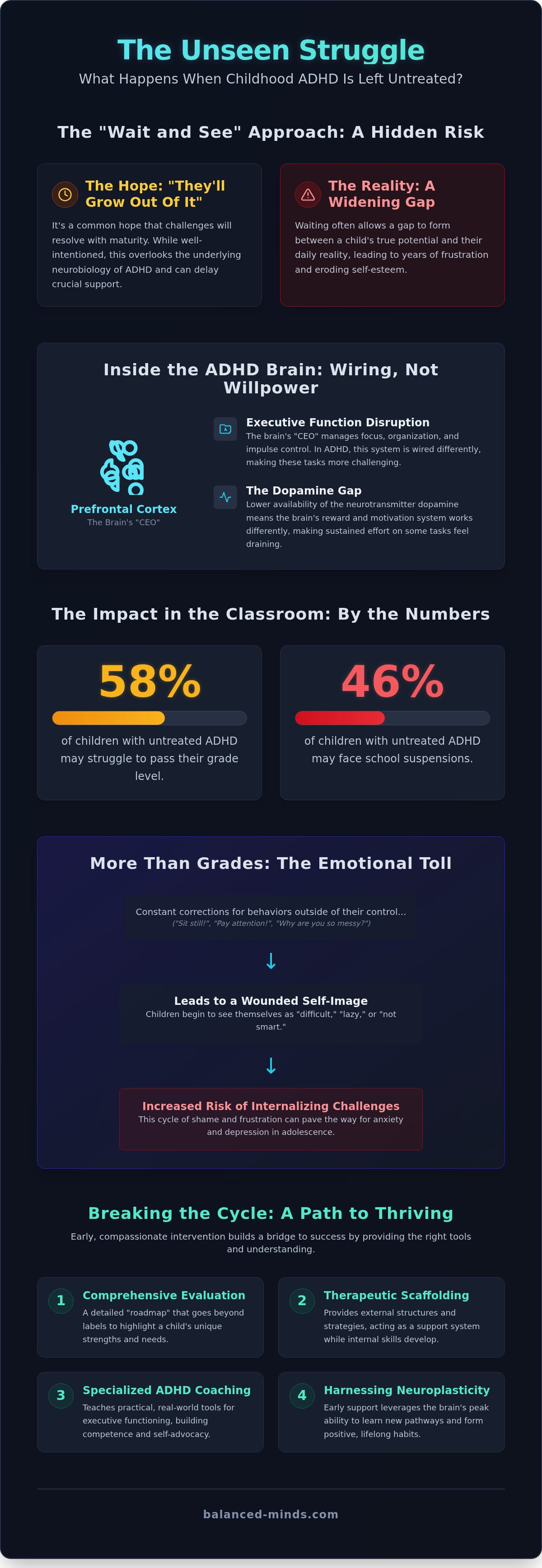
Imagine watching your child sit at the kitchen table, tears welling as they stare at a worksheet that feels like an impossible mountain. You've heard the whispers from teachers and felt the sting of judgment from other parents, but deep down, you know your child is trying their heart out. Many parents find themselves asking what happens if adhd is left untreated in a child, especially when research shows that up to 58% of these children may struggle to pass their grade level. We understand the weight of this uncertainty and the exhaustion that comes from conflicting medical advice. It's natural to feel protective and hesitant when the path forward feels unclear.
We're here to offer a steady hand and a clear perspective on this collective journey. You'll discover the hidden risks of untreated childhood ADHD and learn how compassionate, evidence-based intervention can transform your child’s future. We'll explore the long-term academic and social impacts, demystify the evaluation process, and provide a roadmap for supportive, non-judgmental care. Together, we can move from confusion to confidence, ensuring your child has the scaffolding they need to thrive while honoring the unique strengths they already possess.
Table of Contents
Understanding ADHD Beyond the 'Wait and See' Approach
Choosing to seek an evaluation for your child is a deeply personal decision, often clouded by the fear of a permanent label. It's completely understandable to feel hesitant or to hope that a few more months of growth will resolve the challenges you're seeing in the classroom or at home. However, the "wait and see" approach often creates a silent gap between a child's true potential and their daily reality. For many families, Understanding Attention-Deficit/Hyperactivity Disorder as a biological difference rather than a moral failing is a profound relief. When we examine what happens if adhd is left untreated in a child, we see that the primary risk isn't the label itself, but the years of frustration that occur when a child lacks the right tools. Waiting for a child to simply grow out of it can be a heavy burden for them to carry alone. While some behaviors shift with maturity, the underlying neurological patterns remain, often leading to a cycle of missed assignments and social misunderstandings.
The Science of the ADHD Brain
The prefrontal cortex serves as the "CEO of the brain," overseeing the complex executive functions required for daily life. This part of the brain is responsible for shifting attention, organizing tasks, and filtering out the background noise of a busy classroom. In an ADHD brain, the neurotransmitter dopamine, which helps us stay engaged and motivated, isn't always as available as it needs to be. This chemical gap makes certain tasks feel physically exhausting. We often see children being told to "just focus," but for them, trying harder is as ineffective as telling someone to run a marathon on a broken leg. ADHD is a biological reality rooted in neurological development, not a reflection of a child's willpower or a parent's dedication.
Why Early Detection Matters in 2026
In 2026, the academic and social landscape is faster and more complex than ever. Between digital classroom tools and high expectations for self-regulation, children are asked to manage a heavy cognitive load that can easily become overwhelming. Early detection allows us to take advantage of neuroplasticity, the period when a child's brain is most receptive to learning new ways of processing information and forming healthy habits. By implementing scaffolding early, we provide the external structure a child needs while their internal systems are still developing. This proactive care helps prevent the academic fatigue and low self-esteem that often occur when a child's efforts don't match their results. By addressing these needs now, we can help our children understand their own minds before they begin to internalize these struggles as personal failures.
Immediate Impacts on Academic Success and Social Development
The classroom is often the first place where the gap between a child's effort and their results becomes visible. When we consider what happens if adhd is left untreated in a child, we often see a pattern of missed multi-step instructions and "silly" mistakes on homework that the child actually understands. According to the National Institute of Mental Health, these symptoms are not choices but reflections of neurological pacing. A child might blurt out an answer not to be disruptive, but because their internal "braking system" hasn't yet engaged. Without support, these moments can lead to 46% of children with untreated ADHD facing school suspensions, turning the learning environment into a source of stress rather than growth.
Over time, receiving constant corrections for these behaviors can deeply wound a child's self-image. When a child hears "sit still" or "pay attention" dozens of times a day, they may begin to view themselves as the "difficult" student or the "messy" kid. This consistent negative feedback shapes a self-image rooted in inadequacy. They aren't just struggling with a math sheet; they are internalizing a sense of shame before they've even reached middle school. We believe in shifting this narrative early, helping children see that their brain simply works differently, not incorrectly.
Navigating the Florida School System
In our local Pinellas and Hillsborough County schools, teachers are often working with large classes where a child who struggles quietly can easily slip through the cracks. We find that a formal evaluation is the essential key to unlocking necessary support, such as 504 plans or Individualized Education Programs (IEPs). These documents aren't just paperwork; they're legal protections that ensure your child receives the accommodations they need to show what they truly know. Finding a psychologist for adhd diagnosis in our community is a collaborative step that helps teachers understand how to best support your child's specific learning style.
The Social Cost of Impulsivity
Socially, the impact of untreated ADHD can be just as significant as the academic hurdles. Children with ADHD often experience "social fatigue" because they have to work twice as hard to read peer cues and manage their impulses during play. When a child frequently interrupts or loses their friend's favorite toy, it can lead to repeated rejection from their peers. This isolation hurts, and it can make a child feel fundamentally "different" in a way that is hard to articulate. It is why we focus on building social-emotional resilience through therapy, helping children understand their own social patterns without feeling like they're "wrong." If you're noticing these social hurdles, our team at Balanced Minds is here to help you navigate these early challenges with heart-centered care.
The Ripple Effect: Long-Term Consequences into Adolescence
As children move into the teenage years, the challenges of ADHD don't disappear; they often shift shape and intensity. Understanding what happens if adhd is left untreated in a child helps us see why adolescence can feel particularly turbulent for these families. The academic gap that started in primary school often widens as the safety nets of childhood are removed. Without the right support, the internal experience of a teenager with ADHD can become one of chronic overwhelm. This isn't a lack of maturity; it's a brain that is being asked to perform complex executive tasks without the necessary scaffolding. When we look at the long-term trajectory, we see that approximately 30% of adolescents with untreated ADHD do not complete high school, a statistic that reflects the weight of years of unsupported struggle.
The risks extend beyond the classroom. During these years, the search for "brain quiet" can lead some teens toward risky decision-making or self-medicating behaviors. When a brain is naturally low on dopamine, it may seek out high-stimulation activities or substances to find a sense of temporary balance. We also see a significant impact on the milestones of emerging adulthood. Managing a driver's license requires sustained attention that can be difficult for an untreated teen, and the demands of a first part-time job can feel insurmountable when organizational skills haven't been nurtured. These aren't just "teen phases" but the natural progression of a neurodevelopmental difference that needs a compassionate roadmap.
Compounding Mental Health Challenges
Years of feeling "behind" or "different" often result in what we call comorbidity, where ADHD is joined by other mental health struggles. It's common for untreated ADHD to evolve into internalizing disorders like anxiety or depression. A teenager might feel anxious because they know they'll forget an important deadline, or depressed because they feel they can never meet expectations. We've found that treating the underlying ADHD is often the vital first step in resolving these secondary mood concerns. For families seeking a holistic approach, exploring teen therapy in St. Petersburg can provide a safe space to process these complex emotions while building practical coping strategies.
Executive Function and the Transition to Independence
The "organizational gap" becomes most visible when a teen is expected to manage their own schedule. While their peers may be gaining independence, a teen with untreated ADHD might still struggle with basic time management or emotional regulation. This can create friction at home and hinder their confidence as they look toward life after graduation. We often recommend specialized coaching as a bridge to adult independence. Unlike traditional tutoring, this support focuses on the "how" of life:
Breaking down large projects into manageable steps.
Building reliable systems for tracking deadlines and responsibilities.
Developing the self-awareness to know when to ask for help.
By providing these tools now, we help our teens move into adulthood with a sense of agency and self-kindness. Since ADHD is a lifelong journey, adults also benefit from specialized care; for instance, those in the UK can
for dedicated adult support.
Moving from the worry of what might be to the clarity of what is can feel like a significant emotional shift. Understanding what happens if adhd is left untreated in a child is the first step toward breaking a cycle of frustration and replacing it with a roadmap for success. When we intervene early, we aren't trying to change who a child is; we're providing the scaffolding they need to reach their full potential. In 2026, the options for support have expanded significantly, offering families a variety of evidence-based, non-pharmacological pathways that honor the child's individual humanity while building essential life skills.
Empowerment comes through data and understanding. By moving away from the "wait and see" approach, parents can become their child's most effective advocate. Instead of reacting to classroom struggles, you can proactively collaborate with teachers and specialists to create an environment where your child feels seen and supported. This shift from a deficit-based view to a strength-based perspective changes the entire family dynamic, reducing the shame that often accompanies neurodevelopmental differences.
The Power of a Comprehensive Evaluation
While focusing on your child's needs, it's equally important to support your own health and vitality; for parents exploring functional medicine, Living Well Dallas provides specialized consultations and comprehensive care for perimenopause and menopause.
While a quick pediatric screening is a helpful starting point, it often only captures a snapshot of a child's behavior. A comprehensive psychological evaluation is much more thorough, acting as a deep dive into your child's unique cognitive profile. This process helps us identify co-occurring conditions, which are present in 77.9% of children with ADHD, such as learning disabilities or giftedness. At Balanced Minds, we ensure the testing process is a supportive, child-friendly experience that highlights strengths alongside areas for growth. If you are ready to begin this journey, we invite you to read our guide on finding a child psychologist in St. Petersburg to learn more about our heart-centered approach.
Multimodal Support: Coaching, Therapy, and Family Work
Intervention in 2026 is rarely a one-size-fits-all solution. We focus on a multimodal approach that combines different types of support to create a steady foundation for your child. ADHD coaching and executive functioning coaching are practical, skill-building tools that help children manage the "how" of daily life, from organizing a backpack to breaking down a science project. Simultaneously, family therapy helps parents shift from a cycle of disciplining to one of collaborative problem-solving. This consistent support team in the Tampa Bay area ensures that the strategies learned in our office translate effectively to home and school. To explore how we can support your family's unique needs, you can learn more about our comprehensive psychological evaluations and specialized coaching services.
Compassionate Care at Balanced Minds Psychology & Wellness
At Balanced Minds, we recognize that you are the expert on your child's life. Our St. Petersburg based team, led by a board certified pediatric neuropsychologist, provides a soft landing for families who have felt overwhelmed by the complexities of neurodevelopmental support. We understand the deep concern that brings you to this page, especially the worry about what happens if adhd is left untreated in a child. Our mission is to transform that worry into a collaborative plan that honors your child's innate humanity while providing the evidence based tools they need to flourish. We don't just provide a diagnosis; we provide a partnership that bridges the gap between clinical data and the lived experience of your family at home and in the classroom.
Our commitment to evidence based practice is always balanced with a heart centered delivery. We believe that every individual possesses the capacity for growth, and our role is to provide the steady, guiding presence that makes that growth attainable. By focusing on the whole child rather than just a set of symptoms, we help reduce the shame that can often cloud the parent child relationship. We are here to ensure that your child's journey is defined by their strengths and potential rather than their deficits.
Our Specialized ADHD Services in Tampa Bay
We offer a comprehensive suite of services designed to support your child's growth at every stage of their development. This includes detailed ADHD evaluations that serve as a practical roadmap for success, as well as specialized executive functioning coaching to build the organizational skills required for the real world. For children navigating emotional or social hurdles, our individual child therapy provides a restorative space to develop resilience and self-kindness. We also provide telehealth options to ensure that families throughout the Tampa Bay area can access high quality care from the comfort of their own homes. Our focus is always on building a sustainable support system that empowers both the child and the parent.
Your Next Steps Toward Clarity and Peace
Taking the first step toward professional support doesn't have to be a high pressure experience. We invite you to schedule an initial consultation to discuss your concerns in a low pressure, supportive environment. Whether you are noticing the first signs of struggle in a young child or navigating the increased demands of the teenage years, it is never too late, or too early, to seek clarity. Our team is here to help you understand the unique way your child's brain works so that you can move forward with confidence and peace. We are committed to making the path to wellbeing feel attainable for every family we serve. Remember that your decision to seek support is an act of deep courage and care. Your unwavering love remains the most powerful factor in your child's journey toward a bright and fulfilling future.
Empowering Your Child’s Path Forward
We've explored how early intervention protects a child's self-esteem and provides the necessary scaffolding for academic and social success. By understanding the biological reality of ADHD, we can shift from frustration to collaborative problem-solving that honors your child's unique spirit. While the risks of what happens if adhd is left untreated in a child can feel daunting, they are not inevitable when you have the right support in place. Your child's future is still being written, and you have the power to provide the tools they need to flourish.
At Balanced Minds, led by board-certified pediatric neuropsychologist Dr. Jennifer Katzenstein, we offer comprehensive testing and specialized coaching under one roof to create a clear roadmap for your family. Whether you visit our St. Petersburg office or utilize our secure telehealth services across Florida, we're here to support your journey with heart-centered care. It's time to replace uncertainty with a plan that celebrates your child’s strengths. You don't have to navigate these complexities alone; your child’s potential is waiting to be unlocked with the right care. Schedule a Compassionate ADHD Consultation with Balanced Minds Today and take the first step toward a brighter, more peaceful future for your family.
Frequently Asked Questions
Can a child simply outgrow ADHD without treatment?
ADHD is a neurodevelopmental condition that typically persists throughout the lifespan. While some hyperactive behaviors may lessen as a child matures, the underlying executive functioning challenges often remain. Without support, these difficulties can evolve into significant academic and social hurdles. We focus on providing the tools needed to manage these differences effectively, ensuring that your child’s unique brain wiring becomes a source of strength rather than a constant obstacle to their success.
What are the most common signs that my child's ADHD needs professional support?
You might notice your child struggling to follow multi-step instructions or experiencing "social fatigue" after playdates. If their effort at school doesn't match their grades, or if they frequently receive negative feedback from teachers, it's likely time for a professional evaluation. These signs often indicate that the internal cognitive load has become overwhelming. We help families identify these patterns early to prevent the long-term emotional toll that occurs when a child feels perpetually behind.
Will an ADHD diagnosis stay on my child's permanent record in Florida schools?
A diagnosis is a tool for support, not a permanent stain on your child's record. In Florida schools, information regarding an ADHD evaluation is protected by privacy laws like FERPA. Sharing this data with the school is a choice you make to secure accommodations like 504 plans or IEPs. These supports are designed to level the playing field, ensuring your child’s academic record reflects their true intelligence rather than their struggles with focus or organization.
Is it possible to manage ADHD without medication?
Many families successfully manage ADHD through non-pharmacological interventions. At Balanced Minds, we specialize in individual therapy, ADHD coaching, and executive functioning coaching to build practical skills. These evidence-based approaches focus on creating external structures and internal coping strategies that honor your child's humanity. By strengthening organizational habits and emotional regulation, we help children thrive in their daily environments without solely relying on clinical prescriptions. We prioritize the practical "how" of daily life.
How does untreated ADHD affect a child's self-esteem over time?
When considering what happens if adhd is left untreated in a child, the impact on self-esteem is often the most profound risk. Children who don't receive support may internalize their struggles as personal failures or a lack of intelligence. This chronic sense of not being enough can lead to anxiety and depression as they reach adolescence. We work to shift this narrative, helping children understand their brain's unique rhythm so they can build confidence.
What is the difference between ADHD coaching and traditional therapy?
ADHD coaching is a practical, goal-oriented approach focused on building real-world skills like time management and organization. It’s about the "how" of getting through the day. In contrast, individual therapy often addresses the emotional aspects of ADHD, such as anxiety, social rejection, or low self-esteem. Both services are available at our St. Petersburg office; we often combine them to provide a holistic support system that addresses both the mind and the method.
How can I explain an ADHD evaluation to my child in a way that isn't scary?
We recommend describing the evaluation as a way to find their brain's superpowers. You can tell your child they'll be doing puzzles and activities with a kind expert who wants to help them learn more easily. At Balanced Minds, we ensure the testing experience is supportive and child-friendly, focusing on identifying their unique strengths. This framing helps reduce anxiety, turning the process into a collaborative journey of self-discovery rather than a scary medical appointment.
What support can my child get in a St. Petersburg school with a formal diagnosis?
With a formal diagnosis, students in St. Petersburg and Pinellas County can access vital accommodations through 504 plans or Individualized Education Programs (IEPs). These might include extended time on tests, preferential seating, or broken-down assignments to reduce overwhelm. A formal ADHD evaluation serves as the legal roadmap for these services. We partner with local families to ensure these supports are implemented effectively, bridging the gap between our clinical findings and your child’s daily success.


