

What Does a Child Psychologist Do? A Parent’s Guide to Support and Growth
Updated: 2 days ago
What if your child’s most difficult moments aren't signs of a problem to be fixed, but a silent language waiting to be understood? It's deeply painful to watch your child struggle socially or fall behind in school, and it's completely normal to feel overwhelmed by the "why" behind their behavior. You might find yourself wondering, what does a child psychologist do, and whether bringing a professional into your family’s life will feel like a relief or a source of more stress. We believe that every child possesses an innate capacity for growth; our role is simply to help clear the path so they can find their way forward with confidence.
We understand the anxiety that often surrounds mental health support, but we're here to show you that this journey is built on partnership and compassion rather than judgment. This guide will provide you with a clear roadmap of the therapeutic process, helping you distinguish between psychological evaluations and ongoing therapy. We'll also share gentle strategies you can use at home to foster emotional security. Together, we can move past the stigma and focus on empowering your child to move through life's complexities with resilience and joy.
Table of Contents
Understanding the Role: More Than Just "Talk Therapy" for Kids
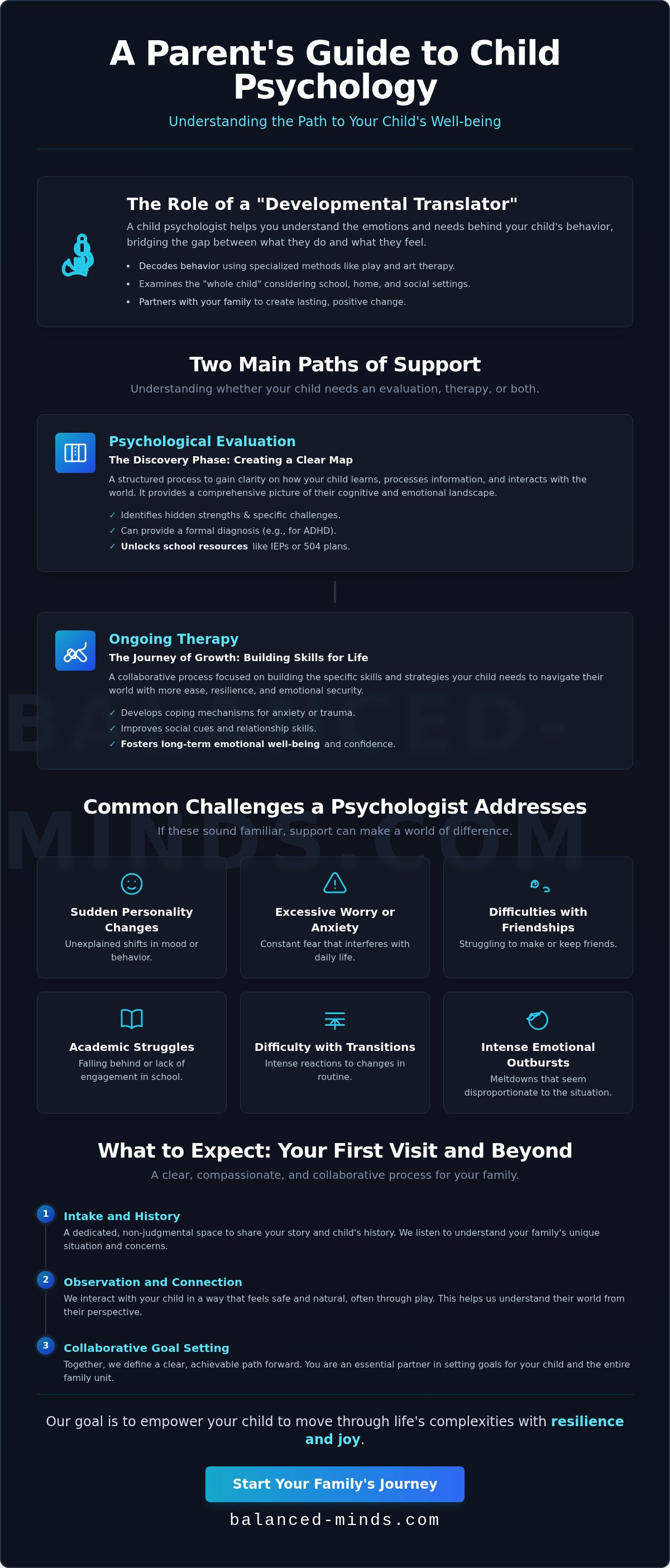
Many parents arrive at our doors feeling a mix of exhaustion and hope. You might be wondering, what does a child psychologist do that is different from a standard counselor? Child psychology is a specialized branch of mental health that focuses deeply on developmental milestones. It isn't just about managing behavior; it's about understanding the unique ways a child’s mind grows from infancy through adolescence. We often describe our role as a "developmental translator." Children frequently lack the vocabulary to explain their internal world, so they use behavior to communicate. We help you decode those actions, bridging the gap between what your child is doing and what they are actually feeling.
It's a common misconception that children are simply "mini-adults" who can sit on a couch and talk through their problems for an hour. In reality, child psychotherapy utilizes evidence-based practices specifically tailored for young, developing brains. This might involve play, art, or structured activities that allow a child to express themselves in their natural language. These methods aren't just "games." They are carefully designed tools that help children process trauma, manage anxiety, and learn social cues in a way that feels safe and accessible.
The Science of Pediatric Neuropsychology
The way a child behaves is inextricably linked to how their brain is wired and maturing. When we explore what does a child psychologist do, we must look at the science of pediatric neuropsychology. This field examines how brain development impacts emotional regulation and social interaction. Instead, we look at the "whole child." This means considering how they function at school, their comfort level at home, and their confidence in social circles. By understanding the biological "why" behind a struggle, we can create more effective, compassionate interventions that respect your child's unique pace of growth.
A Partner for the Entire Family
We don't believe in treating a child in isolation. A child’s environment is their primary source of safety and growth, which makes you our most important partner. Our work is a collaborative journey where we set goals for the entire family unit. You won't find judgment here. We aren't here to critique your parenting or point out flaws. Instead, we aim to empower you with new strategies and insights. This partnership ensures that the progress made in our sessions continues to flourish in the quiet moments at home. Our goal is to help you feel more connected to your child while giving them the tools they need to thrive.
Evaluation vs. Therapy: The Two Main Paths of Support
When you first seek support for your child, you may find yourself at a crossroads between two distinct but complementary paths. Understanding what does a child psychologist do often starts with clarifying whether your family needs an evaluation, therapy, or perhaps a combination of both. Think of an evaluation as a discovery phase; it provides a comprehensive map of your child's cognitive and emotional landscape, identifying strengths that might be hidden beneath the surface of daily challenges. Therapy, on the other hand, is the journey of growth. It focuses on building the specific skills your child needs to navigate their world with more ease and resilience.
Every journey we take together begins with a thoughtful intake process. This is a dedicated time for us to listen to your story and your child's history, creating a safe foundation for whatever path follows. For many families in our community, a formal diagnosis is a powerful tool. Within the Florida school system, a clear evaluation can unlock specific resources, such as Individualized Education Programs (IEPs) or 504 plans. These accommodations ensure your child receives the classroom support they deserve to reach their full potential. While some children may only need a one-time assessment to guide their academic path, others find that ongoing therapeutic support is the best way to foster long-term emotional security.
Comprehensive Psychological Testing
Testing is a structured way to gain clarity on how your child learns and processes information. We offer specialized adhd testing for kids in tampa bay to help families understand focus and impulsivity through a compassionate lens. Additionally, gifted testing in Pinellas County can be essential for children who require a more advanced academic pace. Learning disability assessments go beyond simple grades; they look at the "how" of learning, identifying specific areas where a child’s brain might need different types of instruction to thrive. If you are unsure which path is right for your family, our comprehensive psychological evaluations can provide the clarity you've been seeking.
Evidence-Based Therapeutic Interventions
Therapy is a collaborative space where children learn to translate their big feelings into manageable actions. We utilize evidence-based approaches like Cognitive Behavioral Therapy (CBT), which we adapt to be developmentally appropriate for younger minds. For our littlest clients, play therapy serves as a vital bridge, allowing them to express complex emotions through their most natural form of communication. Professional organizations often highlight how psychologists can help children manage anxiety, mood disorders, and the lasting effects of trauma. By providing a non-judgmental environment, we help your child feel seen and understood as they work toward healing and personal growth.
Common Challenges a Child Psychologist Addresses
When your child’s behavior shifts, it often feels like you're trying to solve a puzzle with missing pieces. You might notice sudden changes in personality, such as a normally gentle child becoming defiant or aggressive. Perhaps you've seen them struggle with social hurdles, like withdrawing from friends or facing the pain of bullying. Understanding what does a child psychologist do involves looking at these specific hurdles that often lead families to our care. We focus on identifying the roots of these behaviors so we can provide a path toward healing and connection.
Academic concerns are another frequent starting point for our work together. Often, what looks like "laziness" or a lack of motivation is actually a gap in executive functioning or undiagnosed ADHD. When a child experiences school refusal or persistent academic stress, it's rarely about a lack of ability. It's usually about a lack of tools. By addressing these challenges early, we help children regain their confidence and prevent the cycle of frustration that can strain the family bond. What does a child psychologist do in these moments? We act as a steady guide, helping your child navigate the complexities of their world with new skills and a sense of mastery.
We frequently help families navigate a wide range of concerns, including:
Emotional struggles such as excessive worry, persistent sadness, or intense difficulty with daily transitions.
Behavioral patterns like frequent meltdowns, defiance, or sudden aggression that feels out of character.
Social withdrawal or difficulty interpreting social cues and making lasting friendships.
Academic gaps that manifest as chronic disorganization, procrastination, or an inability to follow multi-step directions.
Navigating ADHD and Executive Functioning
Many children who struggle to stay organized or find it impossible to sit still are dealing with brain-based differences in focus and regulation. As of 2022, 11.4% of U.S. children have been diagnosed with ADHD, and many more struggle with executive functioning gaps. We use ADHD coaching as a practical, skill-building tool to help children manage their time and tasks. These strategies do more than just improve grades; they significantly reduce daily friction at home, allowing you to focus on being a parent rather than a taskmaster.
Managing Anxiety and Big Feelings
Anxiety in children doesn't always look like worry. It often presents as perfectionism, avoidance, or even physical symptoms like frequent stomach aches. Statistics from 2022-2023 show that approximately 11% of children aged 3-17 were diagnosed with an anxiety disorder. We provide a specialized toolkit for emotional regulation, teaching children how to name and manage their big feelings before they become overwhelming. Early intervention is a powerful act of care that helps prevent these emotional struggles from developing into long-term mood challenges.
What to Expect: Your Child’s First Visit and Beyond
Entering a therapy office for the first time can feel like a significant step for both you and your child. We want this experience to feel like a gentle sigh of relief rather than another source of stress. When parents ask, what does a child psychologist do during that initial encounter, the answer is centered on building a foundation of safety and trust. Our process begins with a dedicated intake session. This is a quiet, supportive time for you to share your child’s history and your current concerns without them in the room. It allows us to speak openly and ensures your child doesn't feel like they are being discussed as a "problem" to be solved.
Once we meet your child, we move into the observation phase. This isn't a stiff or clinical interview. We use play, art, and conversation to assess their natural state in a way that feels like a shared adventure. By watching how they interact with toys or express themselves through drawing, we gain insights into their emotional world that words alone might miss. We also maintain a consistent feedback loop with you. Regular parent check-ins are vital because they allow us to discuss progress and brainstorm practical home strategies together. We view therapy as a season of growth, not a lifetime commitment. Our goal is always "graduation," where your child has the tools they need to flourish independently.
Explaining Therapy to Your Child
It's natural for children to feel a bit nervous about meeting someone new. You can help ease this by using simple, comforting language. Try saying, "We’re going to see a feelings teacher," or "We’re meeting a person who helps kids with big worries." Emphasize that our office is a safe, fun space filled with games and art supplies. Most importantly, assure them they aren't in trouble. In this room, there are no wrong answers; there are only opportunities to be heard and understood. This helps them view the psychologist as a mentor and an ally.
The Practical Logistics
We typically see children for a clinical hour, which is usually 45 to 50 minutes, once a week. For families in the greater Tampa Bay area, we also offer telehealth options to make support more accessible amidst busy school and work schedules. Privacy is a cornerstone of our work. While we keep you closely involved in the process, we also respect your child’s need for a confidential space to build therapeutic trust. If you're ready to start this journey and want to learn more about our individual therapy for children, we invite you to reach out and begin the conversation.
Finding the Right Support in St. Petersburg and Tampa
Choosing the right professional for your family is a deeply personal decision that requires a balance of clinical excellence and emotional resonance. When you're researching what does a child psychologist do, it’s vital to look for a provider who specializes specifically in the pediatric age group. Children's brains are in a state of constant, rapid evolution. This requires a unique set of skills and a deep understanding of developmental stages that general counselors might not possess. We believe in a multi-disciplinary approach that weaves together comprehensive evaluations, targeted coaching, and compassionate therapy. This holistic model ensures that we aren't just treating a isolated symptom, but rather supporting the whole person. At Balanced Minds Psychology & Wellness, we integrate rigorous clinical science with a heart-centered delivery, creating a space where your child feels safe to explore their potential.
Trusting your intuition is a key part of this process. You know your child better than anyone else, and finding a "fit" that feels safe and supportive is essential for therapeutic success. We encourage parents to look for a partnership where they feel heard and respected. What does a child psychologist do to foster this? We prioritize transparency and collaboration, ensuring that you're never left in the dark about your child's progress. By combining our clinical expertise with your intimate knowledge of your child, we create a powerful team dedicated to your family’s growth and wellbeing.
Why a Local Florida Perspective Matters
Pinellas and Hillsborough County schools have their own unique requirements for academic accommodations and gifted placements. A local psychologist understands these nuances, along with the specific testing culture and social dynamics that Florida students face daily. We maintain a close network of local pediatricians and specialists, ensuring that your child’s care is integrated and seamless. This local expertise allows us to act as effective advocates for your child within their specific school environment. We help them receive the exact support they need to succeed while navigating the complexities of our local education systems.
Taking the Next Step for Your Family
Taking this step is a sign of profound strength and proactive parenting. It shows that you're committed to your child’s long-term wellbeing and are willing to provide them with every tool possible to thrive. If you're wondering what does a child psychologist do to help families start this process, it begins with a simple, low-pressure consultation. We invite you to reach out and share your story with us. Every child possesses an incredible capacity for growth and resilience. We are here to walk beside you as your child discovers their own strength, helping your family move toward a future filled with clarity, connection, and hope.
Empowering Your Child's Path to Wellbeing
At Balanced Minds Psychology & Wellness, we have been serving the St. Petersburg and Tampa communities since 2021. We invite you to schedule a compassionate consultation for your child today and take the first step toward lasting growth. Your child isn't broken; they are simply growing, and we're honored to walk beside you on this restorative journey toward healing and confidence.
Frequently Asked Questions
Can a child psychologist prescribe medication for my child?
No, child psychologists do not prescribe medication. We are doctoral-level experts who focus on emotional and behavioral development through therapy and evaluations. If you find yourself asking what does a child psychologist do when medication is needed, the answer is that we collaborate closely with your child's pediatrician or a psychiatrist.
How is a child psychologist different from a school counselor?
School counselors primarily focus on academic success and provide short-term support for school-related issues. In contrast, when considering what does a child psychologist do, we provide deep clinical care for a wide range of emotional and developmental challenges. Our work often extends beyond the classroom to address the root causes of behavior through specialized testing and long-term therapeutic interventions tailored to your child's unique needs.
What is the "right" age to start seeing a child psychologist?
There is no single "right" age to begin seeking support. We work with children as young as toddlerhood to address developmental delays or early behavioral concerns. If you notice your child struggling with transitions, intense emotions, or social hurdles, it's never too early to reach out. Early intervention is a powerful way to foster resilience and provide your child with tools they can use for a lifetime of growth.
Will my child have to do "homework" between therapy sessions?
We sometimes suggest small, manageable "practice" activities rather than traditional academic homework. These might include practicing a new breathing technique or using a specific communication tool during a difficult moment at home. These gentle exercises help bridge the gap between our sessions and daily life. They are designed to empower your child and your family, making the skills we learn together feel natural and sustainable.
How long does a typical psychological evaluation take?
A comprehensive evaluation usually takes several hours, often spread across one or two dedicated sessions. This time allows us to conduct thorough testing, observe your child’s natural interactions, and gather a detailed history from you. While it requires a time commitment, this depth is necessary to provide the clear roadmap your child needs. We ensure the environment remains comfortable and supportive throughout the entire process.
What if my child refuses to talk during the session?
It is completely normal for a child to feel hesitant or quiet during their first few visits. We are trained to meet children where they are, often using play, art, or quiet observation to build a sense of safety. Silence is a form of communication that we respect and understand. We never force a child to speak; instead, we focus on creating a non-judgmental space where they feel safe enough to open up at their own pace.
Can a child psychologist help with 504 plans or IEPs in Florida schools?
Yes, we play a vital role in helping families navigate the requirements for 504 plans and Individualized Education Programs (IEPs). Our evaluations provide the necessary diagnostic evidence that Florida schools require to implement these accommodations. We can also provide specific recommendations for teachers to help your child succeed in the classroom. This ensures that your child’s academic environment is as supportive and inclusive as possible.
Is family therapy required if my child is the one struggling?
While individual therapy focuses on your child’s personal growth, we often find that family therapy or parent check-ins are incredibly beneficial. A child’s progress is deeply connected to their home environment, so providing you with strategies to support them is a key part of our mission. We view this as a partnership where we all work together to create a restorative and nurturing atmosphere for your child to thrive.


