

Virtual Therapy for Kids in Florida: A Parent's Guide
Updated: 3 days ago
What if the most effective way to help your child find emotional balance wasn't found at the end of a long commute through Florida traffic, but right in the comfort of your own living room? For many parents, the search for virtual therapy for children florida begins with a mix of hope and hesitation. You might worry that a screen creates a barrier to connection, or perhaps you're simply exhausted by the waitlists of local clinics that don't quite seem to "get" your child's unique needs.
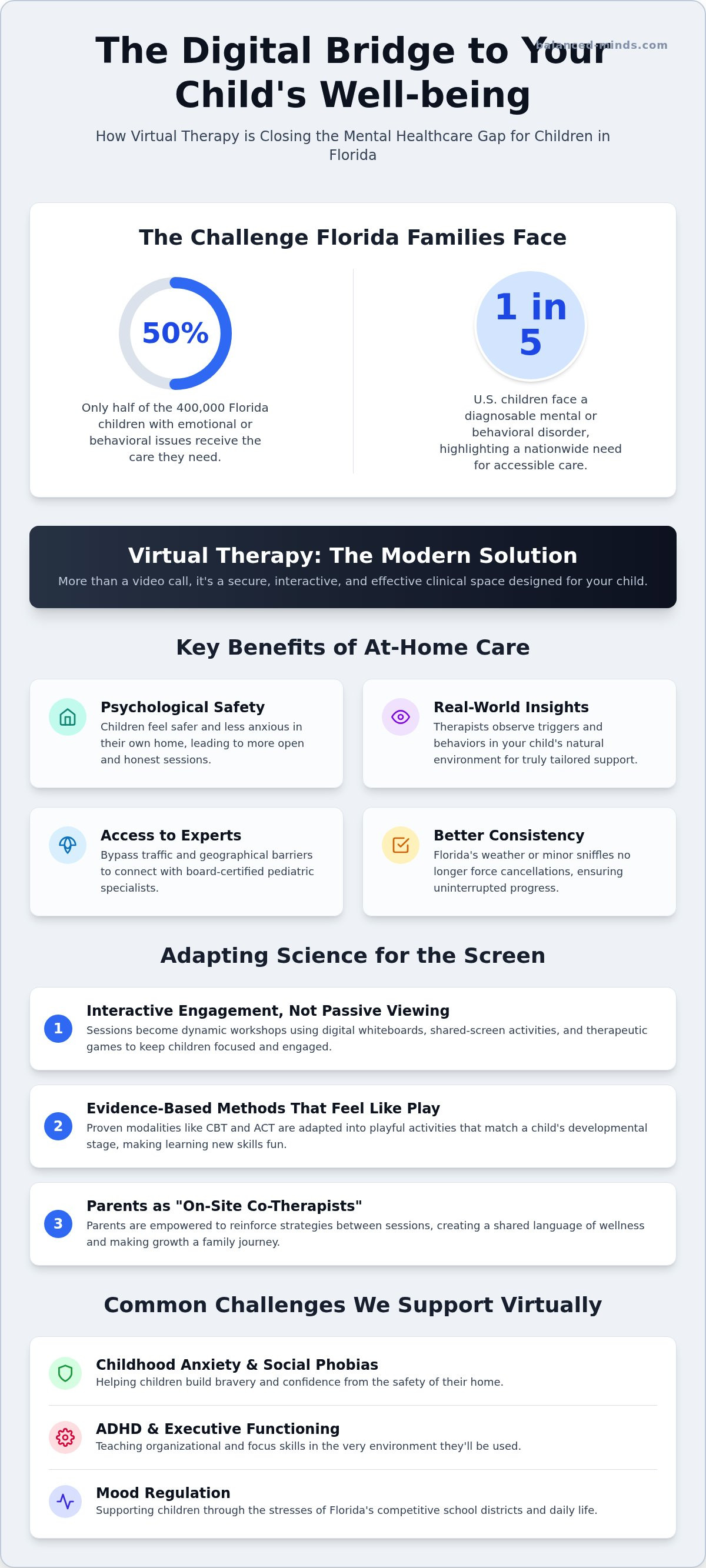
We understand that you want more than just a convenient appointment; you want a clinical expert who truly sees your child's potential. It's a heavy burden to carry when you know your child is struggling, especially since only about half of Florida's 400,000 children with emotional or behavioral issues currently access the care they need. This guide will show you how virtual therapy provides high-quality, evidence-based mental health support that fits into your modern lifestyle. We will explore how to find a licensed expert who understands your child and how this digital bridge can lead to better emotional regulation and a more peaceful home life.
Table of Contents
What is Virtual Therapy for Kids in Florida?
Pediatric teletherapy is much more than a simple video call. It is a secure, HIPAA-compliant space designed specifically for the curious and developing mind. If you are exploring what is online counseling and how it applies to your family, it's helpful to see it as a digital bridge between clinical expertise and your child's daily reality. By 2026, technology has matured significantly; we now use immersive, interactive platforms that allow for real-time engagement rather than just passive listening. This evolution ensures that virtual therapy for children florida remains as effective as traditional in-office visits while meeting the unique needs of families across the Sunshine State.
Many parents in our community find themselves caught in the "Tampa Bay commute," where a thirty-minute drive can easily double during peak hours. This logistical stress often prevents children from receiving the specialized care they deserve. By choosing a virtual format, you can bypass the traffic and access board-certified experts who might live several zip codes away. Clinical research consistently supports this shift. The therapeutic bond is just as strong through a screen when managed by skilled practitioners who understand pediatric development. With 1 in 5 children in the U.S. facing a diagnosable mental or behavioral disorder, and only about half of Florida's 400,000 children with these needs actually receiving care, this accessible format is a vital resource for our families.
The Benefits Beyond Convenience
The home environment offers a sense of psychological safety that a clinic simply cannot replicate. We find that many children experience "white coat" anxiety when entering a medical building, which can lead to guarded behavior. At home, they are surrounded by their own toys and comforts. This allows our therapists to observe natural triggers and behaviors in real-time, providing a window into their world that helps us tailor our support more effectively. Consistency also improves because Florida's unpredictable weather or a mild case of the sniffles no longer forces a cancellation.
Conditions We Support Virtually
Our team utilizes this digital space to address a wide range of developmental and emotional needs. We provide evidence-based support for several common challenges:
Childhood anxiety and social phobias: Helping kids build bravery in the place they feel safest.
ADHD and executive functioning challenges: Teaching organizational skills in the very environment where they'll be used.
Mood regulation: Supporting children through the stresses of Florida's competitive school districts.
By bringing therapy into the home, we help children generalize the skills they learn more quickly. They don't just practice being calm in a therapist's office; they practice being calm in their own room, where it matters most.
How Virtual Child Therapy Works: Adapting Science for the Screen
Many parents initially worry that a video call might feel distant or static. In reality, virtual therapy for children florida is a highly active and immersive experience. We don't expect a child to sit still and talk for fifty minutes. Instead, we transform the digital session into a dynamic workshop where clinical science meets creative engagement. By using digital whiteboards, shared screen activities, and interactive games, we keep children focused while teaching them essential emotional tools. This approach allows us to apply evidence-based modalities like Cognitive Behavioral Therapy (CBT) and Acceptance and Commitment Therapy (ACT) in ways that feel like play rather than work.
Our methodology is deeply rooted in pediatric neuropsychology. We understand that a child's brain processes information differently than an adult's, so we adapt our clinical goals to match their developmental stage. For our younger clients, we often invite parents to act as "on-site co-therapists." This partnership ensures that the strategies we practice during the session are reinforced in the moments they're needed most. It creates a shared language of wellness within your home, making the path to growth feel like a collective family journey rather than an isolated task for your child.
Can You Do Play Therapy Online?
Play is the natural language of childhood, and it translates beautifully to a virtual format. We often use a child's own toys to facilitate expression, which helps them feel more in control of their environment. By building a simple "Virtual Therapy Kit" with items like play-dough, bubbles, or crayons, you can help us create a consistent therapeutic space. Our experts also use digital play techniques, such as virtual sand-trays or collaborative drawing apps, to mimic the interactive environment of a traditional playroom. These tools help children process complex emotions without the pressure of direct eye contact, which can often be intimidating.
Specialized ADHD Coaching via Telehealth
One of the most significant advantages of virtual care is the ability to provide real-time support in a child's actual study environment. Our specialized ADHD coaching helps students manage the digital and physical distractions that often hinder their academic progress. We conduct executive function drills that teach organization and time management directly on the devices they use for school. This practical support is most effective when linked to ADHD testing for kids in Tampa Bay, as it allows us to tailor our coaching to your child's specific cognitive profile. If you're ready to see how these specialized strategies can support your child's focus, we invite you to learn more about our coaching services today.
Is My Child a Good Fit for Online Counseling?
We often hear from parents who worry their child might be too young or perhaps too active for a computer-based session. It's a natural concern, but the "right fit" for virtual therapy for children florida isn't about a child's ability to sit perfectly still. Instead, we look for a child's willingness to engage with a supportive adult, even if that engagement looks a little different than it would in a traditional classroom. While basic digital literacy is helpful, our team is highly skilled at guiding children through the technical side of the session so they can focus on the emotional work at hand.
One of the most common misconceptions we encounter is that a child must remain stationary for the therapy to be effective. We embrace what we call the "Wiggle Factor." Our pediatric experts don't view movement as a distraction; we see it as a window into your child's natural state. If your child needs to pace, jump, or use a fidget toy while we work together, that's perfectly acceptable. We adapt our clinical rhythm to match their energy levels, ensuring the session feels restorative rather than restrictive. For elementary students, this often means short bursts of activity, while teens typically benefit from a more private, conversational space where they can feel a sense of digital autonomy.
There are times when in-person care might be a more appropriate starting point. If a child is experiencing an acute crisis or has severe developmental challenges that make digital interaction overwhelming, we prioritize establishing safety in a physical setting first. We believe in being honest about these boundaries to ensure your child receives the most effective level of care from the very first day.
Addressing Common Parental Concerns
Privacy is often at the top of a parent's mind. We partner with you to ensure your child feels safe to speak freely, which might mean using headphones or choosing a specific room in the house. We also work hard to combat screen fatigue by keeping sessions dynamic. We don't just stare at a camera; we move, we draw, and we use interactive tools to keep the brain engaged. This helps us build a strong "therapeutic alliance," which is the clinical term for the trust and rapport that forms the foundation of all successful growth, even across a digital connection.
The Hybrid Model: The Best of Both Worlds
Many of our families find that a hybrid approach offers the perfect balance of security and flexibility. You might choose to begin your journey in-person to establish a deep connection and then transition to virtual sessions as your schedule demands. Having access to a local child psychologist in St. Petersburg, FL provides an extra layer of comfort. It means your therapist isn't just a face on a screen; they are a real person in your community who understands the specific stresses of Florida's school districts and local life. This flexibility allows us to support your family through the ebb and flow of a busy modern lifestyle without sacrificing the quality of care.
Setting Up Your Florida Home for Virtual Therapy Success
Preparing your home for virtual therapy for children florida doesn't require a dedicated home office or a professional studio. It simply requires a predictable, quiet corner where your child feels safe to share their thoughts. Consistency is more important than aesthetics; using the same chair or the same nook each week helps your child's brain recognize that it's time for restorative work. This predictability lowers their defenses and allows the therapeutic process to begin more quickly.
Before your first session, we recommend a quick tech check to ensure a smooth experience. While Florida's internet speeds are generally reliable, we suggest using a device with a larger screen, such as a tablet or laptop, rather than a phone. A larger display makes it easier for your child to interact with our digital whiteboards and shared activities. We also suggest creating a "Therapy Zone" using simple tools like noise-canceling headphones to ensure privacy in a busy household. A simple "Do Not Disturb" sign on the door can be a powerful boundary that helps siblings understand this is a private time.
The transition from a busy school day or play mode to a therapy session is a crucial window. A five-minute pre-session ritual helps your child shift out of "performance mode" and into "growth mode." This might be as simple as having a glass of water, doing a few deep breaths together, or clearing away toys from their immediate view. These small steps signal to their nervous system that they are entering a safe, focused space.
The Parent’s Role During the Session
We view parents as our most valuable partners in this journey. For our youngest clients, your presence provides a layer of emotional security, and we might ask you to help facilitate a game or activity. As children grow into adolescence, giving them physical space often fosters the autonomy they need to speak freely. If a technical glitch occurs, we encourage you to handle it calmly; showing your child that a minor disruption isn't a catastrophe helps maintain the therapeutic "vibe" and models resilience.
Tech and Safety Protocols
Your family's privacy is our priority, which is why we use secure, HIPAA-compliant platforms rather than standard apps like FaceTime. Because we are a Florida-based practice, we also maintain strict safety protocols. This includes knowing your exact physical location during every call, which is a vital requirement for ensuring we can provide immediate support if an emergency arises. A stable connection is essential for uninterrupted emotional work, so we recommend being close to your router. If you're ready to create a supportive space for your child's wellbeing, you can schedule an initial intake with our team to begin this collaborative process.
Choosing Balanced Minds for Your Child’s Virtual Journey
When you choose a partner for your child's mental health, you deserve more than a generic digital interface or a revolving door of providers. We believe that virtual therapy for children florida should be grounded in the same rigorous scientific standards as our in-person care. By integrating neuropsychological insights into every session, we ensure that our strategies are tailored to the specific way your child's brain learns, grows, and processes emotions.
We are deeply rooted in the Tampa Bay community, which means we aren't just a platform; we are your neighbors. Even when we meet through a screen, we understand the local context of your child's life, from the pressures of Florida's academic standards to the unique rhythms of life in St. Petersburg and Tampa. This local connection allows us to provide a seamless continuum of care, easily linking our virtual sessions to specialized services like psychological testing in St. Pete when a deeper diagnostic understanding is needed. Our goal is to create a clinical home where your child feels seen, understood, and supported at every stage of their development.
A Partnership in Parenting
We recognize that a child's progress is most sustainable when the entire family system feels empowered. We don't just treat the child in isolation; we actively support the parenting journey in Florida by providing you with the tools and insights needed to navigate daily challenges. This holistic approach often involves collaborating with local schools in Pinellas and Hillsborough counties to ensure that the skills your child learns in therapy are reinforced in the classroom. Through regular parent check-ins, we work together to track progress, celebrate victories, and adjust our strategies as your child evolves, ensuring that our partnership remains restorative and effective.
Your Next Steps Toward Healing
Beginning a new therapeutic journey can feel overwhelming, so we have designed our intake process to be as nurturing and straightforward as possible. You can schedule your initial consultation through our secure, HIPAA-compliant portal at a time that fits your family's schedule. In our first session, we focus on building a sense of comfort and safety for your child while collaborating with you to set clear, attainable goals for growth. We invite you to contact our St. Petersburg office today to begin your child's virtual therapy journey and discover how a steady, expert presence can help your family find its way back to balance.
Empowering Your Child’s Growth from Home
We've explored how a digital bridge can connect your family to world-class pediatric neuropsychology without the stress of a Tampa Bay commute. By transforming your home into a restorative space for virtual therapy for children florida, you provide your child with the tools to manage ADHD, anxiety, and mood challenges in their most natural environment.
Whether you need specialized ADHD coaching or evidence-based support for social phobias, we are here to walk this path with you. You don't have to navigate these complexities alone; a steady, guiding presence is just a click away. We invite you to Schedule a Consultation for Virtual Child Therapy today to begin your family's journey toward emotional balance. Every child possesses the capacity for growth, and we look forward to helping yours flourish.
Frequently Asked Questions
Is virtual therapy as effective as in-person therapy for children?
Clinical research indicates that virtual sessions are just as effective as in-person visits for most childhood mental health conditions. For many families, virtual therapy for children florida actually improves outcomes because it reduces the stress of commuting and allows children to practice new skills in their own living rooms.
What age is appropriate for a child to start virtual therapy?
We provide support for children starting at the elementary school level through young adulthood. While older teens often thrive with the independence of a private digital space, younger children typically benefit from a more interactive approach with a parent present. We assess each child's developmental readiness during our intake process to ensure the format feels restorative and engaging rather than overwhelming for their current age and attention span.
Do you accept insurance for virtual therapy sessions in Florida?
Most major commercial insurance plans in Florida are generally required to cover telehealth services at the same rate as in-person visits. Florida Medicaid also covers behavioral health via teletherapy. Since coverage varies by specific policy, we recommend contacting your provider to verify your benefits. Our practice generates revenue through hourly therapeutic rates, and we can provide documentation to help you navigate your out-of-network claims or reimbursement processes.
What if my child refuses to talk or look at the camera during the session?
It is completely normal for a child to feel hesitant or avoid the camera during their first few sessions. Our pediatric experts are trained to handle the "wiggle factor" and don't require constant eye contact to build a meaningful connection. We use interactive digital whiteboards and shared games to lower their defenses. Often, a child who starts by hiding behind a chair ends the session actively participating in virtual therapy for children florida.
How long are the virtual therapy sessions for kids and teens?
Most virtual therapy sessions follow a standard clinical hour, typically lasting between forty-five and fifty minutes. This timeframe allows enough space for a meaningful check-in, the application of evidence-based strategies, and a gentle wrap-up. We vary the rhythm of the session to match your child's developmental needs, ensuring that younger children stay engaged through movement-based activities while teens have ample time for deeper, contemplative conversation about their weekly challenges.
Can I do a mix of in-person and virtual therapy at Balanced Minds?
Yes, we offer a hybrid model that combines the security of our local St. Petersburg office with the convenience of virtual care. Many families choose to establish a connection with our team in-person before transitioning to a virtual format that fits their modern lifestyle. This flexibility allows you to switch between formats based on your weekly needs, such as school schedules or Florida's unpredictable weather, without interrupting your child's progress.
What equipment do I need for my child's teletherapy appointment?
You only need a few simple tools to ensure a successful teletherapy appointment. A reliable internet connection and a device with a larger screen, like a laptop or tablet, provide the best experience for interactive activities. We also recommend using headphones to enhance privacy and a quiet, consistent space where your child feels safe to speak. A simple "do not disturb" sign on the door can help other family members respect this private time.
Is your virtual therapy platform secure and private?
Our practice utilizes a secure, HIPAA-compliant telehealth platform specifically designed for clinical use. Unlike standard video apps, our portal uses advanced encryption to ensure that every conversation remains private and protected. We are committed to creating a linguistic and digital environment that feels restorative and safe. This professional integrity allows your child to explore their emotions freely, knowing that their therapeutic journey is held within a confidential and secure space.


