

Therapy for Young Adults in St. Petersburg: Navigating the Threshold of Adulthood
Updated: 3 days ago
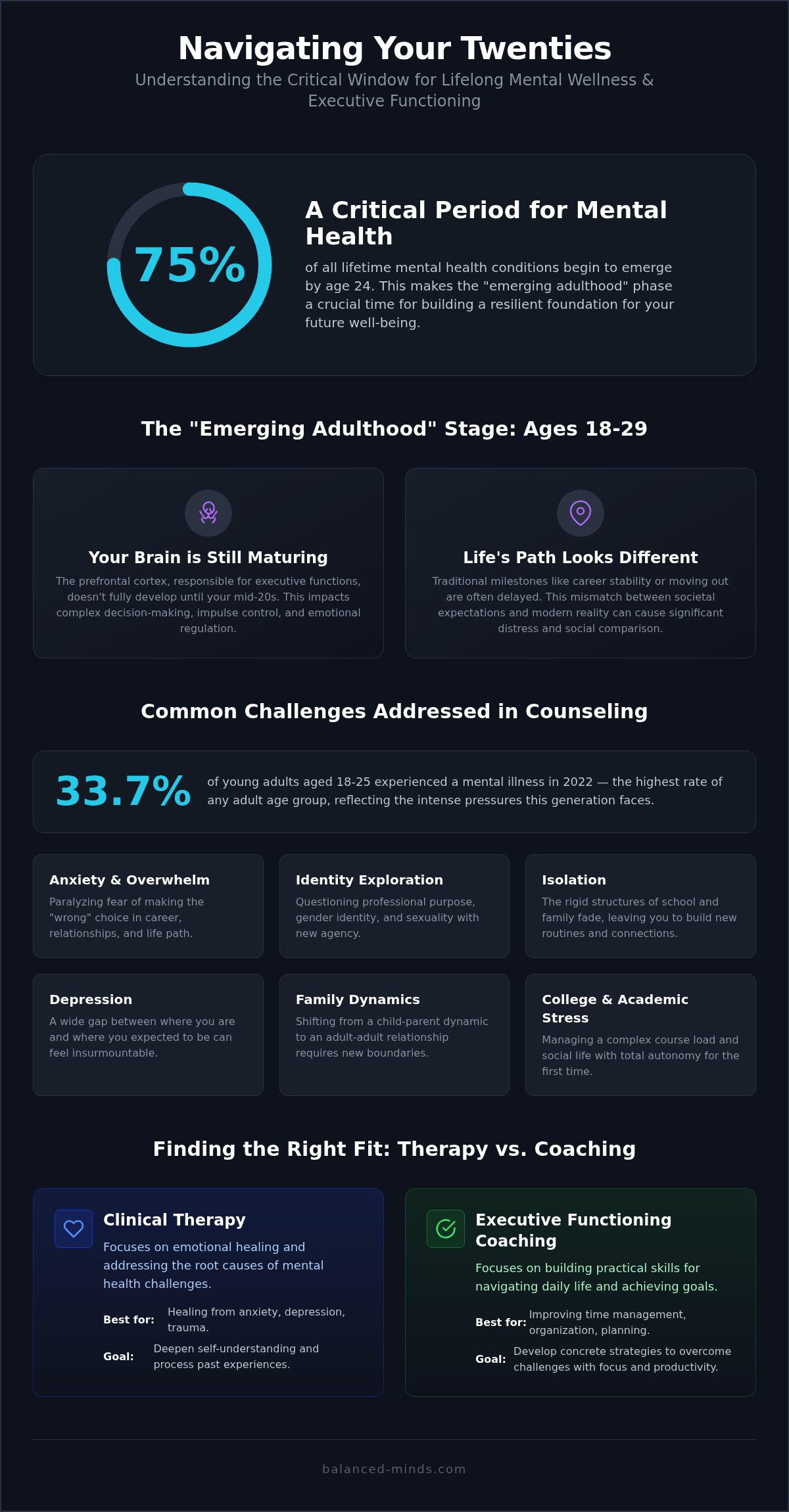
Did you know that 75% of all lifetime mental health conditions emerge by the age of 24? This statistic reveals that the transition into your twenties is much more than a simple rite of passage; it's a critical window for your lifelong emotional and neurological health. If you feel like you're falling behind while your peers seem to move forward with ease, you aren't alone in that heavy sense of being "stuck."
We understand how paralyzing it can be to face major career and relationship choices, especially when anxiety or executive functioning challenges make every step feel like a mountain. Specialized therapy for young adults in St. Petersburg provides a supportive partnership where we can demystify these struggles together. You'll learn how to manage social pressures, sharpen your decision-making skills, and build a resilient foundation for your mental wellness. It's about more than just getting through the week; it's about creating a life that feels authentic and manageable.
This guide explores how the right therapeutic tools and executive functioning coaching can help you reclaim your sense of identity and move toward a future defined by clarity and purpose.
Table of Contents
What is Therapy for Young Adults? Supporting the "Emerging Adulthood" Stage
The transition from adolescence to full independence isn't a single event; it's a profound, decade-long journey. For those between 18 and 29, therapy for young adults St. Petersburg provides a specialized space that honors this unique threshold. We recognize that this phase, often called the Emerging Adulthood Stage, requires a different approach than traditional counseling. Many young people find that pediatric therapy feels too restrictive, as if they're still being treated like a child. Conversely, general adult therapy can feel too distant, assuming a level of life stability that hasn't arrived yet. Our partnership focuses on the specific needs of your current reality: fostering identity formation, building relational independence, and establishing true autonomy.
The Neurobiology of the Young Adult Brain
It's a common misconception that the brain finishes developing at 18. In reality, the prefrontal cortex continues to mature well into your mid-20s. This is the part of the brain responsible for "executive functions" like complex decision-making, impulse control, and organizing long-term goals. Because this area is still under construction, emotional regulation can feel like a moving target. You might feel capable one day and completely overwhelmed the next. We use this scientific understanding to ground our practice, ensuring that therapy for young adults St. Petersburg supports this final stage of brain maturation with both patience and clinical precision.
Why Adulthood Today Looks Different in St. Petersburg
The path to stability looks different for young professionals in the Tampa Bay area than it did for previous generations. Local economic shifts and a competitive job market mean that traditional milestones, like moving out or settling into a career, are often delayed. Living at home longer or changing career paths several times before age 25 is now a common experience. However, these shifts can still cause significant internal distress and social comparison. We view the act of seeking support not as a sign of failure, but as an act of proactive maturity. It's a way to build a sturdy internal foundation while the external world remains in flux. By focusing on your unique values rather than societal timelines, we help you define what success looks like on your own terms.
Common Challenges Addressed in Young Adult Counseling
The shift into your twenties often feels like being handed a map with half the labels missing. While it's an era of immense possibility, it's also the peak time for mental health struggles to surface. Research from 2022 indicates that approximately 33.7% of young adults aged 18 to 25 experienced a mental illness, the highest rate of any adult age group. We see these numbers not as a sign of weakness, but as a reflection of the intense pressure this generation carries. When you seek therapy for young adults st petersburg, we begin by validating the very real challenges you face every day.
Anxiety often takes center stage during major transitions like college graduation or entering the professional workforce. It isn't just about common stress. It's often a paralyzing fear of making a wrong choice that might impact the rest of your life. This is frequently accompanied by a sense of isolation as the rigid structures of school or family life fade away; leaving you to build your own routine from scratch. Depression can settle in when the gap between where you are and where you expected to be feels too wide to bridge.
Identity exploration also becomes a central theme during these years. You might be questioning your professional purpose or exploring your gender identity and sexuality with a new sense of agency. Simultaneously, you're likely redefining your relationship with your parents. Shifting from a child-parent dynamic to an adult-to-adult relationship requires healthy boundaries and a clear sense of self. We walk alongside you as you untangle these complex family dynamics and claim your own voice.
Managing College Stress and Academic Pressure
For students at institutions like USF St. Pete, Eckerd College, or St. Petersburg College, the academic environment presents a unique set of hurdles. High school often provides a safety net of teacher oversight and parental reminders. Suddenly, you're expected to manage a complex course load and a social life with total autonomy. If you find that the transition from the late-teen years is proving particularly difficult, you might benefit from our specialized support for younger students through a teenage therapist near me. We help you bridge that gap by building the executive functioning skills needed to thrive in a self-directed environment.
Relationship Dynamics and Social Anxiety
Building a community in a post-graduate environment can feel daunting. The effortless social circles of a college campus are replaced by the complexities of the professional world and digital dating. Social anxiety can make these new interactions feel like high-stakes performances. We work with you to develop social confidence that feels authentic in both digital and in-person spaces. Learning to set boundaries in romantic and platonic relationships is a vital part of this process. It's about ensuring your needs are met while maintaining meaningful connections. If you're feeling overwhelmed by these shifts, our individual therapy for young adults offers a safe space to process these changes and find your footing.
Finding the Right Fit: Clinical Therapy vs. ADHD Coaching
When you begin your search for therapy for young adults st petersburg, you'll likely encounter two distinct but complementary paths: clinical therapy and executive functioning coaching. Understanding the difference is vital for your progress. Clinical therapy is rooted in emotional healing, addressing the underlying trauma, mood regulation, and psychological barriers that may be holding you back. It's a space where we explore the "why" behind your behavioral patterns, helping you understand how past experiences shape your current reactions.
Executive functioning coaching, on the other hand, shifts the focus toward the "how" of daily life. It's a practical, skill-based partnership designed to help you manage time, organize tasks, and maintain routines that support your goals. While therapy heals the heart and mind, coaching builds the infrastructure for your success. We often find that these services work most effectively in tandem. A holistic approach allows you to process emotional distress in therapy while simultaneously building life skills through coaching.
To determine the most effective path forward, we often recommend a comprehensive psychological evaluation as a foundational first step. This scientific assessment provides a clear roadmap, ensuring that the support you receive is precisely tailored to your unique cognitive and emotional profile. This ensures your investment in therapy for young adults st petersburg is targeted and effective from the very first session.
When to Choose Individual Therapy
If you find that your primary obstacles are persistent feelings of sadness, paralyzing anxiety, or unresolved memories, individual therapy is likely the right starting point. We utilize evidence-based modalities like Cognitive Behavioral Therapy (CBT) and Dialectical Behavior Therapy (DBT) to help you navigate these complex internal landscapes. These sessions provide a safe sanctuary to deconstruct the "why" of your emotional responses, allowing you to move forward with greater self-compassion and clarity.
The Power of Executive Functioning Coaching
For many young adults, especially those managing ADHD, the lack of school-based structure can lead to a sense of chaos. Coaching provides a necessary "scaffold," offering practical tools to execute tasks, manage finances, and maintain consistent routines. This isn't about just trying harder; it's about learning how your specific brain works. To ensure your coaching is as effective as possible, we suggest finding a psychologist for ADHD diagnosis first. This diagnostic clarity ensures that your coaching strategies are grounded in your actual neurobiological needs, making the path to autonomy much smoother.
How to Choose a Young Adult Therapist in St. Pete
Finding the right person to walk alongside you during these formative years is a significant decision. You aren't just looking for a set of credentials; you're looking for a partner who understands the specific weight of being in your twenties. When searching for therapy for young adults st petersburg, prioritize clinicians who specialize in the 18 to 29 age range. This ensures they're familiar with the neurobiological shifts and the unique social pressures we have explored in previous sections.
The style of interaction matters deeply. Many young adults thrive best in a collaborative environment rather than an authoritative one. You want a therapist who respects your growing autonomy and works with you to set goals, rather than simply telling you what to do. Additionally, if you identify as neurodivergent, ensure your provider has specific expertise in supporting ADHD or Autism Spectrum conditions. This ensures your cognitive style is celebrated and supported, rather than pathologized. A therapist's comfort with neurodiversity can be the difference between feeling misunderstood and feeling truly seen.
Questions to Ask During Your Consultation
Most providers offer a brief initial call to see if you're a good match. Use this time to see if the "vibe" feels supportive and safe. We suggest asking:
"How do you approach the transition from family-dependence to independence?"
"What evidence-based tools do you use for anxiety or executive dysfunction?"
"How do you handle privacy and communication if my parents are involved in payment?"
The Logistics of Care in the Tampa Bay Area
Practicality is a major factor in staying consistent with care. Our St. Petersburg office is centrally located for Pinellas County residents, making in-person sessions a convenient part of your weekly routine. We also know that life often takes you across the state for school or work. Telehealth is a vital resource for students attending Florida universities away from home, ensuring you can keep the same trusted provider even while at school. Florida's participation in the Counseling Compact also means you may have access to licensed providers across 39 states if you travel for internships or seasonal work.
Finally, consider the financial structure. Many specialized practices in St. Pete operate on a private-pay model. This often allows for greater privacy and more personalized treatment plans that aren't dictated by insurance limitations. We can provide documentation if you wish to seek out-of-network reimbursement. If you're ready to find a match that feels right, we invite you to explore our therapy for young adults st petersburg options to see how we can support your journey toward independence.
Balanced Minds: A Specialized Approach to Young Adult Wellness
At Balanced Minds, we recognize that the threshold of adulthood is both an ending and a beginning. We've built our practice as a specialized hub for pediatric and young adult wellness, ensuring that the transition from adolescent support to independent living is seamless. This expertise allows us to offer more than just standard talk therapy. We provide a comprehensive integration of psychological evaluations, evidence-based therapy, and practical coaching. By grounding our therapeutic work in scientific data, we ensure that every strategy we develop together is perfectly aligned with your unique cognitive profile.
Our commitment is to provide a space where you feel safe to explore your vulnerabilities without the weight of shame. We believe that every young adult possesses the inherent capacity for growth, and our role is to act as a steady, guiding presence on that journey. Whether you are managing ADHD, navigating a major life transition, or seeking tools for anxiety, we offer a non-judgmental environment that honors your individual experience. Our integrated model ensures that if you start with an evaluation, your results directly inform your therapy or coaching, creating a cohesive path toward wellness that few other practices can provide.
Our St. Petersburg Office and Florida Telehealth
We've designed our local office near the heart of St. Pete to be a welcoming sanctuary that feels both professional and restorative. It is a place where you can step away from the noise of daily life and focus entirely on your personal development. For those who need more flexibility, our secure telehealth platform brings this same level of specialized care to all Florida residents. This accessibility ensures that whether you're at home in Pinellas County or attending university across the state, your support system remains intact. We also recognize that family members often want to help but aren't always sure how to navigate this new stage. For those looking to support their adult children through this process, we offer resources like our guide to parenting near me to help foster healthy, supportive family dynamics.
Taking the First Step Toward Your Balanced Mind
Beginning therapy for young adults st petersburg is a simple, collaborative process. Our intake is designed to lower your defenses and invite reflection from the very first interaction. We'll start by understanding your current challenges and long-term goals, then match you with the specialist who best fits your needs. Your best self isn't a distant, unreachable goal; it is a version of you that is already present, waiting for the right partnership to emerge. We invite you to reach out and schedule a consultation today to discover how we can help you build a foundation for a confident, purposeful future.
Building Your Foundation for a Resilient Future
The transition into adulthood is one of the most complex chapters of the human experience. We've explored how the unique neurobiology of your twenties, combined with modern social pressures, can make this phase feel overwhelming. Whether you're untangling identity questions or seeking practical executive functioning tools, your journey deserves a specialized approach. Therapy for young adults st petersburg offers a bridge between the support of your youth and the autonomy of your future; ensuring you don't have to navigate this threshold alone.
We provide a restorative space where clinical expertise meets genuine heart-centered care. With our convenient St. Petersburg office and Florida-wide telehealth options, finding a skilled mentor for your mental wellness has never been more accessible. We invite you to partner with Balanced Minds to navigate your transition to adulthood and claim the clarity you deserve. Your capacity for growth is limitless, and the right partnership can help you unlock it with confidence.
Frequently Asked Questions
How is therapy for young adults different from child or adult therapy?
Young adult therapy focuses on the specific developmental bridge between 18 and 29. Unlike child therapy, which involves heavy parental oversight, or traditional adult therapy, which often assumes established life roles, this approach centers on identity formation and the shift toward relational independence. It's a collaborative partnership that respects your growing autonomy while providing a clinical safety net for the unique neurobiological changes occurring in your twenties.
What is the "Emerging Adulthood" stage of development?
Emerging adulthood is a distinct life stage from the late teens through the twenties characterized by exploration, instability, and feeling "in-between." During this time, your brain is still refining impulse control and long-term planning. We view this phase not as a delayed adulthood, but as a critical window for establishing long-term mental wellness and clarifying your personal values before you settle into more permanent roles.
Can therapy help with "failure to launch" syndrome?
Yes, therapy for young adults st petersburg can be incredibly effective for those feeling stuck in the transition to independence. We work to identify the underlying anxiety or executive functioning barriers that make "launching" feel impossible. By addressing the "why" behind your hesitation, we can build the confidence and practical skills needed to move from family dependence to a self-actualized, independent life.
How long does young adult therapy typically last?
The length of your therapeutic journey depends entirely on your specific goals and the complexity of the challenges you're facing. Some young adults find clarity in a few months of focused skill-building, while others prefer a longer-term partnership to navigate the many shifts of their twenties. We'll work together to define what progress looks like for you and adjust the frequency of our sessions as your needs evolve over time.
Do I need a diagnosis before starting therapy for young adults?
You don't need a formal diagnosis to begin therapy for young adults st petersburg. Many of our clients seek support for general life transitions, relationship stress, or a sense of being "stuck." While we do offer comprehensive psychological evaluations if diagnostic clarity is needed, therapy can start with a simple desire to understand yourself better and build a more resilient foundation for your future.
Will my parents know what we talk about in therapy if I am over 18?
Once you're 18, your therapeutic relationship is strictly confidential by law, even if your parents are helping with the cost. We cannot share details of our conversations without your written consent. This privacy is essential for creating a safe space where you can be completely honest. We can discuss how to navigate healthy communication with your family while maintaining your right to a private healing space.
Is telehealth as effective as in-person therapy for young adults?
Research shows that telehealth is just as effective as in-person sessions for most mental health concerns, including anxiety and depression. For young adults, the flexibility of a secure video platform often makes it easier to stay consistent with care despite busy school or work schedules. Whether we meet in our St. Petersburg office or online, the quality of our clinical partnership and the evidence-based tools we use remain the same.
How do I know if I need a therapist or an executive functioning coach?
A therapist is the right choice if you're struggling with emotional healing, trauma, or persistent mood issues that impact your daily life. If your main obstacles are practical, such as managing your calendar, finishing tasks, or organizing your finances, an executive functioning coach might be a better fit. Many of our clients choose both to ensure they're addressing both their emotional wellbeing and their day-to-day productivity.


