

Teen Anxiety Support Group Tampa: A Compassionate Guide to Peer-Based Healing
Updated: 3 days ago
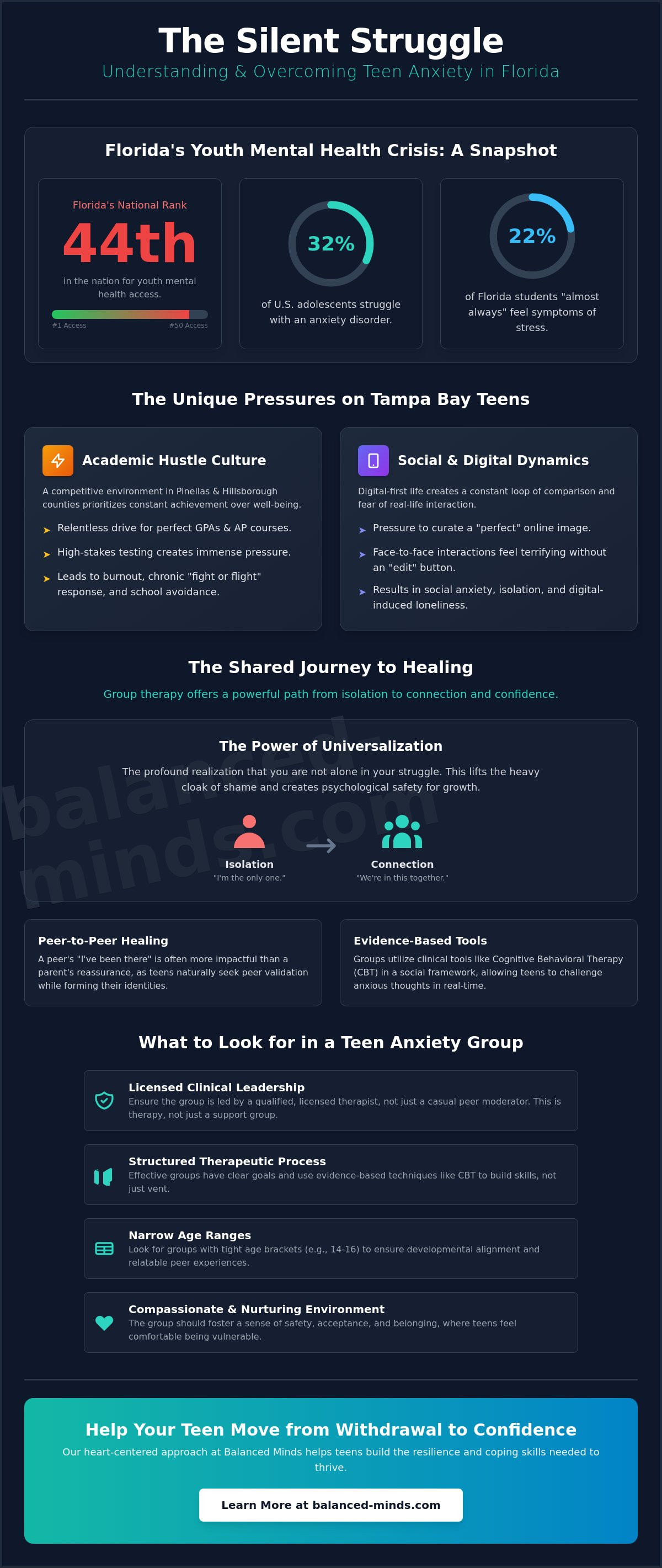
Did you know that Florida currently ranks 44th in the nation for youth mental health access, even as approximately 32% of adolescents across the country struggle with an anxiety disorder? It's deeply painful to watch your teen retreat into isolation or face debilitating panic before a school day in our competitive local districts, especially when you feel like you've exhausted every way to help them. We understand that feeling of helplessness; it's a heavy burden to carry when you simply want your child to feel safe and connected again. While working with a dedicated teen anxiety therapist tampa offers vital individual support, there's a profound shift that occurs when a teenager realizes they're not alone in their struggle.
This guide will show you how specialized peer-based groups provide the authentic connection and clinical tools, like CBT, your adolescent needs to thrive. We'll explore the unique benefits of group healing, how it reduces school avoidance, and what to look for when choosing a compassionate support community in the Tampa Bay area. You'll discover how a shared journey can help your teen move from a place of withdrawal to one of confidence and belonging.
Key Takeaways
Understand the unique academic and social stressors currently impacting adolescents in the Tampa Bay area and how these factors contribute to feelings of isolation.
Learn why working with a specialized teen anxiety therapist tampa in a group setting fosters "universalization," helping your child realize they aren't alone in their emotional journey.
Discover how to navigate common hesitations, such as social shyness, and the important differences between casual support groups and structured therapeutic process groups.
Identify the essential qualities of an effective healing environment, including the necessity of licensed clinical leadership and narrow age ranges for developmental alignment.
Explore the heart-centered philosophy at Balanced Minds and how our nurturing approach helps teens build the resilience and coping skills needed to thrive.
Table of Contents
Understanding Teen Anxiety in the Tampa Bay Area
The experience of being a teenager in the Tampa Bay area has shifted significantly over the last few years. While adolescence has always been a time of transition, the current environment places a unique set of pressures on young people that can feel overwhelming. We often see families searching for a teen anxiety therapist tampa because the weight of these expectations has moved from "normal stress" into the territory of clinical anxiety. It's vital to distinguish between the two. Normal stress is a temporary, healthy response to a challenge, like a big exam or a sports match. Clinical anxiety, however, is a persistent, intrusive presence that disrupts a teen's ability to sleep, learn, or connect with others. In Florida, where 22% of students report "almost always" feeling symptoms of stress or anxiety, we recognize that this is a widespread human experience rather than a personal failing.
The Impact of Florida’s Academic Hustle Culture
In our local Pinellas and Hillsborough County schools, we've observed a growing culture that prioritizes constant achievement over emotional well-being. Students in these competitive districts often feel they must maintain a perfect GPA while balancing advanced placement courses and high-stakes testing. This relentless drive often leads to adolescent burnout, a state where the nervous system remains stuck in a "fight or flight" response. When the pressure becomes too much, a teen might begin to withdraw or avoid school entirely. If you've noticed your child struggling to keep up with these local demands, finding a teenage therapist near me can provide the localized support they need to regain their balance and academic confidence.
Social Anxiety and Local Peer Dynamics
The digital-first nature of life in 2026 has fundamentally changed how our youth interact. Social media creates a constant loop of comparison, where Tampa's teens feel they must curate a perfect image to fit into highly visible social scenes. This digital immersion can make face-to-face interactions feel terrifying because there is no "edit" button in real life. For many, isolation feels like the only safety net to avoid the perceived judgment of peers. We see this manifest as a rise in social anxiety, where the fear of being misunderstood or rejected prevents authentic connection. Group psychotherapy serves as a restorative bridge back to the community. It allows teens to see that their internal struggles are shared by others, effectively breaking the cycle of shame and digital-induced loneliness. By working with a compassionate teen anxiety therapist tampa, your child can begin to untangle these complex feelings and develop the resilience needed to face these modern challenges with confidence.
Why Group Therapy is a Powerful Tool for Anxious Teens
While individual sessions provide a vital foundation for recovery, many families find that a teen anxiety therapist tampa can unlock even deeper healing through the collective power of group dynamics. One of the most transformative elements of this approach is known as the universalization effect. When a teenager who has spent months feeling isolated or "different" enters a room and hears peers describing the exact same intrusive thoughts or physical symptoms, the heavy cloak of shame begins to lift. They realize that anxiety isn't a character flaw or a sign of weakness; it's a shared human experience. This realization creates an immediate sense of psychological safety that allows for genuine vulnerability and growth.
The Science of Peer-to-Peer Healing
Adolescent brain development naturally shifts toward seeking peer connection and validation, which often makes a peer's "I've been there" more impactful than a parent’s best reassurance. We recognize that teens prioritize peer feedback as they form their identities. In our group settings, we utilize evidence-based tools like Cognitive Behavioral Therapy (CBT) within this social framework. This allows adolescents to challenge anxious thought patterns in real-time with people who truly understand their daily reality. Some families begin by searching for psychology near me to find individual support, but adding a group component offers a unique laboratory for social development. It's a space where they can practice setting boundaries or expressing needs without the fear of judgment that often exists in school hallways.
Moving from Isolation to Connection
Groups offer the clinical benefit of vicarious learning. By watching a peer navigate a social challenge or successfully use a new coping skill, a teen gains the confidence to try it themselves. This environment provides a safe space for social experimentation, where social "mistakes" are treated as shared learning opportunities rather than failures. Research highlights the benefits of group therapy, particularly in how it fosters a sense of belonging that individual sessions alone cannot replicate. A licensed facilitator remains present to maintain psychological safety, ensuring that the conversation remains restorative and inclusive. This guided interaction helps teens build a robust social toolkit that they can carry into their schools and families. If your teen is struggling to find their footing, exploring our group therapy options may provide the connection they've been missing.
Overcoming Hesitation: Is a Support Group Right for Your Teen?
It's natural to feel a wave of hesitation when you first consider placing an anxious child into a room full of strangers. The most common concern we hear from parents is, "My teen is far too shy for a group; they'll just shut down." We want to reassure you that this initial resistance is a universal part of the process. In fact, the very traits that make a teen feel hesitant are often the ones that benefit most from a structured, clinical environment. Unlike a typical social gathering, a group led by a skilled teen anxiety therapist tampa is designed to accommodate different comfort levels. We often utilize an observation phase where new members are encouraged to simply listen and absorb the group's energy. There is no pressure to perform or "be on" right away. This allows their nervous system to find safety at its own pace while they realize they are surrounded by peers who truly understand their internal world.
Understanding the difference between a casual support group and a therapeutic process group is also essential for families. While a support group offers a space for sharing common experiences, a therapeutic process group is a clinical setting where we actively work on the underlying drivers of anxiety. We look for specific signs of readiness, such as a teen expressing a desire for connection or feeling stuck in their progress with individual therapy alone. If a teen is currently in a state of high crisis, they might need more time in one-on-one stabilization before transitioning into a group dynamic.
How to Talk to Your Teen About Group Therapy
When you introduce the idea of a group, we recommend using inclusive "we" language to frame the experience as a partnership. Instead of saying "you need this," try saying, "We've been looking for ways to help you feel more like yourself, and we found a space where other kids are navigating these same challenges." This reduces the feeling that they are being "sent" to a fix. We find that offering a trial session can significantly lower their defenses; it feels less like a long-term commitment and more like an exploration. You might even highlight the "cool factor" of meeting peers from different Tampa schools. This provides a fresh social start away from the established reputations or pressures of their daily campus life.
Individual Therapy vs. Group Support
There are times when it's best to prioritize the deep, personalized stabilization of a child psychologist st petersburg fl before entering a group. Individual therapy allows for a focused exploration of specific traumas or deeply rooted thought patterns. However, we often see the most profound growth in a hybrid approach. Individual sessions provide the "why" behind the anxiety, while the group serves as an empowering social club where they can practice the "how" of connection. By reframing the group as a social community rather than a clinical requirement, we help teens move from a place of being "treated" to a place of being empowered. Working with a teen anxiety therapist tampa in this dual capacity ensures your child has both the private space they need and the community they deserve.
What to Look for in a Tampa-Based Teen Anxiety Group
Selecting the right environment for your adolescent is a significant decision that requires more than just a quick online search. When you're looking for a teen anxiety therapist tampa, it's essential to look beyond the surface and evaluate the clinical structure of the group. A high-quality therapeutic group should always be led by a licensed psychologist who understands the intricate nuances of adolescent development. This clinical authority ensures that the group doesn't just become a place to share feelings; it becomes a structured environment where evidence-based tools like Dialectical Behavior Therapy (DBT) or Cognitive Behavioral Therapy (CBT) are actively taught and practiced. We also recommend looking for groups with narrow age ranges, such as 14-16 or 17-19. A middle schooler's social stressors are vastly different from those of a high school senior. Ensuring they're with peers at a similar stage of life is key to creating a space where every participant feels truly understood.
A thorough screening process is another hallmark of a reputable program. Before your teen joins a group, a professional should conduct a vetting session to ensure the group dynamic remains balanced and safe for everyone involved. This initial intake helps determine if the teen is ready for a group setting or if individual stabilization should remain the primary focus. Given that Florida currently ranks 44th in the nation for youth mental health access, finding a practice that prioritizes these rigorous standards is vital for your child's long-term recovery.
Vetting the Group Facilitator
Don't hesitate to ask potential facilitators about their specific experience with adolescent anxiety. It's important to ensure they utilize a trauma-informed approach, which recognizes how past experiences shape a teen's current social fears. A skilled facilitator's primary job is to manage the room's energy and prevent "trauma-dumping," which can sometimes overwhelm more sensitive participants. They should be able to guide the conversation so that it remains restorative and focused on building resilience rather than just dwelling on the struggle. This professional oversight is what transforms a simple gathering into a powerful tool for healing.
Logistics for Busy Tampa Families
We know how demanding life can be for families in the Tampa Bay area. Between competitive sports, extracurriculars, and the rigorous Pinellas County school schedules, finding time for therapy can feel like another stressor on the calendar. Some families find that weekly sessions provide the consistency needed for growth, while others may prefer bi-weekly structures. Whether you're looking for in-person sessions in the St. Pete area or the convenience of telehealth across the wider Tampa region, accessibility shouldn't be a barrier to care. If you're searching for a teenage therapist near me with flexible hours, we recommend looking for practices that prioritize a balanced approach to scheduling. Ready to find a supportive community for your child? Explore our group therapy options to see how we can support your family's journey toward wellness.
Finding Connection: Teen Anxiety Support at Balanced Minds
At Balanced Minds Psychology & Wellness, we believe that healing begins with a sense of safety and a shared journey. We recognize that finding a teen anxiety therapist tampa involves more than just looking for clinical credentials; it's about finding a mentor who can balance professional integrity with genuine heart-centered care. Our philosophy is rooted in the belief that every individual possesses the capacity for growth, and we view the challenges of anxiety not as a permanent state, but as an opportunity to build profound emotional resilience. We strive to create a linguistic environment that feels restorative, ensuring that every teen who walks through our doors feels a sense of immediate psychological safety.
We also understand that a teen's well-being is deeply connected to the health of their entire support system. This is why we often integrate family therapy near me into our treatment plans. By supporting the household as a whole, we help create a restorative environment where the skills learned in group sessions can be practiced and reinforced at home. This collaborative approach ensures that the path to wellness is a collective journey rather than an isolating struggle. Our step-by-step process at our St. Pete office is designed to be gentle and inclusive, moving from an initial assessment to a thoughtful group placement that honors your teen's unique personality.
Our Compassionate Approach to Adolescent Care
Our work focuses heavily on psychological safety and shame reduction. Anxious teens often carry a heavy burden of self-judgment, feeling that their struggles make them "broken" or "weak." We use evidence-based practices to gently de-stigmatize these feelings, framing them as universal aspects of the human condition. By using accessible metaphors for cognitive functions, we help teens understand their brains without feeling overwhelmed by clinical jargon. We invite you to view your child's anxiety as a unique growth opportunity. It's a chance for them to discover a level of self-awareness and strength that will serve them for the rest of their lives.
Next Steps for Your Tampa Bay Teen
If you're ready to explore how our community can support your family, the process begins with a simple, low-pressure consultation. During this initial intake, we take the time to listen to your story and understand your teen's specific needs. We don't just place students into groups; we carefully match them based on their personality, developmental stage, and specific challenges. This thoughtful pairing ensures that the group dynamic remains supportive and conducive to healing. We encourage you to reach out for a quiet conversation to learn more about how a teen anxiety therapist tampa on our team can help your adolescent find their voice and thrive.
Embracing a Shared Path to Resilience
Watching your child navigate the complexities of anxiety can be a heavy experience, but you don't have to carry that weight alone. We've explored how the power of peer connection can transform isolation into a sense of belonging, especially when guided by evidence-based frameworks like CBT and DBT. By choosing a specialized teen anxiety therapist tampa, you're providing your adolescent with more than just clinical support; you're giving them a community where their experiences are validated and their growth is celebrated. This peer-based environment creates a unique safety net that allows for authentic social experimentation and the development of lasting coping skills.
Since 2021, our team has been dedicated to serving the greater Tampa Bay area with a heart-centered approach to adolescent mental health. We invite you to help your teen find their community and schedule a consultation with Balanced Minds today. Every step forward is a victory, and we're honored to be a part of your teen's restorative journey toward wellness and authentic connection.
Frequently Asked Questions
Is group therapy effective for social anxiety in teens?
Group therapy is exceptionally effective for social anxiety as it provides a safe, moderated environment for teens to engage in social interaction. Unlike individual sessions, a group allows adolescents to practice social skills and challenge their internal fears in real-time with peers who share similar struggles. This collective experience helps to de-stigmatize the fear of judgment and builds authentic confidence through shared success and peer validation.
How long does a typical teen anxiety support group last?
Most therapeutic group sessions for adolescents typically last between 60 and 90 minutes. This duration allows enough time for a mindful check-in, the introduction of a specific coping skill, and meaningful peer interaction without becoming overwhelming for a teen’s attention span. We find that this rhythmic, consistent timing helps create a sense of predictability and safety for participants as they settle into the group's flow.
Will my teen be forced to talk in the group?
No teenager is ever forced to speak or share before they feel ready. We prioritize psychological safety and recognize that quiet observation is a valid and restorative part of the healing process. Many teens choose to listen during their first few sessions as they acclimate to the group's energy. A skilled teen anxiety therapist tampa will gently invite participation without ever creating a high-pressure environment that could trigger further withdrawal.
Can group therapy replace individual counseling?
While group therapy offers unique peer-based benefits, it is often viewed as a powerful complement to individual counseling rather than a complete replacement. Individual therapy allows for deep, focused exploration of personal history and specific triggers, while group sessions provide the laboratory for practicing social resilience. We often recommend a hybrid approach where both modalities work in harmony to support your child’s comprehensive growth and recovery.
What is the cost of teen group therapy in Tampa?
The cost of participating in a therapeutic group in the Tampa Bay area can vary depending on the specialized focus of the curriculum and the expertise of the licensed facilitator. Many families find that group sessions are a cost-effective way to supplement their teen’s mental health care. We recommend contacting local providers directly to discuss their specific fee structures and to see if your insurance plan offers coverage for group-based adolescent support.
How do I know if my teen is too anxious for a group setting?
We determine readiness through a thoughtful clinical screening process before any teen joins a group. If an adolescent is currently in a state of acute crisis or finds the idea of a group setting completely debilitating, we may prioritize individual stabilization first. Our goal is to ensure that the group feels like a manageable challenge that promotes growth rather than a source of overwhelming distress that leads to further isolation.
What happens if my teen doesn’t like the group after the first session?
It is common for teens to feel nervous or uncertain after a single session, so we often encourage them to attend at least three meetings to find their rhythm. However, we deeply respect each child’s unique experience and will never force a teen to continue in a setting that doesn't feel right for them. If a group isn't the right fit, we'll work closely with your family to adjust their care plan and explore alternative individual support options.
Are these groups confidential for the teenagers?
Confidentiality is a cornerstone of our therapeutic groups, and we establish clear boundaries to ensure every teen feels safe to share their truth. We emphasize to all members that what is shared in the room stays in the room, which helps to build a culture of mutual trust and respect. While a teen anxiety therapist tampa must follow legal reporting requirements regarding safety, we prioritize protecting the privacy of the peer dynamic to foster genuine connection.


