

Teen Anxiety Support Group in Tampa: Finding the Right Path to Connection and Healing
Updated: 3 days ago
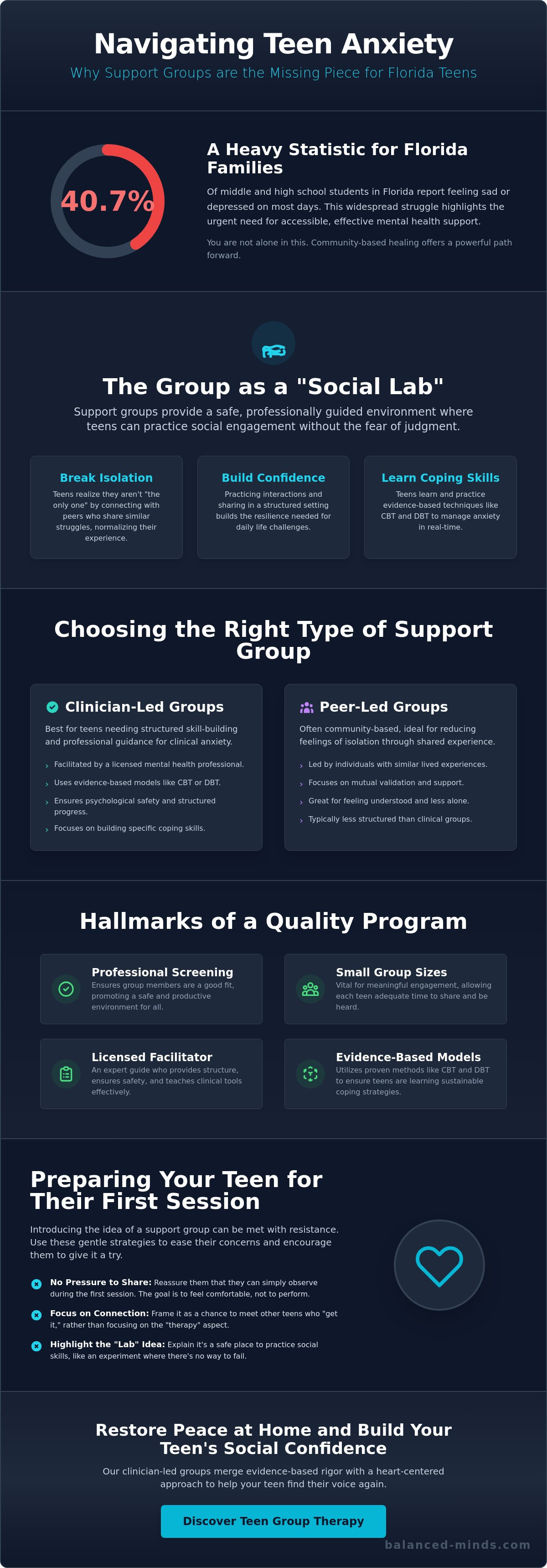
Did you know that 40.7% of middle and high school students in Florida report feeling sad or depressed on most days? It's a heavy statistic that many local families live every afternoon when their teen retreats to their room or refuses to engage. You might feel isolated as a parent, especially if your adolescent is resistant to traditional individual sessions or if the high cost of private care feels out of reach. We understand that it's exhausting to manage these challenges while searching for effective anxiety therapy for teens st petersburg.
We believe that healing often happens best in community. Discover how specialized teen anxiety support groups in the Tampa Bay area provide the peer connection and clinical tools your adolescent needs to thrive. In this guide, we'll explore how these "social labs" foster belonging, teach practical coping skills, and ultimately reduce the conflict in your home. You'll learn why a group setting might be the missing piece in helping your teen find their voice and their confidence again.
Table of Contents
Why Teen Anxiety Support Groups are Essential in the Tampa Bay Area
Anxiety often feels like a secret, heavy weight that pulls a teenager away from the world they used to enjoy. In our local community, this isolation is frequently fueled by the high-stakes environment of Pinellas County schools and the relentless pressure of digital comparisons. A teen anxiety support group serves as a structured, clinically-guided sanctuary where the shame of "feeling different" begins to fade. Instead of struggling alone, adolescents find a space for peer-to-peer healing that normalizes their experiences. When we consider that 40.7% of middle and high school students in Florida report feeling sad or depressed on most days, the need for accessible anxiety therapy for teens in St. Petersburg becomes undeniably clear.
Typical Stress vs. Clinical Anxiety
While every student at St. Petersburg High feels stress before finals, clinical anxiety is more persistent and pervasive. You might notice your teen avoiding social gatherings or experiencing physical symptoms like racing hearts and sleep disturbances. Group therapy is uniquely effective here because it highlights avoidance behaviors that might stay hidden in individual sessions. Mental health professionals recommend intervention when these symptoms disrupt daily functioning for more than two consecutive weeks. If you've been searching for anxiety therapy for teens in St. Petersburg, identifying this threshold is a vital step in protecting your child's mental health.
The Power of Peer Connection in Adolescence
During adolescence, a natural developmental shift occurs where peer influence starts to carry more weight than parental guidance. This transition is an important part of growing up, and within a group, the power of Peer support becomes a catalyst for change. When a teen sees a peer successfully manage a panic attack or navigate a social conflict, their own belief in their ability to cope increases. If you are looking for a teenage therapist, you likely understand that your child needs a mentor who respects this peer-driven stage of life while providing expert clinical tools.
Clinical vs. Peer-Led: Types of Support Groups in Tampa
When you begin searching for support, you'll likely encounter two main categories of groups. Peer-led groups are often community-based and focus on shared experiences; they can be wonderful for reducing the feeling of being "the only one" through mutual validation. However, for many families seeking anxiety therapy for teens st petersburg, clinician-led groups provide a necessary layer of psychological safety and structured skill-building. Unlike unmoderated settings, these clinical groups are facilitated by licensed professionals who use evidence-based models like Cognitive Behavioral Therapy (CBT) or Dialectical Behavior Therapy (DBT). Research highlighting the benefits of group therapy for youth suggests that the structured environment of a clinical group often yields more sustainable progress than individual work alone because it allows for real-time social practice.
The choice between in-person and virtual formats is also a practical consideration for families navigating the St. Pete and Tampa corridor. While virtual groups offer convenience and eliminate the stress of the afternoon commute, in-person sessions often foster a deeper sense of presence and non-verbal connection. We find that for teens who feel particularly isolated, the physical act of being in a room with others who "get it" can be a powerful catalyst for healing. Each family's needs are different, and the right choice depends on your teen's comfort level and the specific goals you hope to achieve together.
The Role of the Licensed Facilitator
A professional facilitator does much more than just sit in a circle and moderate conversation. They ensure the group doesn't devolve into a "venting session," which can actually increase anxiety for participants through a process called co-rumination. Instead, a child psychologist st petersburg fl guides the conversation toward "valued living." This means helping teens identify what truly matters to them and setting specific, science-based goals to move toward those values. This clinical oversight ensures that every session remains productive and restorative rather than becoming an overwhelming emotional dump.
Specialized Groups: OCD, Social Anxiety, and ADHD
Sometimes, a general anxiety group might feel too broad for a teen's specific challenges. If your adolescent struggles with intrusive thoughts or extreme social avoidance, a specialized niche group might be more effective. We also see a significant overlap between anxiety and neurodivergence. For example, a teen with ADHD might feel anxious because of executive functioning challenges at school. In these cases, combining support with a psychologist for adhd diagnosis can address the root cause of the stress. By tailoring the group experience to these specific needs, we help teens develop tools that are relevant to their unique brain wiring. If you're unsure which path is right for your family, exploring professional group therapy can provide the clarity you need to move forward with confidence.
What to Look for in a Quality Tampa Teen Support Group
Selecting the right therapeutic environment for your adolescent involves more than just finding a convenient time slot. A high quality program begins with a thoughtful screening process. Reputable facilitators always require an intake or screening call before a teen joins the circle. This essential step ensures that the group's dynamic remains healthy and that each member is at a stage where they can both contribute to and benefit from the collective experience. When you are looking for anxiety therapy for teens st petersburg, this initial conversation is your first clue that the provider prioritizes clinical integrity over simply filling seats.
The physical and emotional size of the group also significantly impacts how safe your teen feels. We find that six to eight members is the clinical "sweet spot" for meaningful engagement. This range is large enough to provide a variety of perspectives but small enough that no one feels invisible or overwhelmed. Additionally, developmental alignment is key. A middle schooler's anxiety often revolves around different social milestones than a high school senior preparing for college. Ensuring that the group is age appropriate helps your teen feel that the shared stories are relevant to their daily life. When seeking anxiety therapy for teens st petersburg, parents should also ask whether the group follows a set, evidence-based curriculum or remains open-ended, as this structure can dictate how quickly a teen learns specific coping tools.
Safety and Confidentiality Standards
Safety and confidentiality are the cornerstones of any restorative environment. During the very first session, facilitators establish clear "Group Rules" that protect the privacy of every member. This creates a shame-free atmosphere where adolescents struggling with social anxiety can finally let their guard down. Facilitators are also specifically trained to handle disclosures or crisis situations with grace and professional precision. This clinical oversight ensures that the group remains a stable anchor for everyone involved, even when individual members are facing particularly difficult weeks.
Practical Logistics for Florida Families
Practical logistics play a significant role in your family's ability to commit to the healing process. Whether you are traveling from within St. Pete or navigating the afternoon traffic across the bridge into Tampa, the commute should be manageable enough to ensure consistent attendance. Regarding investment, group therapy rates in the Florida market vary depending on whether you utilize insurance or choose private pay. If you are starting your search for psychology near me, we recommend asking about the expected duration of the group. Some programs are designed as short-term, 8 to 12 week intensives, while others offer ongoing support to help teens maintain their progress over time.
Preparing Your Teen for Their First Session
The first step into a group setting is often the hardest, especially when the very reason for attending is a struggle with social pressure or persistent worry. It's completely normal for your teen to feel anxious about attending a group for anxiety. We encourage parents to validate this fear rather than dismissing it. Acknowledging that walking into a room of strangers is a brave act helps build the trust necessary for the process to begin. Reassure your adolescent about the "Observer Phase." In a clinically-led environment, they aren't forced to speak or share their deepest secrets immediately. They can simply sit, listen, and realize they aren't alone. This low-pressure start is a hallmark of effective anxiety therapy for teens st petersburg.
Setting realistic expectations is also vital for long-term success. While the first session often brings a sense of relief, it won't "fix" everything instantly. Healing is a rhythmic process of building skills and confidence over time. By involving your teen in the selection process, such as looking at a facilitator's background together, you give them a sense of agency. This collaborative approach transforms the experience from something being "done to them" into a journey they are choosing for themselves. When they feel like a partner in their own care, the walls of resistance naturally begin to lower.
How to Talk to a Reluctant Teen
When a teen is resistant, "fixing" language usually backfires. Instead, try using "curiosity" language to lower their defenses. You might say, "I've noticed things have been really heavy lately, and I'm curious if you'd be open to seeing if this group makes things a little easier." Sometimes, framing the group as a way to "get people off their back" can be a powerful motivator. If they learn the tools to manage their stress, they'll likely experience less questioning and hovering from the adults in their lives. Here is a simple script you can adapt: "I know you don't want to talk about this with me, and that's okay. This group is just for people your age to figure out how to handle the stress of school and friends so it doesn't feel so overwhelming."
The Role of the Parent in Group Therapy
While the group itself is a private sanctuary for the adolescent, your role as a parent remains foundational. Most teen groups are for the adolescents only, though facilitators often provide brief, high-level check-ins for parents to share progress. You can support the skills they learn by modeling them at home without being overbearing. For example, if they learn a grounding technique, you might mention when you're using a similar tool yourself. If you find that the process is bringing up your own worries, seeking parenting near me can provide you with the community and support you deserve as you guide your child. To explore how our team can support your family's journey, feel free to learn more about our adolescent group therapy offerings.
Teen Group Therapy at Balanced Minds Psychology & Wellness
At Balanced Minds Psychology & Wellness, we recognize that the journey to healing is deeply personal, yet it thrives in a space of shared humanity. We've crafted an environment that bridges the gap between rigorous clinical standards and heart-centered, nurturing care. By merging evidence-based models like CBT and DBT with a compassionate delivery, we provide the anxiety therapy for teens st petersburg families need to see real, lasting change. Whether you visit our St. Petersburg offices or join us through our telehealth options, our goal is to make the path to wellbeing feel attainable and secure for every adolescent we serve.
Getting started begins with a thoughtful intake process. We prioritize finding the right clinical fit for your teen, ensuring they are placed in a group where they feel both challenged to grow and safe enough to be vulnerable. This initial step allows us to understand your teen's unique story and match them with peers who are navigating similar paths. We believe that when a teen feels truly understood by their facilitator and their peers, the heavy lifting of therapy becomes a collective journey rather than a solitary struggle.
Why Choose Balanced Minds for Your Adolescent?
We understand the specific pressures that Florida students face, from the competitive nature of local Pinellas County schools to the social complexities of the digital age. Our practice offers a unique advantage because we house comprehensive psychological evaluations, ADHD coaching, and group therapy all under one roof. This multi-disciplinary approach ensures that we aren't just treating a symptom; we're supporting a whole person. We're deeply committed to reducing the stigma of mental health in our local St. Pete community, fostering a culture where seeking anxiety therapy for teens st petersburg is seen as a profound act of self-care and bravery. Our experts stay grounded in the latest science while never losing sight of the human heart at the center of our work.
Healing the Whole Family
Sustainable progress for an adolescent rarely happens in a vacuum. We believe that for a teen to truly thrive, the entire family system needs to feel supported and equipped. This is why we integrate family support into our models, ensuring that the coping skills learned in our sessions are reinforced and nurtured in the home environment. If you feel that your family could benefit from a collaborative approach to wellness, exploring family therapy near me can be a vital step toward long-term harmony. We invite you to reach out to our team to learn more about our current offerings and schedules. Please Contact Balanced Minds to inquire about current teen group openings and discover how we can walk alongside your family on this path to connection and healing.
Embarking on a Journey Toward Shared Resilience
Finding the right path for your adolescent doesn't have to be a journey you take alone. We've explored how clinician-led groups provide a unique social lab where your teen can practice bravery, move past the cycle of shame, and build meaningful connections with peers who truly understand their experience. By prioritizing evidence-based approaches and thoughtful preparation, you're giving your child the tools they need to navigate the complexities of modern life with renewed confidence. Our team is here to ensure that your search for anxiety therapy for teens st petersburg leads to a place of genuine recovery and lasting peace.
We combine clinical rigor with a heart-centered delivery, utilizing CBT and DBT-informed strategies to support your family from our convenient St. Petersburg location. We believe that every adolescent possesses the capacity for growth, and we're committed to walking alongside you as you rediscover harmony at home. When you're ready to take the next step, please Schedule a Consultation for Teen Group Therapy. There is hope, and a sense of belonging is closer than you think.
Frequently Asked Questions
How do I know if my teen is ready for a support group instead of individual therapy?
Your teen might be ready for a group when they feel isolated by their struggles or when their progress in individual sessions has plateaued. While individual therapy focuses on internal processing, a group acts as a social lab for real-time interaction. It's often the right choice when an adolescent needs to see that they aren't alone in their experiences. Many families find that the peer connection helps lower a teen's defenses more effectively than one on one work.
Are teen support groups in Tampa covered by health insurance?
Coverage for group sessions depends on your specific health insurance plan and whether the group is clinician-led. Some Florida plans reimburse for group work as a primary form of anxiety therapy for teens st petersburg, while others may view it as a secondary service. We recommend contacting your insurance carrier to ask about "group therapy" codes. Many practices provide a superbill that you can submit for potential out-of-network reimbursement to help manage the investment in your child's care.
What happens if my teen refuses to talk during the group session?
It is perfectly acceptable for a teen to remain quiet, especially during their first few sessions. We respect the "Observer Phase," which allows an adolescent to simply listen and absorb the shared experiences of their peers without the pressure to perform. Facilitators are specifically trained to create a low-pressure environment where no one is forced to speak. Often, just hearing that others share their fears is enough to begin the restorative process and build the trust needed to eventually share.
How long do these support groups typically last (weeks vs. months)?
Most clinician-led support groups in the Tampa Bay area follow a structured curriculum that lasts between 8 and 12 weeks. These short-term intensives are designed to teach specific, science-based coping skills like those found in CBT or DBT. Some practices also offer ongoing groups that meet once or twice a month for long-term maintenance. The duration usually depends on the clinical goals established during your initial screening call and the specific needs of the group members.
Can my teen attend a group if they are already seeing an individual therapist?
Yes, many adolescents attend both individual therapy and a support group because the two modalities are highly complementary. Individual sessions allow for deep, private processing of personal history, while the group provides a safe space to practice new coping tools in a social setting. This combination can accelerate healing by addressing both the internal thoughts and the external social behaviors that contribute to a teen's anxiety. It's a holistic approach that supports the whole person.
What is the difference between a support group and a social skills group?
A support group focuses on emotional validation and the processing of shared experiences, while a social skills group is more instructional. Social skills groups often target specific behaviors like starting conversations or reading non-verbal cues. While there is some overlap, support groups prioritize the reduction of shame and the fostering of a deep sense of belonging. The goal is to help teens feel understood and supported as they navigate the universal challenges of adolescence.
How are members screened to ensure the group is safe for my child?
Safety is maintained through a mandatory intake or screening call before any member is invited to join. This process allows the facilitator to ensure that each teen's needs align with the group's focus and that the overall dynamic remains healthy. By matching members who are at similar developmental stages and have compatible clinical goals, we create a secure, non-judgmental environment. This careful curation ensures that every adolescent feels protected and respected within the circle.
Are there virtual teen anxiety support groups available for families in Tampa?
Yes, many practices in the Tampa Bay area offer virtual support groups through secure, HIPAA-compliant telehealth platforms. These options are particularly helpful for families navigating busy school schedules or those who find the commute to St. Petersburg difficult. Virtual groups maintain the same clinical rigor and confidentiality standards as in-person sessions, ensuring that anxiety therapy for teens st petersburg remains accessible. This format often feels less intimidating for teens who are just beginning their journey toward connection.


