

Social Skills Group for Kids Near Me: Tampa Bay’s Guide to Connection
What if the struggle to make friends isn’t about a lack of social rules, but a need for a safe space where a child’s “tricky brain” feels truly understood? It’s deeply painful to watch your child stand on the periphery of a playground or learn they’re avoiding school because of a painful conflict with a peer. If you’ve been searching for a social skills group for kids near me in Tampa, you’re likely looking for more than just a classroom; you’re looking for a community where your child can finally feel they belong.
We recognize how confusing it feels to weigh different therapy labels like SST, PEERS, or CBT while simply wanting your child to flourish. You aren’t alone in this search. According to the 2023-2024 National Survey of Children’s Health, roughly 1 in 10 Florida children ages 3 to 17 currently has a diagnosed anxiety, depression, or behavioral condition. This guide will help you discover how compassionate, evidence-based care can transform social anxiety into emotional resilience. We’ll explore local resources in Tampa and St. Pete to help your child build conversational confidence and develop the lasting friendships they deserve.
Key Takeaways
Understand the vital difference between clinical social skills groups and simple peer play, ensuring your child receives professional guidance in a safe, nurturing environment.
Explore how evidence-based frameworks like Cognitive Behavioral Therapy (CBT) and the PEERS® curriculum provide children with a reliable roadmap for building genuine friendships.
Learn how to navigate your local options to find a social skills group for kids near me tampa that aligns with your family's unique needs and location.
Discover compassionate ways to prepare your child for their first group meeting by validating their emotions and creating a sense of psychological safety from the start.
Identify the specific roles of group therapy and individual support in fostering emotional resilience and long-term social flourishing for your child.
Table of Contents
What is a Social Skills Group and How Does it Help Tampa Kids?
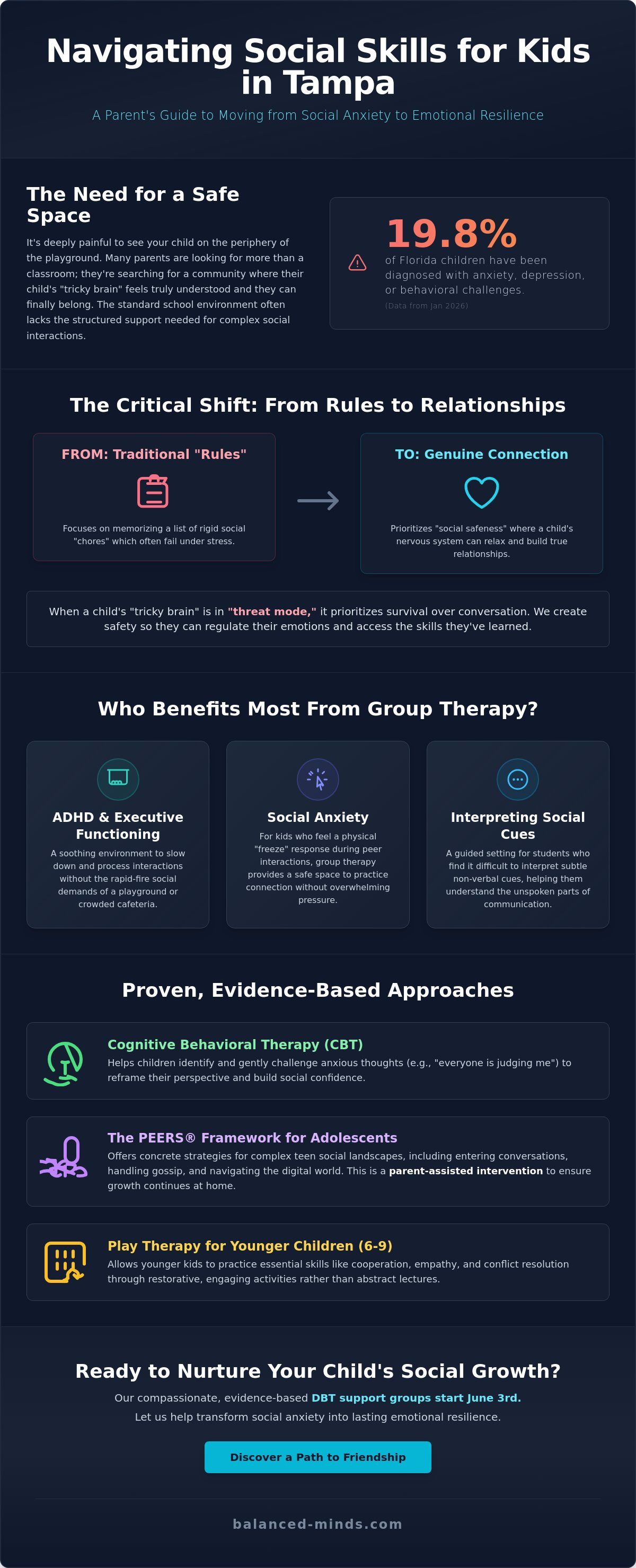
Finding a social skills group for kids near you in Tampa often begins with a parent’s quiet observation that their child feels like an outsider in their own community. We define these groups as intentional, therapeutic peer settings where clinicians guide children through the delicate nuances of connection. There is a vital distinction between traditional “social skills training,” which can sometimes feel like a list of chores or rigid rules, and “social connection groups” that prioritize the feeling of being seen and understood. Our primary goal is to move a child’s nervous system from a state of social anxiety into what we call “social safeness,” where they feel secure enough to take risks and be themselves.
At its heart, a social skill is the bridge that allows a child to move from isolation to belonging. For many students, the standard classroom environment doesn’t provide the quiet, structured support they need to practice these complex interactions, which is why specialized groups can be so valuable.
Who Benefits Most from Group Therapy?
Group therapy offers a unique sanctuary for children who find the typical school day overwhelming. It’s particularly restorative for kids navigating ADHD or executive functioning challenges, as they often struggle to manage the rapid-fire social demands of the playground. Our groups provide a soothing environment where these children can slow down and process interactions without the pressure of a crowded cafeteria. Others who benefit deeply include kids with social anxiety who feel a physical “freeze” response during peer interactions and students who find it difficult to interpret subtle non-verbal cues.
The Shift from "Rules" to "Relationships"
Many parents worry that their child simply hasn’t memorized the right “social rules.” However, we’ve found that memorization often fails when a child is stressed. This happens because our “tricky brain” prioritizes survival over conversation when it feels unsafe. If a child’s brain is in “threat mode,” they can’t easily access the part of the mind that remembers how to take turns. Our groups provide a real-world laboratory where children practice empathy and conflict resolution in the moment. Instead of just learning what to say, they learn how to regulate their emotions so they can actually say it. This transition from following rules to building genuine relationships is what allows a child to truly flourish.
Evidence-Based Approaches to Social Growth
When searching for a social skills group for kids near me tampa, it's natural to prioritize methods that are proven to work. We rely on Evidence-Based Approaches because they provide a reliable scaffolding for a child's emotional development. Cognitive Behavioral Therapy (CBT) serves as a vital foundation for many of our sessions. It helps children identify the anxious thoughts that lead to social withdrawal or hesitation. By gently challenging the belief that "everyone is judging me," kids learn to reframe their perspective in a way that feels safe. For younger children, such as those in the 6 to 9 age range, we weave in elements of play therapy. This allows them to practice cooperation and empathy through restorative activities rather than abstract lectures.
The PEERS® Framework for Adolescents
For teenagers, the social landscape becomes significantly more complex, involving digital nuances and subtle power dynamics. We utilize the PEERS® framework to offer concrete strategies for entering and exiting conversations gracefully. This model is particularly effective for handling modern challenges like rumors, gossip, and the unspoken rules of the digital world. PEERS® is a parent-assisted intervention that builds lasting relational competence. It empowers caregivers to act as social coaches, ensuring the growth that happens in the group continues at home. If you feel your teen needs this level of structured support, exploring our adolescent group therapy options can be a gentle first step toward their social confidence.
Compassion-Focused Connection
While skills are important, they can't flourish in an environment of shame. We integrate Compassion Focused Therapy (CFT) to help children develop a "soothing system" that balances the brain's natural threat response. When a social interaction goes "wrong," a child's inner critic often becomes loud and unkind. We teach them to treat themselves with the same warmth they would offer a friend. This approach normalizes the struggle by reminding children that they aren't alone in feeling this way. By reducing the fear of rejection, we create the psychological safety necessary for a child to try again. This heart-centered delivery is a hallmark of the summer groups beginning on June 1st, 2026, which focus on executive functioning and friendship skills for local students.
Navigating Social Skills Options in St. Petersburg and Tampa
Choosing the right social skills group for kids near me tampa involves more than just a quick search; it requires a thoughtful look at how local school cultures in Pinellas and Hillsborough influence your child's daily life. While Florida school districts provided school-based services to 295,927 students during the 2023-24 school year, many families find they need a more personalized, clinical touch to truly address their child's unique needs. Whether you are looking in the vibrant heart of St. Petersburg or the suburbs of Tampa, understanding the logistics of where your child feels most comfortable is the first step toward their social flourishing. Finding a child psychologist in St. Petersburg, FL who understands these local community dynamics ensures that the therapy reflects the real-world challenges your child faces every day.
It's also worth considering how different therapeutic formats serve different goals. While social coaching might focus on specific tasks, group therapy provides a living laboratory for emotional regulation. With over 400,000 children in Florida currently managing emotional or behavioral issues, the demand for high-quality, clinical intervention is significant. We often see that the best results come from a blend of approaches that prioritize the child's sense of safety and belonging above all else.
Group vs. Individual Therapy: Which is First?
For many children, starting with individual sessions helps build a vital baseline of safety before they enter a peer environment. We call this the "bridge" effect, where a child first learns to trust a single therapist before slowly expanding that trust to a small, curated group of peers. This gradual process helps prevent the "tricky brain" from feeling overwhelmed or overstimulated. Additionally, integrating family therapy near me can support this progress by giving parents the tools to reinforce new social patterns at home, creating a consistent environment of support.
Choosing the Right Fit for Your Child
As you evaluate a social skills group for kids near me tampa, don't hesitate to ask detailed questions about how groups are formed. Age-matching is important, but developmental level and shared interests often matter more for creating a sense of "safeness." You should also inquire about the facilitator's clinical background; for example, are they Board Certified or specifically trained in evidence-based models like DBT or PEERS®? Finally, trust your intuition regarding the "vibe" of the office. A space that feels nurturing and warm, rather than cold or overly clinical, will help your child lower their defenses and engage more deeply with their peers.
Preparing Your Child for Their First Group Session
The transition from individual sessions to a group setting can feel like a significant leap for both you and your child. When you finally find a social skills group for kids near me tampa, the initial relief often mixes with a new wave of "first day" anxiety. It's helpful to remember that success for the very first session is defined simply by showing up and feeling safe. We don't expect immediate social mastery; instead, we focus on helping your child's nervous system settle into the new environment. This gentle introduction is especially important for the 19.8% of Florida children who manage anxiety or behavioral challenges daily, according to January 2026 data.
Validating your child's apprehension is the first step toward building their confidence. Rather than dismissing their fears with "you'll be fine," try acknowledging that it's normal for the "tricky brain" to feel cautious in a new peer group. Set realistic expectations by explaining that the first few weeks are about observation and comfort, not performance. This approach reduces the pressure to "get it right" and allows them to move at their own pace. Many families worry about the jump from 1-on-1 therapy to a group of four or five peers. We view individual therapy as the training ground where children build the internal safety needed to eventually share a space with others.
Managing 'First Day' Jitters
You can use gentle scripts to frame the experience, such as: "We're going to a place where other kids sometimes feel exactly like you do." This emphasizes shared humanity and the opportunity to meet peers who truly "get it." After the session, establishing a soothing routine, perhaps a quiet walk or a favorite snack, helps their system transition back to a restful state. It's important to provide this restorative space, especially if they are joining a more intensive program like the DBT support group starting on June 3rd, 2026. This rhythm helps them process the new social data without becoming overwhelmed.
The Role of Parent Coaching
Some evidence-based models, such as the PEERS® curriculum, involve parents directly as social coaches. This ensures that the lessons learned in the clinical setting translate seamlessly into your home life. By building a collaborative partnership with your teenage therapist in St. Petersburg, you become an active part of your child's growth. Your role is to support the "homework" assignments, like practicing a phone call or inviting a friend over, without adding unnecessary pressure. If you're ready to begin this journey, you can schedule an initial consultation to discuss which group is the best fit for your family's needs.
Nurturing Growth at Balanced Minds Psychology & Wellness
At Balanced Minds Psychology & Wellness, we believe that every child possesses an innate capacity for growth when provided with the right environment. Our commitment to evidence-based, heart-centered care is the foundation of every social skills group for kids near me tampa that we facilitate. Led by Drs. Russo and Brustad and our dedicated team of pediatric experts, we combine rigorous clinical standards with a deeply human touch. We understand that the "tricky brain" needs a sense of total security to step out of its comfort zone. By creating a dedicated "safeness" zone, we allow children and teens to move past the fear of judgment and begin to truly flourish.
This restorative environment is essential because connection isn't just a skill to be learned; it's a state of being that requires a regulated nervous system. We ensure that our therapeutic settings mirror the mindfulness practices we advocate, providing a calm and steady rhythm that invites reflection. Whether your child is navigating the social complexities of a large Hillsborough County school or seeking a small peer group in St. Petersburg, our goal is to make the path to wellbeing feel attainable and grounded in their daily life. We're here to offer a steady, guiding presence that acknowledges the complexities of mental health without becoming overwhelming.
Our Specialized Group Offerings
We provide age-specific groups tailored to the unique developmental stages of elementary, middle, and high schoolers. These sessions are often integrated with ADHD coaching and executive functioning support to address the specific hurdles that can make social interaction feel draining. For families seeking a social skills group for kids near me tampa, our St. Petersburg office offers a warm, inviting physical space, while our telehealth options ensure that high-quality care is accessible regardless of your schedule. This flexibility allows us to meet your child where they are, both emotionally and geographically, ensuring that the process of building social safeness is as soothing as possible.
Start the Journey Toward Connection
Taking the first step toward support can feel daunting, but we're here to guide you through a low-pressure process. The journey begins with a comprehensive intake session where we work together to find the perfect group match for your child's personality and needs. We're profoundly committed to helping children move from the pain of isolation into a deep sense of belonging. If you're ready to see your child build lasting resilience and master the art of conversational flow, Connect with our compassionate team today to learn about upcoming groups. We look forward to walking this path of discovery and connection alongside your family.
Empowering Your Child’s Journey Toward Belonging
You've taken a vital step today by exploring how to help your child move from the pain of isolation into a world of genuine connection. We've discussed how evidence-based frameworks like PEERS® and Compassion Focused Therapy provide a reliable roadmap for children and teens to navigate social complexities with confidence. By prioritizing psychological safety over rigid rules, your child can learn to manage their "tricky brain" and build the emotional resilience needed for lasting friendships. It's about creating a space where they feel seen, heard, and valued for who they are.
Finding a social skills group for kids near me tampa is about more than just proximity; it's about finding a clinical team that sees the unique potential in every young person. Our practice offers specialized care designed to help children, teens, and young adults in the Tampa Bay area flourish. We invite you to discover our upcoming social skills groups and nurture your child's connections through our heart-centered protocols. Your child possesses the capacity for growth, and we're honored to support your family as you begin this restorative new chapter together.
Frequently Asked Questions
How do I know if my child is ready for a social skills group?
Readiness is often signaled when a child expresses a desire for peer connection but feels overwhelmed by the "tricky brain" response in social settings. We look for children who can manage basic group behavior but need a safe, curated environment to practice conversational flow. An initial intake evaluation helps us determine if your child has the foundational emotional regulation skills to benefit from a peer group at this time.
What is the typical age range for your social skills groups in Tampa?
We offer age-specific groups that span from early elementary through high school to ensure developmental compatibility. For example, our "Helping Children Thrive Support Group" is specifically designed for children ages 6 to 9. Other local programs, such as those at Serene Mind, focus on adolescents between the ages of 12 and 18, ensuring that peers are matched with others navigating similar life stages.
Does insurance cover social skills group therapy in Florida?
Insurance coverage for a social skills group for kids near me tampa depends on your specific plan and whether the sessions are billed as evidence-based clinical interventions. Florida regulations require that groups providing psychosocial skills training be led by licensed professionals, which often helps with out-of-network reimbursement. We recommend contacting your provider to ask about coverage for CPT code 90853, which is commonly used for group therapy.
How long do these groups typically last?
Most therapeutic groups in the Tampa Bay area run for 8 to 12 weeks to allow enough time for meaningful peer bonding and skill acquisition. For instance, the Social Butterflies Club® offers 8-week enrichment programs, while the Children's Friendship Training at Pivotal Therapy typically lasts 12 weeks. This duration provides a steady, predictable rhythm that helps children feel secure as they practice new ways of connecting.
What if my child refuses to speak or participate in the group?
We never force a child to speak, as we prioritize creating a "safeness" zone where they can engage at their own pace. Silent observation is often a vital first step for a child whose nervous system is in a state of high alert. Our facilitators are trained to gently invite participation without creating pressure, allowing the child to move from observation to interaction as their comfort grows.
Is there a difference between a social skills group and a support group?
Social skills groups are highly structured around evidence-based curricula like PEERS® to build specific relational competencies, while support groups focus more on shared emotional processing. Both formats aim to reduce the pain of isolation and promote flourishing. We often integrate elements of both to ensure that children aren't just learning "rules," but are also feeling the soothing benefit of a shared human experience.
Can my child join a group if they already have an individual therapist elsewhere?
Your child is welcome to join our groups even if they see an individual therapist at another practice. We view mental health as a collective journey and are happy to collaborate with your child’s existing provider to ensure their care is cohesive. This partnership helps reinforce the skills learned in the group across all areas of your child's therapeutic life.
How do you handle conflict or 'clashes' between children within the group?
We treat peer conflicts as "real-world" laboratories where children can practice resolution skills in a safe, supervised setting. Rather than simply stopping the conflict, facilitators use restorative communication to help children understand their emotions and the impact of their actions. This process helps them build the resilience needed to handle the natural ups and downs of friendships outside the clinical office.


