

Social Anxiety Group for Teens in Tampa: A Path to Connection and Confidence
Updated: 1 day ago
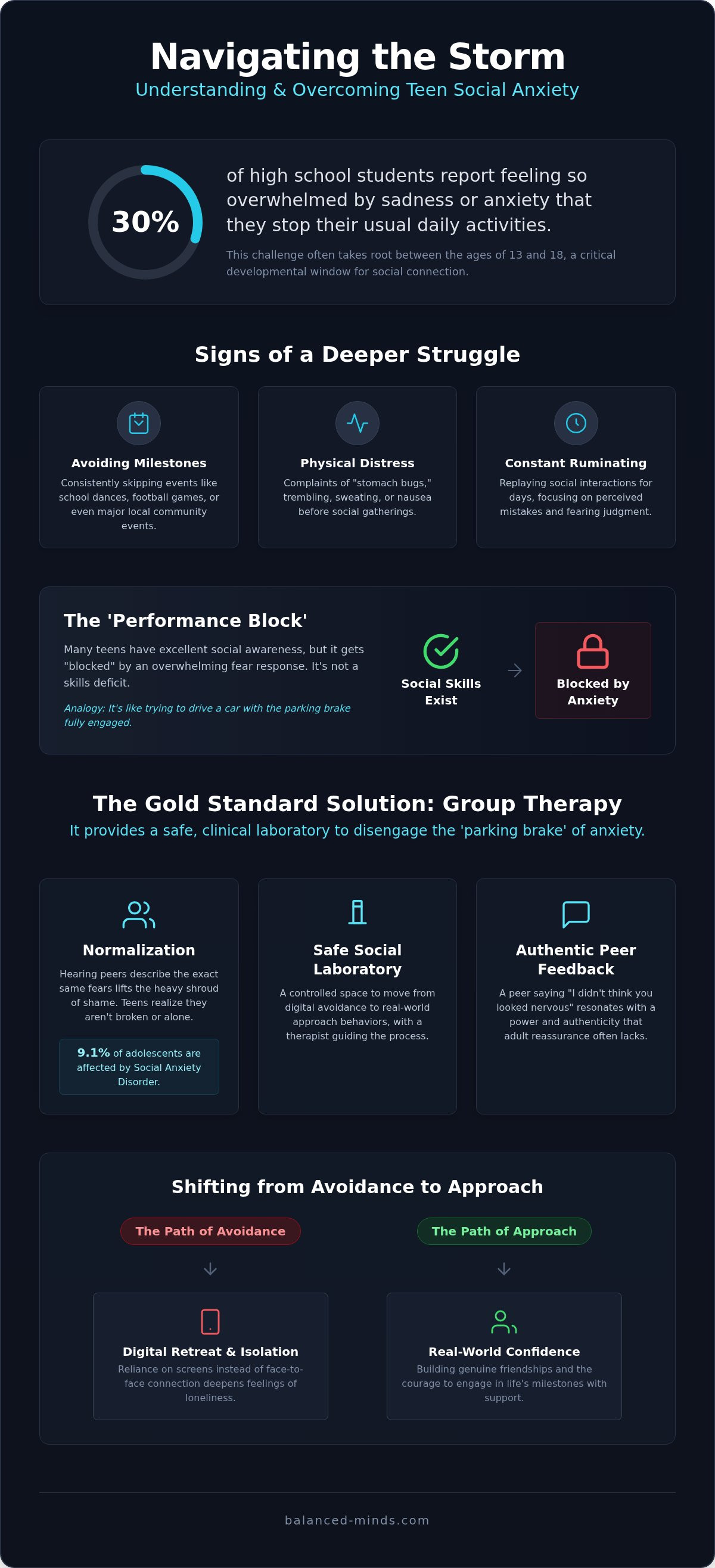
Nearly 30% of high school students now report feeling so overwhelmed by sadness or anxiety that they have stopped their usual daily activities. As a parent in the Tampa Bay area, you've likely seen this struggle firsthand through the "stomach aches" before school presentations or the way your teen relies on a screen rather than face-to-face connection. It's painful to watch them miss out on the milestones that define these years. We understand that you want more for them than just getting by; you want them to thrive. Finding a dedicated social anxiety group for teens tampa offers a gentle, restorative path back to the physical world.
We believe that healing happens in connection, not isolation. In this article, you'll discover how group therapy provides a safe, clinical laboratory where your teen can practice social courage alongside peers who truly understand their experience. We'll discuss how this supportive environment helps adolescents move from digital retreats to real-world confidence; whether that means ordering their own food at a restaurant or building a genuine circle of friends right here in our community.
Table of Contents
Understanding Social Anxiety in Tampa Bay Teens
Social anxiety is more than just a preference for quiet moments; it is a persistent, often paralyzing fear of being scrutinized or judged by others. For many, this challenge begins to take root between the ages of 13 and 18, a developmental window where the desire for peer belonging is at its peak. When we look at Understanding Social Anxiety Disorder, we see that it functions like an internal filter that magnifies perceived flaws and predicts social rejection, even when there is no evidence for it. It's a heavy burden for a young person to carry alone.
In our local community, these pressures are often amplified. Teens in Hillsborough and Pinellas County schools face intense academic competition and a social environment that never truly "turns off." Social media acts as a 24/7 stage, where every post or missed invitation is analyzed under a digital microscope. While typical shyness might involve a brief period of warming up to new people, clinical social anxiety creates a wall that prevents a teen from participating in life altogether. We see this not as a character flaw, but as a biological and emotional response to a world that feels increasingly overwhelming.
Signs Your Teen is Struggling in the Tampa Social Scene
Identifying the difference between a teen who is simply introverted and one who is suffering can be difficult. We often see patterns of avoidance that ripple through a teen's life in the Tampa Bay area. Some common indicators include:
Avoiding major local milestones like Gasparilla, high school football games, or homecoming dances.
Physical distress before social events, including trembling, sweating, or persistent nausea that often looks like a "stomach bug."
Ruminating on social interactions for days, often focusing on a single "mistake" they believe they made during a conversation.
The 'Performance Block' vs. Social Skills Deficit
One of the most misunderstood aspects of this condition is the difference between not knowing what to say and being too afraid to say it. Many adolescents we work with actually possess excellent social awareness; they are simply "blocked" by an overwhelming fear response. This is why a social anxiety group for teens tampa is so effective. It doesn't just teach "how to talk to people." Instead, it helps lower the emotional volume of the anxiety so the teen can finally use the skills they already have.
If your teen is struggling to break through this barrier, connecting with a teenage therapist near me can be the first step toward reclaiming their confidence. Without addressing the underlying fear, even the best social skills training can feel like trying to drive a car with the parking brake engaged. Finding a social anxiety group for teens tampa allows them to slowly release that brake in a safe, guided space where they can feel seen without feeling judged.
Why Group Therapy is the Gold Standard for Social Anxiety
For many adolescents, the idea of joining a group to discuss their social fears feels counterintuitive. Why would they face their biggest challenge in a room full of people? Clinical research consistently shows that group therapy is the gold standard for this specific struggle because it addresses the root of the issue: the fear of being judged by peers. The power of normalization is immediate. When a teen hears a peer describe the exact same "performance block" we discussed earlier, the heavy shroud of shame begins to lift. They realize they aren't broken; they're simply experiencing a universal human condition.
A social anxiety group for teens tampa serves as a specialized social laboratory. In this space, teens move from avoidance, where they retreat to digital communication, to approach behaviors, where they engage in real-world connection. Peer feedback carries a unique weight that adult reassurance simply cannot match. According to NIMH statistics on Social Anxiety, social anxiety disorder affects an estimated 9.1% of adolescents. When a fellow teen says, "I didn't think you looked nervous at all," it resonates with a level of authenticity that a parent's words often lack.
The Role of the Therapist in a Teen Group
Our therapists don't just lecture; they facilitate a delicate dance of interaction. By managing the group dynamic, we ensure every participant feels protected and heard. We utilize evidence-based models like Cognitive Behavioral Therapy (CBT) to help teens identify and reframe the distorted thoughts that fuel their fear. If your family is ready to start this journey, we invite you to learn more about our Group Therapy offerings. This professional guidance ensures that the group remains a restorative environment rather than an overwhelming one.
Building a Sense of Shared Humanity
Helping a peer through a difficult moment can be a transformative experience for an anxious teen. It shifts their focus from their own internal distress to the well-being of another, which naturally builds self-esteem. We define social exposure as the gradual practice of facing feared social situations in a controlled environment. Within the group, being accepted while in a vulnerable state is deeply restorative. It teaches the teen that they are worthy of connection even when they feel imperfect. This shared humanity is the bridge that leads them back to the milestones they've been missing.
What to Expect in a Teen Social Anxiety Group
Joining a therapeutic community is a significant step, and we want you and your teen to feel completely prepared for what lies ahead. Finding the right social anxiety group for teens tampa begins with a thoughtful intake process. This initial meeting isn't just a formality; it's a way for us to ensure the group dynamic will be restorative for your teen's specific needs. We look at their personal goals and current comfort levels to make sure they'll feel both challenged and supported as they enter this new environment.
A typical session flow follows a predictable rhythm to help lower anxiety from the moment they walk in. We start with gentle check-ins, move into structured activities, and finish with guided peer interaction. Consistency is the heartbeat of this process. Weekly attendance is vital because it allows the "social laboratory" to build momentum, helping new behaviors become second nature over time. Safety and confidentiality are our highest priorities, ensuring that every participant feels protected while they share their experiences in a non-judgmental space.
Common Activities in Teen Anxiety Groups
We use practical, hands-on exercises to help teens bridge the gap between knowing what to do and actually doing it. These include:
Role-playing social scenarios like ordering food at a restaurant, starting a conversation with a new classmate, or setting healthy boundaries with friends.
Mindfulness exercises that help manage the physical symptoms of panic, such as a racing heart or shallow breathing, in real-time.
Collaborative problem-solving for school-based social challenges, allowing the group to brainstorm solutions together and realize they're not alone in their struggles.
Helping Your Teen Take the First Step
It's natural for a teen to feel hesitant or even resistant to the idea of group therapy. They might fear being the most awkward person in the room or worry that they'll be forced to speak before they're ready. We often suggest that parents present the social anxiety group for teens tampa as a short-term experiment rather than a permanent fix. This lowers the pressure and allows the teen to enter the space with a sense of curiosity. If you're looking for more ways to support your family's journey, exploring resources for parenting near me can provide additional guidance and support for your own role in this process.
Remind your teen that they aren't alone in this struggle. According to NIMH statistics on social anxiety, millions of adolescents navigate these same fears every day. Knowing that their struggle is a shared human experience can make that first step into the room feel a little less heavy. We are here to walk with them through that doorway and into a more connected future.
Navigating the Search: Finding a Group in Tampa or St. Petersburg
Finding a social anxiety group for teens tampa involves more than just a quick search for the nearest zip code. It's about finding a space where clinical expertise meets human connection. We always recommend looking for groups led by a licensed psychologist or therapist. These professionals have the training to distinguish between typical adolescent development and clinical social anxiety, ensuring that every session is grounded in evidence-based safety. A credentialed leader can pivot the conversation when a teen feels overwhelmed, turning a moment of panic into a breakthrough of growth.
Location often plays a subtle but important role in a teen's comfort. While a Tampa office might offer convenience for busy families, some adolescents prefer the privacy of a St. Petersburg location. This distance can provide a sense of psychological safety, reducing the fear of running into school peers while they are in a vulnerable state. If you are specifically looking for expert guidance in Pinellas County, finding a child psychologist st petersburg fl can help you navigate these local options with confidence.
Age-matching is another critical factor to consider. The social world of a 14-year-old freshman is vastly different from that of an 18-year-old preparing for college. We strive to group teens with peers in similar life stages so the "social laboratory" feels relevant and authentic. While virtual groups offer accessibility, in-person interaction is often the most effective format for social anxiety. It removes the safety of the screen and allows for the gradual, real-world exposure that leads to lasting change.
Questions to Ask Potential Group Providers
As you research local options, we encourage you to ask specific questions to ensure the group is a healthy fit for your family. You might consider asking:
What is the specific therapeutic framework used? Common effective models include Cognitive Behavioral Therapy (CBT) or Acceptance and Commitment Therapy (ACT).
How do you handle a teen who is too anxious to speak during the first few sessions?
Is there a parent component or regular progress updates provided so we can support the work at home?
Understanding the Commitment and Costs
Most structured groups in the Florida mental health landscape run in cycles of 8 to 12 weeks. This timeframe is deliberate; it allows for the development of trust and the consistent practice of new skills. Regarding costs, many specialized providers operate on a private-pay basis to maintain the highest standard of individualized care, though some may provide documentation for out-of-network insurance reimbursement. To see if our current schedule and approach align with your family's needs, we invite you to view our group therapy services and reach out with any questions.
How Balanced Minds Supports Your Teen's Social Growth
At Balanced Minds, we believe that clinical excellence and heart-centered care are not mutually exclusive. Our philosophy is rooted in the idea that every teenager possesses an innate capacity for growth when provided with the right environment. We've served the greater Tampa Bay area since 2021, and we understand the unique cultural and social pressures facing local families.
Our St. Petersburg office is more than just a clinical space; it is a sanctuary designed for psychological security. We've intentionally created an atmosphere that feels warm and welcoming, helping to lower the defenses of even the most hesitant adolescent. This physical environment mirrors our therapeutic approach, which emphasizes a collaborative journey. We don't just work with the teen in isolation; we partner with parents to ensure that the progress made within our social anxiety group for teens tampa translates into lasting confidence and connection at home.
Our Approach to Teen Social Anxiety
We focus heavily on self-kindness and the reduction of shame. Social anxiety often carries a heavy internal burden, and our goal is to dismantle that weight through the power of shared humanity. By keeping our group sizes small, we ensure that every teen receives personalized attention while maintaining the safety of the collective experience. We also recognize that social stress often overlaps with academic challenges. To address this, we integrate executive functioning support for teens who find that their anxiety is intertwined with the organizational demands of school life.
Ready to Help Your Teen Thrive?
Taking the first step toward support should feel like a gentle invitation, not a high-pressure commitment. The process begins with a comprehensive initial evaluation, where we take the time to understand your teen's unique story and social goals. This helps us determine the most effective group placement, ensuring they are surrounded by peers who offer both challenge and support. Whether your teen is struggling to speak in class or simply wants to build a genuine friend group, a social anxiety group for teens tampa provides the structure they need to move forward. Every teen has a voice worth hearing, and we are here to help them find the courage to use it.
Empowering Your Teen's Journey Toward Connection
Watching your teen navigate the complexities of social anxiety can feel like a heavy, solitary path for any parent. We've explored how group therapy transforms that isolation into a shared experience of growth, providing a safe laboratory where adolescents can finally move past their performance blocks. By focusing on evidence-based strategies and the power of peer normalization, your teen can begin to reclaim the milestones they've been missing. It's about moving from a place of avoidance to a place of genuine, heart-centered presence.
Our commitment to evidence-based adolescent mental health ensures that every participant in a social anxiety group for teens tampa receives the specialized care they deserve. We believe that every young person possesses the strength to find their voice and build lasting, authentic connections. Take the first step toward your teen's confidence—contact Balanced Minds today. You don't have to navigate this journey alone; we're here to walk alongside you and your teen as they discover their own resilience.
Frequently Asked Questions
How do I know if my teen's social anxiety is severe enough for group therapy?
If social anxiety prevents your teen from participating in daily life milestones, such as attending school events or making friends, it's time to consider professional support. Group therapy is appropriate when shyness becomes a persistent barrier to emotional development. We provide comprehensive evaluations to determine if a social anxiety group for teens tampa is the right fit for your child's specific needs and current comfort levels.
Will my teen be forced to speak or participate in the group?
We never force a teen to speak before they are ready, as we prioritize psychological safety and trust above all else. Our therapists use a gentle, invitation-based approach that allows adolescents to observe until they feel secure enough to engage. This gradual exposure ensures that participating in the group remains a restorative experience rather than a source of further panic or distress.
What if my teen knows someone else in the group from school?
We prioritize privacy and carefully screen group members during the intake process to avoid placing students from the same school or social circle together. If a teen realizes they know someone in the room, we address it immediately with sensitivity. Our goal is to create a neutral social laboratory where every participant feels free to explore new behaviors without fear of school-yard judgment.
How long does it typically take to see results from a social anxiety group?
Most families begin to notice subtle shifts in confidence within 8 to 12 weeks of consistent attendance. Growth is often gradual; it starts with a teen being more present in sessions and eventually translates to them ordering their own food or initiating a text. Lasting change in social behavior requires the steady, rhythmic practice that a long-term group dynamic provides.
Can group therapy replace individual therapy for my teen?
Group therapy serves a different purpose than individual sessions, focusing on real-world interaction rather than deep personal processing. For many, a social anxiety group for teens tampa works best as a supplement to individual therapy. We often coordinate with existing therapists to ensure a holistic approach that addresses both the internal fears and the external social skills your teen is practicing.
Is group therapy for social anxiety covered by insurance in Florida?
Coverage varies significantly depending on your specific provider and plan within the Florida mental health landscape. While many specialized clinical groups operate on a private-pay basis to ensure a high standard of personalized care, we can often provide documentation for out-of-network reimbursement. We recommend contacting your insurance carrier directly to verify your specific benefits for group-based therapeutic services.
What is the average age range for your teen groups in Tampa Bay?
We typically organize our groups into two distinct developmental tiers: middle schoolers (ages 12-14) and high schoolers (ages 15-18). This ensures that the social challenges discussed are relevant to each participant's current life stage. By matching teens with peers of a similar age, we foster a sense of shared humanity and make the path to connection feel more attainable for everyone.
What happens if my teen misses a session due to school or sports?
Consistent attendance is vital for the group dynamic, but we understand that academic and athletic commitments occasionally arise. We encourage families to prioritize these sessions as a part of their teen's wellness routine. If a session is missed, our therapists work to help the teen reconnect with the group flow during the following meeting, ensuring they don't feel left behind in their social progress.


