

Signs My Child Needs Therapy: A Parent’s Compassionate Guide to Care in St. Petersburg & Tampa
Updated: 3 days ago
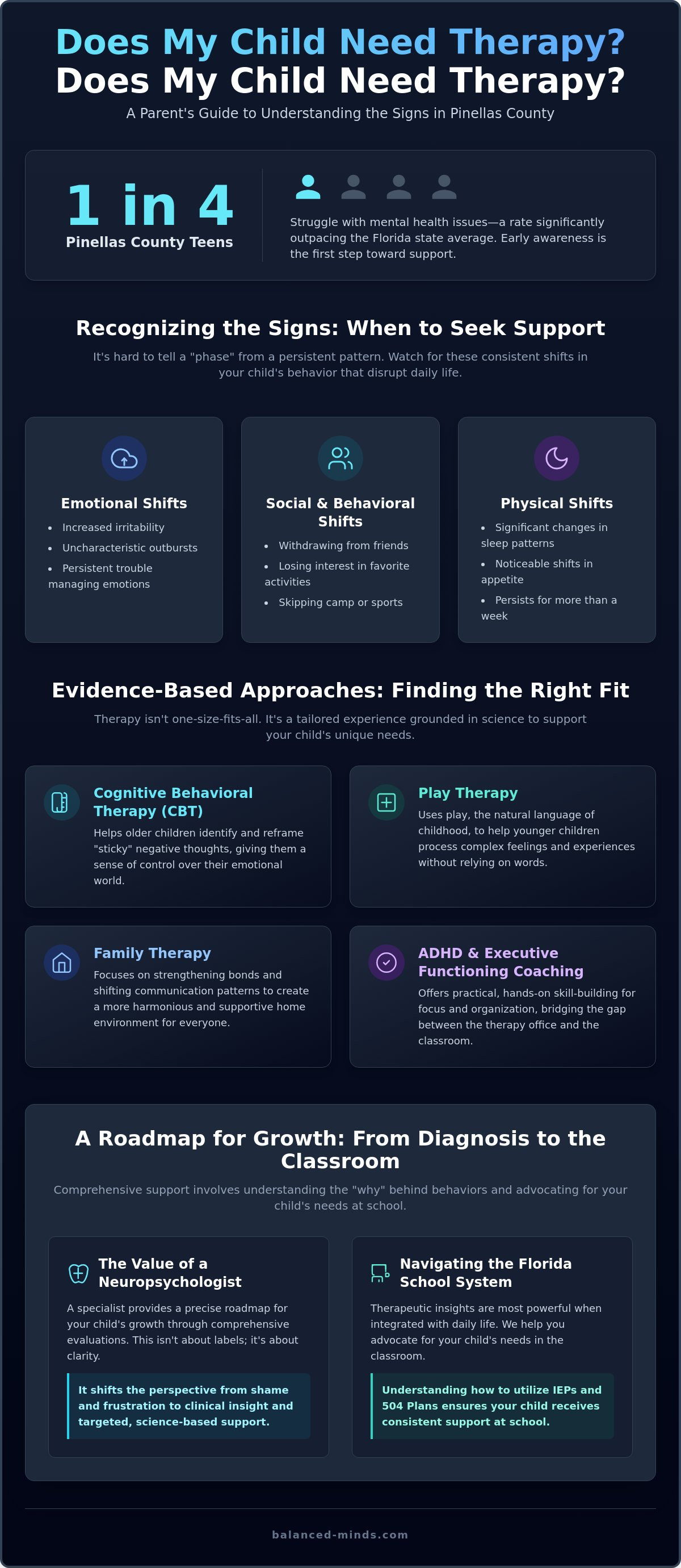
Did you know that in Pinellas County, one in four teens struggles with mental health issues, a rate that significantly outpaces the Florida state average? It's a startling figure that often leaves parents feeling deeply responsible for their child's distress. We understand the quiet worry that keeps you up at night, questioning whether a recent outburst or a period of withdrawal is just a temporary hurdle or something more significant. You aren't alone in this journey, and your desire to seek understanding is the first step toward restorative healing for your family.
We've created this guide to help you identify the specific signs my child needs therapy while distinguishing them from the standard challenges of growing up in the Tampa Bay area. We'll explore the nuances of various therapy types and clarify how to manage Florida school requirements for IEPs or 504 plans. By the end, you'll have a clear understanding of your child’s "why" and a practical set of tools to support their success at home and in the classroom. Together, we can find a path that honors your child's unique needs and restores a sense of balance to your home.
Table of Contents
Recognizing the Signs: When Typical Growing Pains Become Something More
Childhood is a beautiful, if sometimes turbulent, journey of discovery. Every parent in St. Petersburg has watched their child navigate a "phase," yet it's often difficult to tell when a phase becomes a persistent pattern. We view therapy not as a reaction to a crisis, but as a proactive tool for emotional and social development. We want to provide your child with the vocabulary to express their inner world before small frustrations grow into long-term academic or social struggles. Child psychotherapy serves as a psychological safety net, supporting not just the individual child but the entire family unit as you grow together.
Distinguishing between typical growing pains and clinical signs is a common challenge for even the most attentive parents. While a toddler's tantrum is developmentally expected, a ten-year-old's persistent inability to regulate emotions might be one of the signs my child needs therapy. Early intervention is vital. It addresses the root cause of distress before it impacts their self-esteem or school performance. When we identify these needs early, we prevent the "snowball effect" where social anxiety or learning gaps become deeply ingrained habits.
Common Behavioral Shifts to Watch For
Watch for shifts that feel "out of character" for your unique child. This might look like increased irritability or uncharacteristic emotional outbursts that disrupt your family's daily rhythm. You might notice your child withdrawing from friends or favorite activities in the Tampa Bay community, like suddenly refusing to attend a beloved local summer camp or skipping soccer practice. These aren't just "moods"; they are signals that your child's current coping tools aren't quite enough for the challenges they face.
The Role of Neuropsychological Awareness
Understanding brain development is key to choosing the right support. When we look at behavior through a clinical lens, we see it as a form of communication rather than a choice to be difficult. For instance, finding a psychologist for ADHD diagnosis can provide a clear roadmap for therapy by identifying exactly how your child's brain processes information. This shift from shame to understanding allows parents to replace frustration with targeted clinical insights. By moving toward a science-based perspective, we can create an environment where your child feels seen, safe, and empowered to grow.
Evidence-Based Approaches: Choosing the Right Therapy for Your Child
Once you begin to recognize the signs my child needs therapy, the next step is understanding which path will best support your child's unique spirit. We believe that therapy isn't a one-size-fits-all solution; it's a tailored experience grounded in science and heart-centered care. Cognitive Behavioral Therapy (CBT), for example, helps older children identify the "sticky" thoughts that lead to anxiety or frustration. By learning to shift these patterns, they gain a sense of agency over their emotional world, turning overwhelming feelings into manageable steps. For our youngest clients, we lean into Play Therapy. Since play is the natural language of childhood, it allows children to process complex feelings through toys and creative expression rather than relying solely on adult-level vocabulary.
Sometimes, the most effective way to support a child is to work with the whole family. Family Therapy focuses on strengthening bonds and creating a more harmonious home environment by shifting communication patterns that might be causing friction. When we look at Behavior or Conduct Problems in Children, we see that these challenges often respond best when the entire home system is supportive and aligned. For children who struggle with focus or organization, specialized ADHD and executive functioning coaching offer practical, hands-on skill-building that bridges the gap between the therapy office and the classroom.
Therapy for Younger Children vs. Adolescents
The way we offer support naturally evolves as your child grows. For those under age ten, play-based models are essential because their brains are still developing the capacity for abstract talk therapy. As they move into their teens, the focus shifts toward independence and self-identity. Searching for teenage therapy near me often leads parents to seek a space where their adolescent can feel safe to explore who they are without judgment. By young adulthood, therapy becomes a powerful tool for navigating the transition to college or the workforce, focusing on identity-building and emotional resilience.
Specialized Support for Neurodivergent Kids
For neurodivergent children, traditional talk therapy may not always be the most effective starting point. Kids with ADHD or learning differences often need more than just emotional processing; they need tangible strategies for daily life. This includes coaching for organization, time management, and focus. These practical tools complement individual therapy by building the resilience needed to succeed in school and social settings. If you're wondering how these strategies might fit your family's needs, exploring our specialized coaching services can help you find a targeted roadmap for growth that honors how your child's brain works.
Specialist Care vs. General Counseling: Finding the Right Fit in Pinellas County
Choosing a clinical partner for your child's well-being is a deeply personal decision that often comes after weeks of observation and quiet worry. While many professionals offer valuable support, understanding the distinction between a general counselor and a board-certified pediatric neuropsychologist can significantly impact the quality of care your family receives. A generalist often focuses on immediate behavioral management, which is helpful for minor adjustments. However, if you are seeing persistent signs my child needs therapy, a specialist looks deeper into the "why" behind those behaviors. We believe that a comprehensive evaluation is often the most effective first step in St. Petersburg, as it allows us to see how your child's brain processes information, manages emotions, and interacts with the world.
When you evaluate credentials, look for specialists who are grounded in Evidence-based therapies. This ensures that the techniques used are backed by rigorous scientific research rather than just anecdotal success. In a private practice setting, a multidisciplinary approach allows for a seamless transition from testing to treatment. Instead of starting over with a new provider who doesn't know your child's history, you benefit from a clinical team that already understands their unique strengths and hurdles. This continuity of care creates a sense of psychological safety that is essential for long-term healing and growth.
In-Person Care in St. Pete vs. Telehealth Convenience
We recognize that every family has different needs when it comes to accessing care. For younger children, in-person sessions at our St. Pete office are often the most beneficial because play therapy requires a physical space for creative expression and connection. Being in the same room allows our clinicians to pick up on subtle non-verbal cues that are vital for understanding a child's internal state. For busy families across the Tampa Bay area, secure telehealth offers a practical and effective alternative, especially for adolescents or parent coaching sessions. Our practice at Balanced Minds Psychology & Wellness bridges both options, ensuring that high-quality clinical support is always within reach, regardless of your schedule.
This high level of specialization is rare in private practice, and it allows us to tackle complex challenges with confidence and precision. We marry this clinical authority with a warm, heart-centered delivery, ensuring that our evidence-based care never feels cold or overly academic. We're committed to the idea that every child possesses the capacity for growth, and we're honored to serve as the steady, guiding presence your family needs during this season of life.
Integrating Therapy with Florida School and Home Life
A child's growth doesn't happen in a vacuum. It unfolds in the bustling hallways of Pinellas County schools and around your own dinner table in Tampa. When you identify the signs my child needs therapy, the goal isn't just to find relief within the four walls of a clinical office. We aim for a seamless integration where therapeutic progress translates into classroom success and home-life harmony. In Florida, this often involves active advocacy within the school system. Whether your child requires an Individualized Education Program (IEP) or a 504 plan, we provide the clinical documentation and professional voice needed to ensure they receive the accommodations they deserve.
Collaborative care is the heartbeat of our approach. We don't just work with the child; we build a support network that includes teachers and school counselors across Hillsborough and Pinellas counties. By sharing a consistent language of care, we ensure that the strategies learned in therapy are reinforced throughout the school day. This consistency helps children feel supported and understood, reducing the anxiety that often accompanies academic challenges. At home, we provide parents with practical "homework," which consists of gentle, actionable strategies that bring therapeutic insights into the living room. This turns daily interactions into opportunities for healing and connection.
Support for Gifted and Twice-Exceptional Students
Pinellas County schools serve a diverse population of gifted and twice-exceptional (2e) students who often face unique emotional hurdles. These high-achieving children might excel academically while struggling with intense perfectionism or social-emotional gaps. Because their signs my child needs therapy can sometimes be masked by high grades, diagnostic testing is crucial. It allows us to create a specialized plan that honors their intellectual gifts while supporting their emotional development. We help these students navigate the pressure of high expectations while building the resilience they need to thrive both socially and academically.
Empowering Parents as Partners
We believe in moving away from the idea of "fixing the child" and toward a model of partnership. This often involves seeking parenting near me support to help you build a restorative home environment. By establishing a shared vocabulary of emotional security, you become an active participant in your child's journey. This collaborative bond between therapist, parent, and child ensures that growth is sustainable and deeply rooted in your family's daily life. We're here to provide the tools you need to feel confident and supported as you lead your family toward wellness.
If you're ready to bridge the gap between clinical support and school success, schedule a consultation with our team today to begin your family's journey toward balance.
Starting the Journey: What to Expect at Balanced Minds
Deciding to seek professional support is a profound act of love and courage. Once you've recognized the signs my child needs therapy, the path forward should feel like a partnership rather than a series of clinical hurdles. We've designed our intake process to be a compassionate, restorative space where your concerns are heard without judgment. This initial conversation allows us to understand the unique rhythm of your family life and the specific challenges your child is facing. It's the first step in moving from a place of worry to a place of targeted, effective action.
We don't believe in guesswork. Every therapeutic journey at Balanced Minds is customized based on a deep understanding of your child's neurobiology and emotional landscape. By using testing results to guide individual therapy goals, we ensure that every session is purposeful. We work with you to set measurable milestones for your child’s emotional and behavioral progress; this might look like a decrease in school-morning meltdowns or an increase in their ability to use "feeling words" during a disagreement. Our long-term vision is to build a foundation of resilience and self-kindness that will serve your child well into their adult years.
Our Comprehensive Evaluation Process
Our evaluation process is the bridge between clinical expertise and daily success. We move beyond surface-level observations to create a personalized treatment roadmap through diagnostic testing. Whether we're exploring ADHD, giftedness, or learning differences, we ensure that every child feels seen, heard, and understood throughout the testing experience. We don't just hand you a report and send you on your way. We take the time to explain our findings in a clear, actionable way, ensuring you feel empowered to lead your child toward healing.
Taking the Next Step for Your Family
If you're ready to move forward, we invite you to schedule a consultation at our St. Petersburg office. We can also accommodate busy schedules through secure telehealth for families across the Tampa Bay area. When preparing your child for their first session, we recommend using a positive, supportive narrative. You might explain that they're going to meet a kind person who helps kids understand their big feelings and discover their "superpowers." This approach lowers their defenses and sets the stage for a trusting therapeutic relationship. Contact us today to begin your journey toward wellness.
Embracing a Path Toward Resilience and Balance
Navigating your child's emotional landscape is one of the most significant journeys you'll undertake as a parent. We've explored how identifying the signs my child needs therapy is rarely about finding a "fix" but rather about opening a door to deeper understanding and growth. By bridging the gap between clinical neuropsychological expertise and the daily realities of Florida school life, we can create a targeted roadmap that honors your child's unique strengths while addressing their hurdles. Our collective approach ensures that every evaluation leads to actionable strategies, providing your family with the tools needed for lasting success at home and in the classroom.
Whether you visit our St. Petersburg office or connect through secure telehealth, we're here to offer a steady, guiding presence for children, teens, and young adults. You don't have to navigate these complexities alone; a future filled with clarity, connection, and restorative healing is within reach for your family.
Frequently Asked Questions
How do I know if my child needs therapy or if it is just a phase?
Distinguishing between a developmental phase and a deeper need often comes down to the frequency and intensity of the behavior. While a short period of moodiness is common, persistent changes that disrupt your child's ability to learn, play, or maintain friendships are significant signs my child needs therapy. We look for patterns that last longer than a typical "bad week" and begin to impact the family's overall sense of well-being.
What is the difference between a child psychologist and a therapist?
The primary difference lies in the level of clinical training and the scope of practice. This expertise allows for comprehensive psychological evaluations that go beyond surface-level symptoms to identify the root neurobiological cause of a child's struggles.
How long does children’s therapy typically last?
The duration of therapy is deeply personal and depends on your child's unique goals and the complexity of their needs. Some families find that short-term, solution-focused coaching for executive functioning provides the necessary tools in a few months. Others may benefit from longer-term individual therapy to process trauma or manage chronic anxiety. We work with you to establish clear milestones, ensuring the journey feels purposeful and restorative.
Can therapy help with my child’s school performance in Pinellas County?
Yes, therapy directly supports academic success by addressing the emotional and cognitive barriers to learning. We often help families in Pinellas County navigate the requirements for IEPs and 504 plans, ensuring that the school environment aligns with your child's therapeutic goals. By building skills like focus, organization, and emotional regulation, your child can approach their schoolwork with newfound confidence and resilience.
Do you offer telehealth sessions for families in the Tampa area?
We provide secure telehealth options to ensure that distance or a busy schedule never stands in the way of your family's wellness. While some younger children benefit more from the physical environment of our St. Petersburg office, many adolescents and young adults find telehealth to be a comfortable and effective way to engage. This flexibility allows us to serve families across the entire Tampa Bay area with the same high standard of care.
How do you involve parents in the child’s therapy process?
We view parents as essential partners in the therapeutic journey rather than just observers. Depending on your child's age and needs, we may include family therapy sessions or provide separate parent coaching to help you implement restorative strategies at home. This collaborative approach ensures that the progress made in our office is reinforced in your daily life, creating a shared language of care within your household.
What should I tell my child about why they are going to therapy?
We recommend framing therapy as a positive opportunity to meet a "feelings doctor" or a coach who helps kids understand their big emotions. Keeping the narrative supportive and shame-free helps your child feel safe and receptive to the growth process ahead.
Is psychological testing necessary before starting therapy?
While not every child requires formal testing, a comprehensive psychological evaluation often serves as a valuable roadmap for treatment. These assessments help us identify specific signs my child needs therapy that might be missed during a standard intake. By understanding your child's cognitive strengths and hurdles from the start, we can customize a therapeutic plan that is both efficient and deeply effective for their unique brain.


