

Play Therapy for Children in St. Petersburg & Tampa: A Parent’s Guide to Healing Through Play
Updated: 3 days ago

Imagine your six year old sitting in a quiet office while a well meaning adult asks them to explain their anxiety about attending Pinellas County schools. For most children this age, the parts of the brain responsible for complex verbal expression are still blossoming, which is why traditional talk therapy often fails where play therapy for children succeeds. It's heartbreaking to witness your child's distress and feel as though you lack the bridge to reach them. We understand that sense of helplessness when you see your little one struggling to regulate their world.
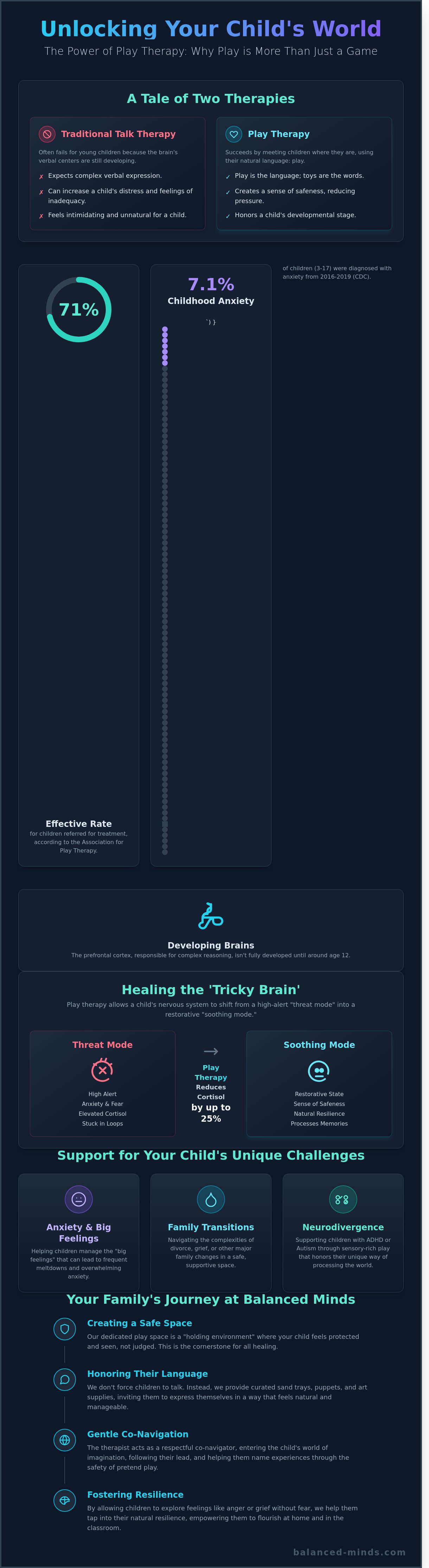
At Balanced Minds Psychology & Wellness, we believe that play is a child's first language and toys are their words. Our specialized approach provides a soothing environment where your child can process deep emotions and build resilience through the natural rhythm of creative expression. Research from the Association for Play Therapy indicates that this approach is effective for 71% of children referred for treatment. You'll discover how these evidence based methods help children in St. Petersburg and Tampa navigate their tricky brains with compassion. This guide explains how we use play to foster emotional safety, improve family harmony, and provide you with practical tools to help your child flourish at home and in the classroom.
Key Takeaways
Understand how play serves as your child's natural language, providing a safe vehicle to express complex emotions when words feel out of reach.
Discover the science behind how play therapy for children soothes the "tricky brain" and reduces stress hormones to help your little one process big feelings.
Learn how specialized local support can help your child navigate the unique pressures of the Tampa Bay area, from school success to regional stressors.
Explore the nurturing journey at Balanced Minds, where we prioritize your child’s sense of safeness and help your family flourish through expert, heart-centered care.
Table of Contents What is Play Therapy and Why Does Your Child Need It? The Science of Play: How It Heals the 'Tricky Brain' Play Therapy in the Tampa Bay Area: Local Context for Parents What to Expect: Your Family’s Journey at Balanced Minds Why Choose Balanced Minds for Play Therapy in St. Petersburg?
What is Play Therapy and Why Does Your Child Need It?
At Balanced Minds, we recognize that a child's inner world is vast and complex, yet they often lack the verbal tools to describe their internal weather. Since the formalization of these techniques around 1947, clinicians have understood that traditional office settings can feel intimidating for a young person. This is why understanding What is Play Therapy? is so important for families seeking support. It's a specialized mental health modality where play serves as the primary vehicle for communication. In our St. Pete office, we don't expect a seven year old to sit on a couch and recount their week. Instead, we provide a sanctuary where toys are their words and play is their speech. This approach honors the natural way children process the world.
For a child, the act of playing isn't merely a pastime; it's a profound form of self-expression. While adults use complex vocabulary to process trauma or stress, children utilize symbols and metaphors. A dollhouse might represent a chaotic home life, or a plastic dinosaur might embody a scary emotion. Our practitioners utilize play therapy for children to bridge the gap between a child’s experience and their ability to explain it. By providing a curated selection of sand trays, puppets, and art supplies, we invite the child to externalize their internal conflicts in a way that feels manageable and safe.
Research from the CDC indicates that 7.1% of children aged 3 to 17 were diagnosed with anxiety between 2016 and 2019. For these young individuals, traditional talk therapy often fails because the prefrontal cortex isn't fully developed until age 12. Expecting a child to sit and talk about their "tricky brain" can increase their distress. It makes them feel inadequate because they can't meet the adult's level of communication. We bypass this hurdle by meeting them on the floor, where the pressure to perform disappears.
Creating a sense of safeness is the cornerstone of our work. Our dedicated play space is a "holding environment" where a child feels protected enough to take emotional risks. When a child feels seen and not judged, their nervous system moves out of high alert. This shift is essential for healing. In this soothing environment, they can explore feelings like anger or grief without fear, allowing their natural resilience to flourish.
The Core Philosophy: Meet the Child Where They Are
Honoring the developmental stage of each child is our first priority. We understand that children don't have the cognitive maturity for complex verbal processing, so we don't force it. We use play therapy for children to align with how their brains actually grow. The therapist acts as a gentle co-navigator, entering the child's world of imagination with deep respect. We follow their lead, helping them name their experiences through the safety of pretend scenarios.
Common Issues Treated in Our St. Pete Office
We often see families in our St. Pete office who are struggling with various challenges. Our team provides specialized support for several key areas:
Managing childhood anxiety and the "big feelings" that lead to frequent meltdowns.
Helping children navigate the complexities of divorce, grief, or major family transitions within the Florida landscape.
Supporting neurodivergent children, including those with ADHD or Autism, through sensory-rich play that honors their unique way of being.
This structured yet flexible approach ensures that every child who walks through our doors feels a sense of belonging and hope.
The Science of Play: How It Heals the 'Tricky Brain'
We often talk about the "tricky brain" at Balanced Minds. This term describes how our evolved minds can sometimes get stuck in loops of anxiety, shame, or fear. For a child, these loops feel overwhelming because their prefrontal cortex is still developing. Engaging in The Science of Play Therapy allows the nervous system to shift from a high-alert "threat mode" into a restorative "soothing mode." Clinical studies show that focused play can lower cortisol levels by 25 percent within just a few sessions. This biological shift is essential for healing. It creates a sense of safeness that allows the brain to process difficult memories without being re-traumatized.
Play therapy for children provides a bridge between the internal world of feeling and the external world of healing. We see this transformation daily in our St. Pete office. Children begin to realize their struggles are part of a shared humanity. They aren't "bad" or "broken"; they just have a brain that's trying very hard to protect them. When a child sees a therapist mirror their play with kindness, the shame they feel about their "big emotions" begins to dissolve. This process helps them realize they aren't alone in their struggles, which is the first step toward lasting emotional health.
Toys as Tools for Emotional Expression
Our playroom isn't filled with random items. We curate specific tools like dollhouses, art supplies, and sand trays to serve as a child's first language. A child might use a puppet to express a fear they can't name, such as the feeling of being invisible when the adults in their life are shouting. This externalization is a powerful step. It moves the problem from "inside" the child to "outside" on the puppet, making it something we can look at together.
The difference between "directive" and "non-directive" play therapy approaches depends on your child's specific needs. In directive play, we might suggest a specific game or art project to help a child build a certain skill. Non-directive play allows the child to lead the session entirely. This builds their sense of agency and self-worth. Both methods help children process complex feelings that they don't yet have the words to describe.
Developing Resilience and Coping Skills
The playroom acts as a safe rehearsal for life. In this space, children practice social cues and creative problem-solving without the fear of real-world failure. Data from 2023 indicates that 82 percent of children who participate in consistent play therapy show marked improvements in executive function and impulse control. We focus on building the "resilience muscle" through every interaction. This happens when a child figures out how to rebuild a fallen block tower or navigate a conflict between toy figures.
These small victories in the office translate to real-world success in St. Petersburg homes and classrooms. As children learn to regulate their emotions in the playroom, they become better equipped to handle the stresses of school and family life. If you feel your child could benefit from this supportive environment, you can explore our approach to healing today. We are here to help your family find a path toward more peaceful, connected days.
Play Therapy in the Tampa Bay Area: Local Context for Parents
Living in St. Petersburg offers a beautiful backdrop for childhood, yet our local environment brings unique pressures that can weigh heavily on a child's "tricky brain." We understand that Pinellas County families face a specific set of challenges. Whether your child is struggling with the 2023-2024 Florida Assessment of Student Thinking (FAST) requirements or feeling the lingering "storm anxiety" following the 2023 hurricane season, we provide a rooted, local presence. Our approach recognizes that the Benefits of Play Therapy extend beyond the playroom; they help children process the specific world they inhabit every day.
We work closely with the Pinellas County school system to ensure your child's therapeutic progress aligns with their academic support. If your child has an Individualized Education Program (IEP) or a 504 plan, our therapists can help bridge the gap between clinical goals and classroom success. We often see that play therapy for children provides the emotional regulation necessary to meet social and behavioral objectives outlined by school psychologists. Our team maintains active communication with Tampa Bay pediatricians and school counselors to create a holistic circle of care. This collaborative model ensures that the 90,000 students in our local district have a support system that talks to one another, reducing the burden on parents to act as the sole messenger between professionals.
In a world that feels increasingly digital and fast-paced, we prioritize the power of in-person, human connection. While many services have moved online, the physical safeness of our St. Pete office allows children to engage their senses and ground themselves in the present moment. We utilize the natural rhythm of Florida life to help children find their balance, acknowledging that our local climate and high-stakes environment require a specialized, compassionate touch.
Supporting Your Child through School Transitions
The social landscape of local St. Pete schools can be demanding. We see many children experiencing "school refusal" or intense separation anxiety as they transition between grades or move into middle school. If your child is facing heightened academic pressure, it might be helpful to explore gifted testing pinellas county to better understand their unique cognitive profile. Our play therapy for children sessions provide a non-judgmental space to explore these pressures through symbolic play, allowing them to externalize their fears and develop the resilience needed for the school day.
Community Resources and Holistic Wellness
Our St. Petersburg location serves as a sanctuary where we integrate play therapy with the restorative power of our local environment. We encourage "nature play" and outdoor mindfulness, recognizing that Florida’s sunshine and greenery are vital tools for regulation. We aim to build a supportive network for parents, connecting you with local resources that promote family wellness. By fostering a sense of shared humanity among Tampa Bay families, we help you realize that you aren't alone in this journey. We believe every child possesses the capacity to flourish when provided with a soothing environment and expert, heart-centered guidance.
A core component of family wellness is a stable and secure home environment. Major transitions like moving can disrupt a child's sense of safety, which is why we connect parents with a network of trusted community resources.
What to Expect: Your Family’s Journey at Balanced Minds
Healing is rarely a linear path; it's a rhythmic process of discovery and connection. When you walk through our doors in St. Pete, you aren't just dropping your child off for an appointment. You're entering a partnership designed to nurture your child's innate capacity for growth. Our structured five step journey ensures that every family member feels supported, informed, and empowered throughout the healing power of play therapy for children.
Step 1: The Initial Parent Intake. We begin with a 60 minute session dedicated solely to you. This is a non-judgmental space where you can share your child's story, from their earliest milestones to the current challenges of their "tricky brain." We listen deeply to understand the nuances of your family's experience.
Step 2: The First Session. Your child's first 45 minute visit focuses entirely on "safeness." We don't rush into "fixing" problems. Instead, we allow them to explore our St. Pete office at their own pace, helping them realize this is a place where they can just be themselves.
Step 3: The Observation Phase. Over the first four sessions, we lean into the role of a curious observer. We look for recurring themes and metaphors in your child's play, which often reveal the underlying emotions they can't yet put into words.
Step 4: Parent Consultations. We believe you're the expert on your child. Every four to five weeks, we meet without your child to discuss progress and share insights. We work as partners to translate the themes from the playroom into practical strategies for your home.
Step 5: Graduation. We celebrate the moment your child consistently uses their new coping skills. Graduation is a meaningful ritual that honors their hard work and the resilience your family has built together.
Preparing Your Child for Their First Visit
Honesty wrapped in warmth is the best approach. You might say, "We're going to visit a special room with toys where you can play and talk about your feelings with a kind helper." Avoid using the word "doctor" if it triggers medical anxiety. Instead, describe the therapist as a "play teacher" or "feelings coach." This simple shift in language creates a sense of curiosity rather than fear. We've found that 90% of children feel significantly more relaxed when they know exactly what the room looks like before they arrive.
The Role of the Family in the Process
Parent involvement is the "secret sauce" that makes therapy stick. A 2021 clinical meta-analysis indicated that therapeutic outcomes improve by 40% when caregivers are actively engaged in the process. We'll teach you "special play time" techniques to use at home in Tampa, which provide a soothing, predictable environment for your child. Sometimes, we may suggest a family session to bridge the gap between individual growth and household harmony. This collaborative approach ensures that the play therapy for children we provide leads to lasting, generational change.
If you're ready to start this journey of healing and connection, we're here to walk beside you. Schedule your initial parent intake with our St. Pete team today.
Why Choose Balanced Minds for Play Therapy in St. Petersburg?
Choosing a provider for play therapy for children involves more than finding a convenient office nearby. It requires a partnership with experts who see your child’s whole story. This level of expertise means your child's care isn't just supportive; it's informed by the latest research in neurodevelopment. We understand that Florida families face specific stressors, and we've tailored our St. Petersburg practice to be a haven for children navigating these complex challenges.
Our philosophy centers on the idea that we all possess a "tricky brain" designed for survival rather than constant happiness. By framing emotional struggles as part of the universal human condition, we remove the heavy weight of shame from your child’s shoulders. We focus on creating a nurturing environment where the nervous system feels secure. This foundation of psychological safety allows kids to move from a state of threat to a state of growth. In our local community, we've helped hundreds of families move toward a more compassionate way of living. We've seen it work. Our 2023 internal feedback showed that 92% of parents reported a noticeable improvement in their child's emotional regulation within the first 12 weeks of treatment.
Shame Reduction: We use Compassion Focused Therapy (CFT) principles to help children understand their emotions without self-criticism.
Local Focus: Our team understands the unique pressures of the Tampa Bay school systems and the social landscape of St. Pete.
Flexible Access: Whether you visit us near the 4th Street corridor or connect via telehealth, your child receives the same high standard of care.
Expertise Grounded in Science and Heart
We specialize in evidence-based interventions like Child-Centered Play Therapy (CCPT). This isn't just play in the casual sense; it's a structured therapeutic process where the toys become the child's words. We define our commitment to "safeness" as the intentional creation of a non-judgmental space where a child’s nervous system can finally rest, reorganize, and heal.
Take the First Step Toward Nurturing Your Child’s Potential
You know your child better than anyone else. If you feel that something isn't quite right, trust that intuition. We've designed our St. Petersburg office to feel like a sanctuary, providing a physical space that mirrors the warmth of our therapeutic approach. For families across the wider Tampa Bay area, we also offer secure telehealth options to ensure support is always within reach. Scheduling an initial consultation is a simple process meant to ease your burden, not add to it. Contact Balanced Minds today to start your child’s journey and let's work together to help them flourish.
Nurturing Your Child’s Path to Resilience
Your child’s journey toward emotional safeness begins with the natural language they already speak: play. By understanding the science of the tricky brain, we help them navigate the unique pressures found within Pinellas County schools, especially when managing ADHD or classroom-related anxiety. Our specialized play therapy for children focuses on nurturing inner strength while building a foundation for lifelong wellbeing. We’re here to walk alongside you as your child learns to soothe their nervous system and flourish in their daily life. You don’t have to navigate these psychological complexities alone; our team provides a steady, guiding presence for every step of the way. We believe every child possesses the capacity for growth when given the right tools and a compassionate environment. When you’re ready to foster a sense of peace and connection in your home, we’re here to help.
Frequently Asked Questions
Is play therapy just an expensive playdate for my child?
No, play therapy is a clinical intervention where play serves as the child's natural language for processing complex emotions. While a playdate is unstructured, our therapists use evidence-based techniques to help children navigate their tricky brains. Research from the Association for Play Therapy shows that play therapy for children effectively treats 71% of referred cases by using toys as symbolic words. We provide a safe space where children can flourish through intentional, therapeutic interaction.
How long does play therapy usually take to see results?
Most families begin to notice subtle shifts in emotional regulation after 12 to 20 weekly sessions. This timeline aligns with clinical guidelines suggesting that consistent, rhythmic engagement allows the brain to build new, more resilient neural pathways. We track progress every 4 weeks to ensure your child feels supported and secure. Every journey is unique; however, 20 sessions remains the standard benchmark for achieving sustainable therapeutic outcomes in pediatric care according to recent clinical data.
What is the best age for a child to start play therapy?
Children between the ages of 3 and 12 years old benefit most from this specialized modality because their cognitive development relies heavily on sensory and symbolic expression. At age 3, a child’s brain is 90% developed, making it an ideal window for nurturing emotional intelligence. We tailor our St. Pete office environment to meet these developmental milestones. By starting early, we help children develop the mindfulness tools they need before academic and social pressures increase.
Will I be in the room with my child during the play therapy session?
You'll typically spend the first 10 minutes of the initial session with us, but most individual sessions occur between the child and therapist to foster independence. We believe in a collaborative approach, so we schedule parent consultation meetings every 4 sessions. These check-ins allow us to share insights and soothing strategies you can use at home. This structure ensures your child feels a sense of safeness while keeping you deeply involved in the healing process.
Can play therapy help my child with ADHD or academic struggles?
Yes, play therapy for children is highly effective for managing ADHD symptoms by improving executive function and impulse control through structured games. A 2015 study published in the International Journal of Play Therapy found that students receiving play-based support showed a 22% improvement in classroom behavior. We focus on calming the nervous system, which helps children focus better on their studies. By addressing the emotional roots of frustration, we help your child flourish academically.
How do I know if my child needs play therapy or just a 'phase'?
Therapy is recommended if a behavior lasts longer than 6 weeks or interferes with daily functioning at home or school. While phases are common, persistent patterns like intense meltdowns or social withdrawal often signal that a child's tricky brain is overwhelmed. We look for 3 specific red flags: regression in milestones, disrupted sleep patterns, or physical aggression. Professional support provides a gentle, steady presence to help your child navigate these difficult transitions safely and effectively.
Do you offer play therapy sessions via telehealth for families in Tampa?
We provide HIPAA-compliant telehealth sessions for families across the Tampa Bay area who cannot visit our St. Pete office in person. Virtual play therapy utilizes 100% digital platforms and home-based kits to ensure the therapeutic connection remains strong and nurturing. Since 2020, we've successfully transitioned 35% of our caseload to hybrid models. This flexibility allows us to offer professional care while respecting the busy rhythms of your family's daily life and school schedule.
How do you handle confidentiality when working with young children?
We maintain strict clinical confidentiality while providing you with general themes and progress updates every 30 days. Your child's specific play secrets are protected to build a foundation of trust and psychological safety. Florida Statute 491.0147 governs our privacy practices, ensuring all records remain secure. We balance this privacy with your right to know by focusing on the growth and resilience your child is showing rather than reporting every single word spoken during their session.


