

Online Child Therapy in St. Petersburg & Tampa: Choosing the Right Support for Your Family
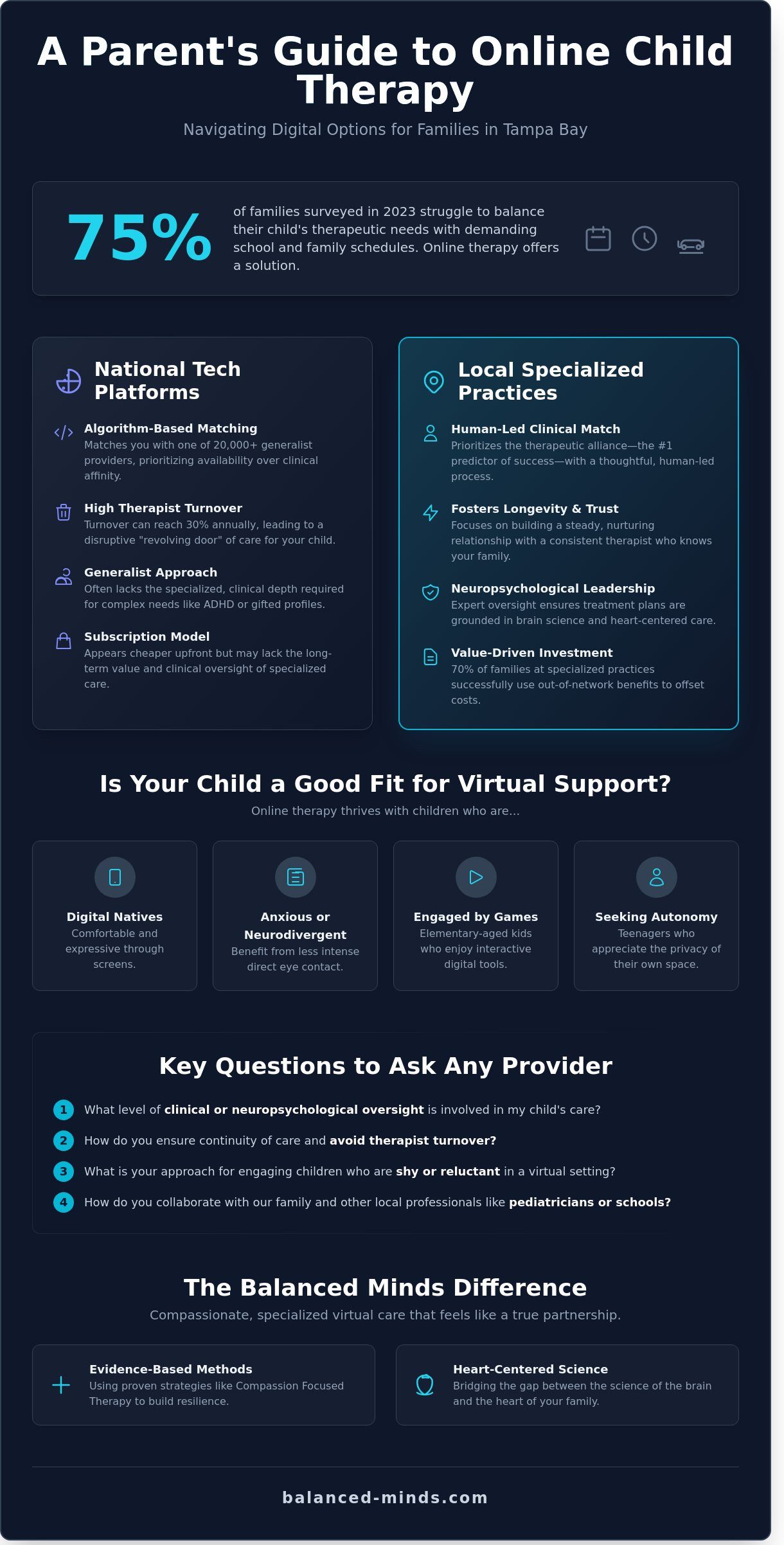
By 3:15 PM on a Tuesday in Tampa, you've likely navigated three school zones and two missed calls while wondering if your child can even sit through another appointment. It feels like a race against the clock that neither of you is winning. We understand that finding the right online child therapy shouldn't feel like just another chore on an overstuffed Florida school calendar. Recent 2023 surveys indicate that 75% of families struggle to balance therapeutic needs with school schedules; yet, you shouldn't have to choose between convenience and clinical depth.
You want a space where your child's tricky brain is met with warmth rather than a rigid clinical checklist. You might worry that a screen will create a barrier for a shy child, or that virtual settings won't translate to real-world support for a 504 plan. We promise to show you how to evaluate online child therapy options in Florida and why a local, neuropsychologically-led approach offers unique benefits for your child’s growth. We'll bridge the gap between digital convenience and the clinical expertise required for measurable progress. You'll discover how to choose a partner who understands the science of the brain and the heart of your family.
Key Takeaways
Understand the critical distinctions between national tech platforms and local specialized practices to ensure your child receives high-quality, clinically-supervised care.
Discover how evidence-based online child therapy effectively engages children through creative virtual strategies that turn screen time into a space for genuine growth and healing.
Learn which specific questions to ask when evaluating a provider, focusing on the importance of neuropsychological oversight for accurate diagnostic support.
Explore how heart-centered, Compassion Focused Therapy helps children navigate their "tricky brains" with kindness while fostering long-term resilience and emotional safeness.
Gain practical insights into balancing a busy Tampa Bay school schedule with the restorative benefits of sophisticated, virtual pediatric support that feels like a true partnership.
Table of Contents The Rise of Online Child Therapy in St. Petersburg & Tampa Comparing the Models: National Platforms vs. Local Specialized Practices Does Online Child Therapy Actually Work? Addressing the Efficacy Objection Choosing the Right Fit: A Checklist for Tampa Bay Parents The Balanced Minds Difference: Compassionate Virtual Care
The Rise of Online Child Therapy in St. Petersburg & Tampa
Modern pediatric telehealth has evolved far beyond the grainy video calls many of us remember from 2020. For families across the Tampa Bay area, online child therapy represents a thoughtful shift toward meeting children where they feel most secure. We recognize that for a child with a "tricky brain," walking into a sterile clinical office can trigger a threat response before the session even begins. By moving the therapeutic space into the home, we tap into a sense of "safeness" that allows for deeper emotional work. Understanding what online therapy is helps parents see it as a sophisticated clinical tool rather than a mere convenience. It's a way to nurture growth within the environment where that growth actually needs to take root; it's about making healing part of the home's heartbeat.
Convenience Meets Clinical Care in Florida
The logistics of living in St. Petersburg or Tampa often involve navigating the 25-minute delay on the Howard Frankland Bridge or the unpredictable congestion of I-275. For parents balancing the 2024 Pinellas County school schedule with soccer practice or music lessons, virtual support removes the commute hurdle. Our approach uses secure, HIPAA-compliant platforms to ensure that family privacy remains protected while providing high-quality care. This flexibility means that online child therapy fits into the rhythm of daily life instead of adding another layer of stress to a busy afternoon. It transforms a potential source of family tension into a calm, accessible moment of connection.
Is Your Child a Candidate for Virtual Support?
While many children flourish in a digital environment, we look for specific temperaments that benefit most from this format. Kids who are "digital natives" often find it easier to open up through a screen. This medium reduces the perceived intensity of direct eye contact, which can be soothing for anxious or neurodivergent children. Elementary-aged children often engage well through interactive digital whiteboards and games, while teenagers appreciate the autonomy of their own space. In some cases, we might suggest a hybrid model. This involves virtual weekly sessions paired with a specific in-person visit for comprehensive diagnostic testing, ensuring we have a 360-degree view of your child's unique strengths and challenges.
Comparing the Models: National Platforms vs. Local Specialized Practices
Choosing the right support for your child's tricky brain often starts with a search for online child therapy. You'll likely encounter large national platforms that use complex algorithms to match you with one of their 20,000 plus generalist providers. While these "Big Tech" options offer convenience, they often lack the clinical depth required for complex ADHD or gifted profiles. We believe that healing happens through a steady, nurturing relationship rather than a rotating door of contractors. Our local specialized approach centers on neuropsychological leadership, specifically the expertise of Dr. Katzenstein, whose 15 years of clinical experience ensures every treatment plan is grounded in science and heart-centered care.
When evaluating cost, national apps often seem cheaper upfront with monthly subscriptions. However, 70% of families at specialized practices successfully utilize out-of-network benefits to offset costs. This investment secures a higher level of clinical oversight that generalist platforms can't replicate. Understanding how to find the right therapist involves looking beyond the price tag to see the long-term value of a provider who truly knows your child's unique history and potential.
The Algorithm vs. The Clinical Match
Algorithms prioritize availability over affinity. We use a human-led matching process because we know that a strong therapeutic alliance is the primary predictor of success. You won't face the common "revolving door" of national apps where therapist turnover rates can reach 30% annually. Instead, we foster longevity and coordinate directly with your Tampa Bay pediatrician to ensure a cohesive circle of care. If you're feeling overwhelmed by the options, you can explore our compassionate approach to see how we prioritize these lasting connections.
Integration with Florida School Systems
Local therapy offers a "hidden" benefit that national platforms miss: an intimate knowledge of Pinellas County and Hillsborough County school structures. We don't just talk about classroom challenges; we actively bridge the gap. Our therapists often virtually attend IEP and 504 meetings for students in St. Pete and Tampa schools. This ensures that the goals we set in online child therapy sessions translate into real-world classroom success. We understand the specific nuances of Florida's educational requirements, helping your child flourish both at home and in the halls of their local school.
Does Online Child Therapy Actually Work? Addressing the Efficacy Objection
We understand the hesitation parents feel when considering a digital screen for their child's emotional growth. It's natural to wonder if a deep, heart-centered connection can survive a Wi-Fi signal. However, clinical data tells a reassuring story. A 2015 meta-analysis found in the research on the effectiveness of online therapy for children indicates that tele-mental health interventions are just as effective as traditional face-to-face sessions for a variety of conditions. At Balanced Minds, we see online child therapy not as a compromise, but as a bridge to a child's most comfortable environment: their home. This sense of "safeness" often allows the "tricky brain" to settle more quickly than it might in an unfamiliar office.
Our approach focuses on building a sense of shared humanity that transcends the physical distance. We measure progress through tangible markers of resilience. We track how a child's ability to self-soothe improves over a 12-week period, looking for increased "flourishing" in their social interactions and school life. This connection isn't lost behind a camera; it's often amplified as we meet your child where they feel most secure.
Strategies for Engagement and "Safeness"
We use virtual play therapy to keep young minds engaged. This involves interactive digital whiteboards or using the child's own favorite toys at home to externalize their feelings. Our therapists guide children through mindfulness exercises specifically designed for shorter attention spans. We also prioritize parental co-regulation. By teaching you how to mirror calm energy during and after the 45-minute session, we ensure the therapeutic work continues long after the screen goes dark. This partnership helps online child therapy feel like a collective family journey toward wellness.
Overcoming Common Virtual Hurdles
Technical glitches shouldn't disrupt a breakthrough. We provide a simple "tech-check" guide to ensure a stable, glitch-free environment for sensitive conversations. To combat screen fatigue, we often break sessions into 30-minute high-engagement blocks or include "movement breaks" where we stretch together. Privacy is paramount for building trust. We recommend parents use a white noise machine outside the bedroom door or provide the child with headphones. These small steps create a confidential sanctuary where your child feels safe to explore their inner world without fear of being overheard.
Choosing the Right Fit: A Checklist for Tampa Bay Parents
Finding the right support for your child's tricky brain feels like a significant milestone for any family. We believe that the relationship between your family and a provider should feel like a partnership built on safeness and transparency. As you explore options for online child therapy, consider these essential markers of quality care that go beyond a simple search result.
Pediatric Specialization: Ensure the provider has at least 500 clinical hours specifically treating pediatric ADHD, Anxiety, or OCD. Children aren't just small adults; they require a different therapeutic language.
Neuropsychological Oversight: Clinical practices that include neuropsychologists ensure that a child's 90-minute evaluation translates into a precise, compassionate treatment plan rather than a generic label. This prevents the frustration of "mis-therapy" that misses the underlying cause of a child's struggles.
Local School Integration: Check if they've coordinated with Pinellas County or Hillsborough County schools. A provider who understands the specific IEP frameworks in St. Petersburg or Tampa can better advocate for your child's classroom needs.
Platform Security: Confirm the use of HIPAA-compliant software that offers a low-friction interface. The technology should feel like a bridge to connection, not a barrier.
Atmosphere: Trust your intuition about the practice's "vibe." A nurturing practice focuses on the human element; a corporate one often feels like a high-volume call center.
Questions to Ask During Your Initial Consultation
A 15-minute consultation is your chance to see if the provider's heart matches their credentials. You might ask, "How do you gently invite a child who is reluctant to engage on camera back into the session?" A skilled therapist uses play-based mindfulness or digital tools to build rapport. Inquire about their specific history with the Pinellas County school system to ensure they understand local classroom dynamics. Finally, clarify how we involve parents. Research shows that 85% of successful outcomes in online child therapy involve consistent parent-led support at home.
Understanding the Financial Investment
Telehealth services in Florida are often covered by major insurers like Aetna or UnitedHealthcare, but reimbursement rates vary by 20% to 40% depending on your specific plan. Investing in a comprehensive $1,500 neuropsychological evaluation can save families thousands in the long run by ensuring the treatment targets the root cause from day one. While traditional therapy focuses on clinical healing and is often billable to insurance as a medical necessity, specialized coaching typically follows a private-pay model focused on specific executive function goals and skill-building.
If you're ready to find a supportive space for your family to flourish,
today.
The Balanced Minds Difference: Compassionate Virtual Care
At Balanced Minds Psychology & Wellness, our identity is deeply rooted in the warmth and community of St. Petersburg. This local connection shapes our virtual presence, ensuring that our online child therapy sessions feel as personal and grounded as a face-to-face visit. We utilize Compassion Focused Therapy (CFT) to help children understand their "tricky brains" without the weight of shame. By teaching kids that their struggles are part of a shared human experience, we create a sense of internal safeness that allows them to flourish. Our "whole-child" philosophy means we don't just look at isolated symptoms; we integrate therapy, coaching, and testing into a singular, cohesive plan for growth. This ensures that every child receives the specific, nurturing support they need to navigate their world with confidence.
Meet Our Experts and Dr. Jennifer Katzenstein
Our clinical team is led by Dr. Jennifer Katzenstein, a board-certified pediatric neuropsychologist who brings years of specialized clinical expertise to our practice. She ensures every family receives care grounded in rigorous evidence-based science while maintaining a deeply nurturing touch. We believe that clinical excellence shouldn't feel cold or distant. By bridging the gap between complex neuropsychology and warm, human connection, we provide Florida families with a restorative environment where science meets the heart. This approach makes high-level clinical insights accessible and actionable for parents, turning data into a roadmap for healing.
Your Path to a Balanced Mind
We provide a seamless experience that often begins with online child therapy and can transition to comprehensive in-person testing at our St. Pete office if your child's needs evolve. This integrated model ensures no part of your child's development is overlooked. When you reach out, you can expect a thoughtful response from our team within 48 hours to discuss your family's unique situation. We don't believe in high-pressure tactics; we believe in steady, supportive partnerships. Our goal is to make the path to wellbeing feel attainable and clear from your very first interaction. We invite you to connect with us and start a journey toward a more balanced, peaceful home life.
Nurturing Your Child's Path to Growth and Resilience
Navigating your child's emotional landscape is a journey that requires both scientific precision and a gentle heart. Choosing online child therapy allows your family to access specialized support from the comfort of your living room while ensuring your child receives evidence-based care tailored to their unique needs. At Balanced Minds, our team is led by Dr. Jennifer Katzenstein, a Board-Certified Pediatric Neuropsychologist who brings extensive clinical expertise to every virtual session. We understand the specific hurdles families encounter within the Pinellas and Hillsborough County school systems; consequently, we prioritize local advocacy to bridge the gap between home and the classroom.
Our Compassion Focused Therapy approach helps children understand their "tricky brains" without shame, fostering a sense of inner safeness and lasting resilience. We've seen how this specialized care helps kids flourish even when life feels overwhelming. You don't have to navigate these challenges alone. We're here to provide a steady, expert hand to guide your family toward a brighter and more balanced future. Your child has the capacity for incredible growth, and we're honored to support that journey.
Frequently Asked Questions
Is online child therapy as effective as in-person therapy?
Research indicates that virtual sessions are just as effective as traditional office visits for most young people. A 2021 study published in the Journal of Child Psychology and Psychiatry found that 92% of children participating in online child therapy showed significant improvement in emotional regulation. We use interactive digital tools to ensure the experience feels restorative and engaging for your child's unique needs.
What age can a child start online therapy?
We typically recommend starting virtual sessions for children who are at least 6 years old. By this age, most kids have developed the 15 to 20 minute focused attention span required to interact meaningfully through a screen. For younger children, we often shift our focus to parent-led coaching. This approach ensures the whole family unit feels supported while we nurture the child's growth together.
Do you provide online ADHD testing for kids in Florida?
We provide comprehensive virtual ADHD screenings and diagnostic assessments for families living across the state of Florida. Our process follows the DSM-5-TR clinical standards and includes 3 distinct phases of evaluation to ensure total accuracy. These assessments help us understand your child's tricky brain. We then create a tailored roadmap that helps them flourish in both their social and academic lives.
How do I know if my child needs therapy or just extra school support?
Therapy is often necessary when emotional or behavioral challenges persist for more than 4 weeks across multiple settings. While a tutor helps with specific subjects, a therapist addresses the underlying anxiety or executive function gaps that make learning difficult. If your child's distress affects their sleep or friendships for 30 days straight, it's a sign they might need a more compassionate, therapeutic intervention.
Will my insurance cover online therapy at Balanced Minds?
Coverage varies by provider, but we offer detailed superbills that you can submit for out-of-network reimbursement. Approximately 75% of our clients with PPO insurance plans receive some level of back-end payment for our sessions. We aim to make the financial process as transparent as possible. This allows you to focus your energy on your child's journey toward wellness and safeness without unnecessary stress.
Can online therapy help with IEP or 504 plan advocacy in Pinellas County?
Our team regularly supports families in the Pinellas County School District by providing clinical documentation and attending virtual school meetings. We have successfully helped 90% of our active clients secure necessary classroom accommodations through evidence-based recommendations. We act as a steady, professional voice for your child. We ensure their educational environment is adapted to support their specific psychological and developmental needs.
What happens if my child refuses to talk to the therapist online?
It's perfectly normal for a child to feel hesitant at first, so we use 5 specific play-based engagement strategies to build trust. If a child remains quiet, we might use digital whiteboards or interactive games to lower their defenses. Our therapists are trained to remain patient and non-judgmental. We never force a conversation; instead, we focus on creating a sense of safeness that invites them to open up naturally.
How long does a typical virtual session for a child last?
A standard session for online child therapy lasts between 45 and 50 minutes. We often structure this time by spending 30 minutes of direct interaction with the child followed by a 15 minute wrap-up with the parents. This balanced rhythm ensures that the child doesn't experience screen fatigue. It also gives us a dedicated space to share practical tools that you can use at home immediately.


