

Is It Working? 10 Signs Therapy Is Helping Your Child
Updated: 3 days ago
What if the most profound progress in your child's journey is actually happening in the quiet moments you might be missing? As parents, we often wait for a dramatic shift, yet the reality of emotional growth is frequently subtle and non-linear. It's completely natural to feel a sense of uncertainty or wonder about the signs therapy is working for your child, especially when the work feels "invisible" or slow. We understand the difficulty of distinguishing between normal developmental milestones and the intentional gains made through professional support.
We believe that every family deserves a sense of psychological safety and clarity as they navigate these complexities. This article will help you recognize meaningful markers of progress so you can move forward with confidence in your child's therapist and treatment plan. We'll explore a clear framework for measuring emotional and behavioral growth, providing you with practical ways to support this restorative process right at home. From improved regulation to a stronger sense of self, here are the ten indicators that your family's investment in wellness is truly blooming.
Table of Contents
Defining Success: What Does 'Progress' Look Like in Child Therapy?
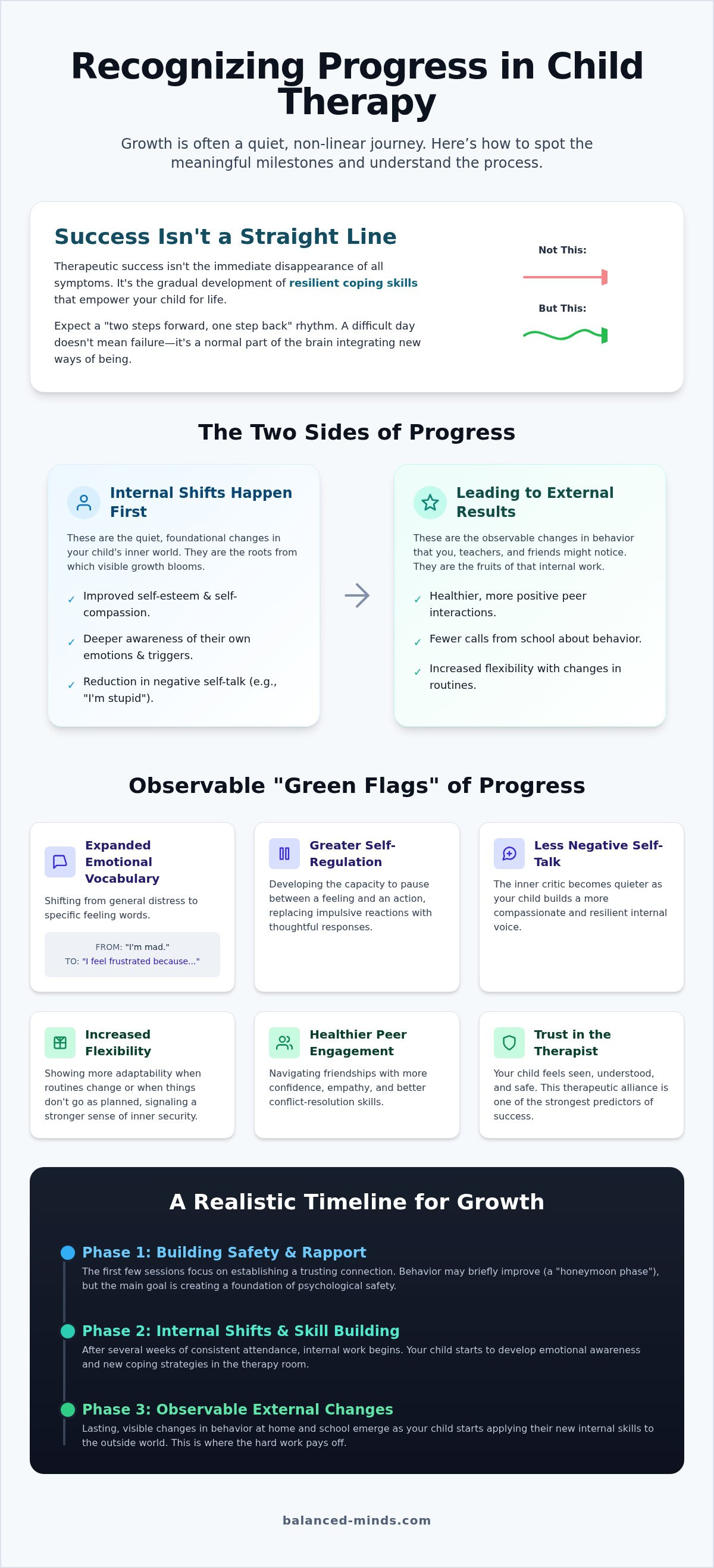
When we begin the journey of therapy, it's natural to look for immediate relief. We want the meltdowns to stop or the anxiety to vanish overnight. However, we define success not just by the absence of challenges, but by the presence of new, healthier ways to navigate them. Genuine progress is found in the development of resilient coping skills that your child can carry into adulthood. One of the most important signs therapy is working for your child is their growing ability to utilize these tools when life feels overwhelming.
Growth in children rarely follows a straight line. It's often a rhythmic dance of two steps forward and one step back. A child might have a wonderful week followed by a difficult day; this isn't a failure of the process. It's simply how the brain integrates new learning. We work to set realistic milestones based on your child's unique diagnostic profile, ensuring the map we follow is tailored specifically to their needs. At Balanced Minds, we see ourselves as partners in your family's journey, focusing on sustainable growth rather than quick, temporary fixes.
The connection between the child and the professional is paramount. Research in Child psychotherapy consistently shows that the quality of this therapeutic alliance is a primary predictor of success. When your child feels truly seen and understood, their defenses lower, making room for the hard work of change. This bond creates the psychological safety necessary for them to explore difficult emotions and try out new behaviors without fear of judgment.
The Timeline of Change
Safety comes first. The first few sessions aren't about fixing behavior; they're about building rapport. You might see a honeymoon phase where behavior improves briefly due to the novelty of the sessions, but genuine growth takes time. It often takes several weeks of consistent attendance before we see observable, lasting shifts in behavior. We prioritize this slow, steady foundation because a child who feels safe is a child who is ready to grow.
Internal vs. External Gains
We often see internal gains before external changes manifest. Internal shifts include improved self-esteem or a deeper emotional awareness. Your child might start to understand their own triggers before they have the full capacity to manage them perfectly. External gains, like fewer calls from school or improved peer interactions, are the outward fruit of that internal work. These visible results are encouraging signs therapy is working for your child, but they rely on the quiet, internal shifts happening in the therapy room first.
Emotional Intelligence: Identifying Internal Shifts in Your Child
While we often wait for big behavioral shifts, the most profound signs therapy is working for your child often begin within the quiet landscape of their internal world. These "green flags" of emotional intelligence represent the foundational work that makes lasting change possible. You might notice your child beginning to replace impulsive reactions with thoughtful observations about their own feelings. This shift indicates that they are moving from being overwhelmed by their emotions to being the curious observers of them, which is a significant milestone in any therapeutic journey.
We look for a noticeable reduction in "negative self-talk" as a key marker of progress. When a child stops saying "I'm stupid" or "I can't do anything right" and begins to use more compassionate language, it shows that the restorative work of therapy is taking root. This internal shift creates a sense of psychological safety that allows them to take risks and learn from mistakes without the heavy weight of shame. It's a beautiful moment when a child starts to offer themselves the same kindness we provide in our sessions.
The Power of Emotional Vocabulary
A significant victory occurs when a child moves from general expressions of distress to specific "feeling words." Instead of simply saying "I'm mad," they might explain, "I feel frustrated because this homework is taking longer than I expected." Our child psychologists work as gentle translators in this process, helping children map out their internal experiences with precision. Emotional literacy is the ability to identify and communicate internal states effectively, serving as the essential cornerstone of therapeutic success. As this vocabulary grows, the need to "act out" feelings often diminishes because the child finally feels empowered to speak them instead.
Self-Regulation in Action
One of the most heartening signs therapy is working for your child is the emergence of "the pause." This is that split second of hesitation before a reaction where a child chooses a different path. It shows their brain is building the "mental muscle" required for executive functioning. You may notice that meltdowns are becoming shorter in duration or that your child is starting to initiate their own coping strategies, such as taking a deep breath or asking for a break. This transition from external, parent-led regulation to internal, child-led regulation is a powerful marker of growth. If you are noticing these small but mighty shifts, our Individual Therapy for Children can help you continue to foster this growth at home.
Observable Behavioral Changes at Home and School
While the internal shifts we discussed are vital, we know you are also looking for tangible changes in daily life. One of the clearest signs therapy is working for your child is an increase in emotional and cognitive flexibility. You might notice they are more resilient when a routine changes unexpectedly or when they hear the word "no." Instead of an immediate meltdown, they might ask a clarifying question or utilize a calming strategy. This adaptability shows that their nervous system is learning to stay regulated even when things don't go according to plan.
We also celebrate when children return to activities they once avoided due to anxiety or fear. Whether it's attending a birthday party, joining a sports team, or simply sleeping in their own bed, this "return to life" is a powerful indicator of progress. Therapy helps them dismantle the walls built by avoidance, replacing fear with a renewed sense of curiosity. As they regain their independence in daily tasks and schoolwork, we see their confidence bloom. They start to trust their own ability to handle difficult things, which is the ultimate goal of our work together.
Social and Peer Success
Navigating the social complexities of Tampa Bay schools can be a heavy lift for any child. We look for a reduction in social withdrawal and a genuine desire to engage with peers as a mark of therapeutic success. You might hear stories of improved conflict resolution during playdates or see your child initiating games with others. This shift isn't just about "behaving"; it's about feeling safe enough to connect. When a child begins to navigate disagreements with family members or friends with less intensity, we know their social-emotional toolkit is expanding.
The School Connection
We often collaborate with Pinellas County teachers to track how these shifts translate to the classroom environment. Improved academic focus is frequently a natural byproduct of better emotional health; when the brain isn't stuck in a state of high alert, it's finally free to learn. One significant victory we often see is the reduction of "Monday morning" school refusal. Through therapeutic tools, children learn to manage the transition from home to school with significantly less distress. These observable changes in the classroom provide a beautiful confirmation that the signs therapy is working for your child are manifesting in every area of their life.
The Parent's Role: Measuring and Supporting Progress
We view therapy as a collaborative journey where parents are the primary partners in their child's growth. While the child does the deep internal work during their sessions, you provide the external scaffolding that sustains that progress in the real world. One of the most subtle yet powerful signs therapy is working for your child is actually a shift in your own relationship with them. You might find yourself reacting with more patience or understanding their specific triggers with greater clarity. This growth in the parent-child bond is a vital metric of success that often goes uncelebrated in traditional clinical settings.
We encourage you to observe shifts from a place of quiet curiosity rather than scrutiny. Tracking progress at home should feel like noticing the weather change, not like conducting a performance review. When you see a "green flag," such as your child choosing to take a breath instead of shouting, you can acknowledge it gently. This approach preserves their sense of autonomy and psychological safety while validating their hard work. By focusing on these small victories, you help reinforce the new pathways their brain is building.
Effective Parent-Therapist Communication
Regular consultations are essential for keeping the treatment plan aligned with your family's daily reality. During your check-in with a child psychologist st petersburg fl, come prepared to share both the "wins" and the "setbacks" from your week. We recommend asking questions like, "What specific regulation skills are we prioritizing right now?" or "How can I mirror the language you're using in sessions?" While we respect child-therapist confidentiality to maintain a foundation of trust, these consultations ensure you remain an informed co-navigator in the clinical process.
Creating a Therapeutic Environment at Home
The work done in the therapy office truly takes root when it is reinforced within the home environment. By adjusting your parenting style to mirror the skills being taught, you create a consistent and predictable world for your child. This alignment is a core focus of family therapy near me, where we work to ensure the whole family system is speaking the same emotional language. Active parental involvement accelerates a child's progress by providing a safe, consistent space for them to practice their new "toolbox" of skills. If you're ready to deepen this collaborative work, our team at Balanced Minds Psychology & Wellness offers the professional guidance your family needs to move forward with confidence.
The Balanced Minds Approach: Collaborative Growth in St. Pete
At Balanced Minds Psychology & Wellness, we believe that healing happens within the context of connection. We don't just view the child as the individual in treatment; instead, we see the child, the family, and the therapist as a unified team moving toward a shared goal of wellbeing. This collaborative spirit is the heartbeat of our practice in St. Petersburg and Tampa. By working together, we ensure that the progress seen in our offices translates into meaningful, lasting change in your living room. Recognizing the signs therapy is working for your child becomes much easier when everyone is reading from the same map.
One of the ways we provide this map is through comprehensive psychological evaluations. These assessments allow us to look beneath the surface of a behavior to identify the "why" behind the struggle. Whether your child is navigating anxiety or requires specialized ADHD evaluations, understanding their unique neuropsychological profile ensures we're targeting the right goals from the very first session. This precision reduces the uncertainty many parents feel and helps you move forward with confidence in the treatment path we've chosen together.
Science-Backed Care with a Human Heart
Our approach is deeply rooted in evidence-based therapeutic interventions, yet we never lose sight of the human being in front of us. We integrate neuropsychological insights into daily sessions to help children build the specific cognitive and emotional skills they need to thrive. When searching for psychology near me, it's vital to find a practice that prioritizes psychological safety as much as clinical rigor. We're especially committed to supporting our St. Pete and Tampa Bay community through ADHD coaching and executive functioning coaching, helping neurodivergent children find their unique rhythm and strengths.
Your Next Steps Toward Healing
If you're ready to explore how we can support your family's journey, the first step is a simple one. You can schedule a consultation at our St. Petersburg office to discuss your concerns and learn more about our restorative process. During the intake process, we take the time to listen to your story and gather the information needed to create a tailored plan for your child. We know that the path to mental wellness can feel long, but you don't have to walk it alone. As you begin to notice the signs therapy is working for your child, know that we're right there with you, celebrating every milestone and supporting every step toward a brighter, more balanced future.
Nurturing the Path Toward Resilience and Connection
We understand that the therapeutic process often feels like a quiet unfolding rather than a sudden transformation. By observing the subtle shifts in emotional vocabulary and the newfound flexibility in your daily routines, you can find deep confidence in the progress being made. Recognizing the signs therapy is working for your child allows you to celebrate the small victories that build a foundation for a resilient future. This journey is most successful when we work as a unified team, grounding every step in both clinical science and heart-centered care.
At Balanced Minds Psychology & Wellness, we are dedicated to providing evidence-based care tailored specifically to our Tampa Bay community. We invite you to take the first step toward your child's wellbeing; schedule a consultation with Balanced Minds today. Your family possesses an incredible capacity for growth, and it's our privilege to walk this restorative path alongside you.
Frequently Asked Questions
How long does it usually take to see signs that therapy is working?
Most families begin to see the signs therapy is working for your child within 6 to 12 sessions of consistent attendance. The initial phase of care focuses on building psychological safety and rapport, which is essential for deep work. While some children show immediate relief, others require more time to process internal shifts before behavioral changes manifest in their St. Petersburg or Tampa schools.
What if my child says they don't want to go to therapy anymore?
Resistance is a natural part of the therapeutic journey, often occurring when the work begins to touch on difficult emotions. If your child expresses a desire to stop, we recommend discussing this with their therapist during a parent consultation. It may indicate that a breakthrough is near or that the treatment plan needs a slight adjustment to better align with their current emotional capacity.
Can I talk to my child's therapist about what they discuss in sessions?
We prioritize the privacy of the child to ensure they feel safe sharing their internal world. While you won't receive a play by play of every session, your child's therapist will regularly discuss general themes, progress toward goals, and specific skills you can reinforce at home. This balance maintains the therapeutic alliance while keeping you informed as a vital partner in their growth.
My child's behavior got worse after starting therapy—is this normal?
It's actually quite common for behaviors to intensify shortly after therapy begins. As children start to unpack complex feelings, they may feel more sensitive or overwhelmed before they have fully mastered their new coping tools. We often see this "regression before progression" as a sign that the child is finally engaging with the underlying issues rather than simply masking them for the sake of others.
How do I know if we have the wrong therapist for my child?
A successful outcome depends heavily on the "fit" between the child and the professional. If your child remains consistently guarded after several sessions or if the therapist's style doesn't resonate with your family's values, it may be time to reassess. We encourage open dialogue with the clinical team at our St. Petersburg office to ensure your child feels supported by a mentor they can truly trust.
Is it a sign of progress if my child starts talking about their therapist at home?
When your child starts mentioning their therapist or the "tools" they learned in session, it's a wonderful sign of integration. It shows that the therapy room has become a place of psychological safety and that they are successfully carrying those restorative concepts into their daily life. This is one of the most encouraging signs therapy is working for your child as they begin to own their growth.
What should I do if I don't see any changes after three months?
If you don't see any shifts after 90 days, we recommend a collaborative review of the treatment plan. This may be an appropriate time to consider comprehensive psychological evaluations if they haven't been completed yet. These assessments provide a clearer map of your child's neuropsychological needs, ensuring our interventions in the Tampa Bay area are targeting the root cause of the challenges rather than just the symptoms.
How do we know when it's time to 'graduate' from therapy?
Graduation occurs when the child has consistently met their therapeutic goals and demonstrated the ability to use their coping skills independently. We look for sustained stability during transitions and a general sense of resilience when facing new stressors. The conclusion of therapy is a celebratory milestone, marking the moment when your child is ready to navigate their world with the internal strength they've worked so hard to build.


