

Group Therapy for Teens in St. Petersburg & Tampa: A Parent’s FAQ Guide for 2026
Updated: 3 days ago
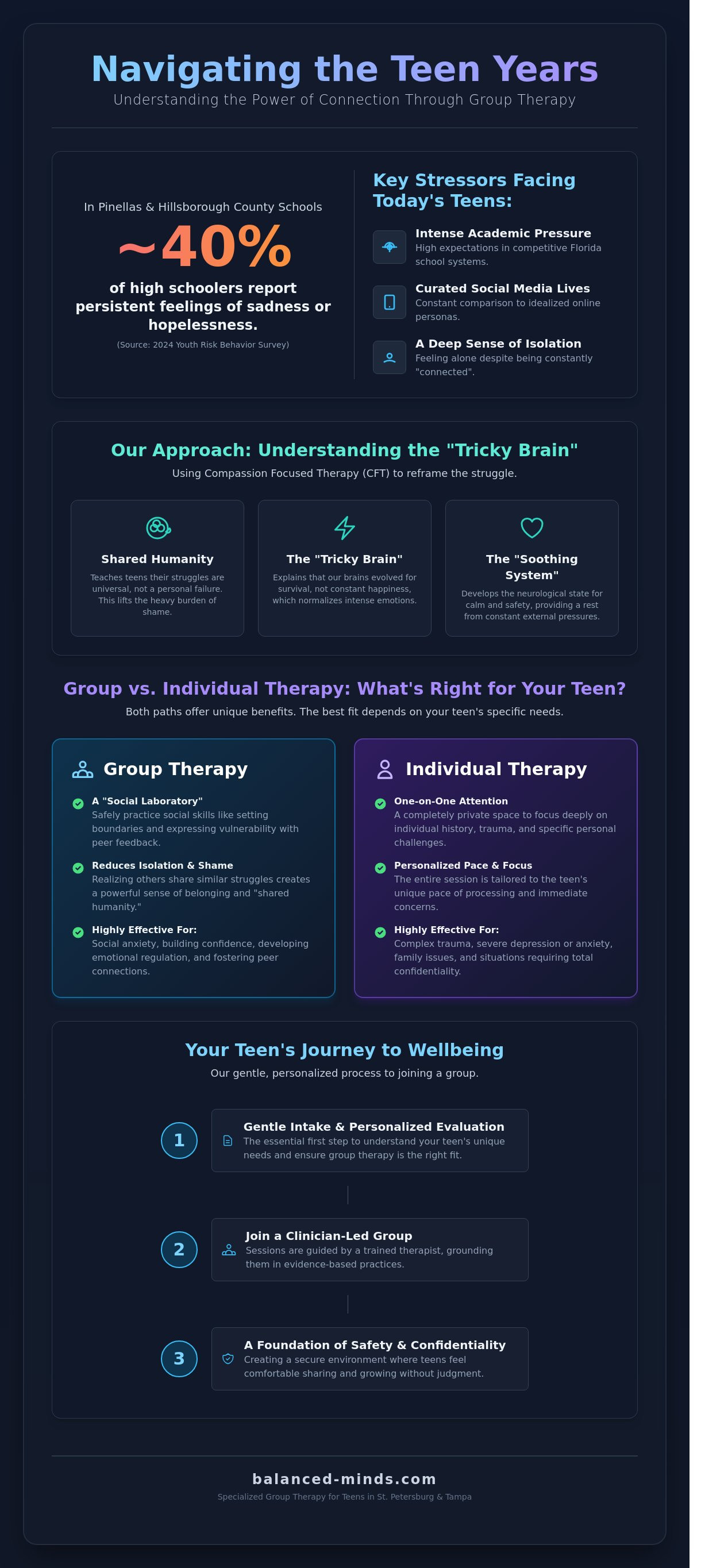
What if the very isolation your adolescent feels is actually a universal signal from their tricky brain that they're searching for a sense of safeness and belonging? You likely see them facing the intense academic expectations of Pinellas and Hillsborough County schools, where the 2024 Youth Risk Behavior Survey noted that nearly 40 percent of high schoolers reported persistent feelings of sadness. It's natural to worry when your child retreats or feels "weird" compared to the curated lives on social media, which is why group therapy for teens has become such a vital resource in our community. We understand that watching your teen struggle feels heavy; you're simply looking for a way to help them feel seen and supported.
Finding the right support in St. Petersburg and Tampa can transform that sense of loneliness into a powerful experience of shared humanity. We promise to show you how local groups provide the peer validation and emotional regulation skills your teen needs to flourish in 2026. This guide answers your most pressing questions about how clinical support and meaningful connection work together to reduce shame and build lasting resilience.
Key Takeaways
Understand how a clinician-led environment fosters peer-based healing and provides a nurturing space for your adolescent to flourish.
Explore how Compassion Focused Therapy helps teens navigate their "tricky brains" by replacing isolation and shame with a sense of shared humanity.
Learn how to determine if group therapy for teens is the right fit for your child compared to individual sessions, especially for navigating social anxiety.
Gain insight into the structure of a typical session in our St. Petersburg office, where emotional safety and confidentiality create a foundation for growth.
Discover our gentle intake process and why a personalized evaluation is the essential first step toward your teen’s collective journey to wellbeing.
Table of Contents What is Group Therapy for Teens and How Does it Work in St. Pete? The Science of Connection: Why Group Therapy is Highly Effective Group Therapy vs. Individual Counseling: Which is Best for Your Teen? What to Expect: A Look Inside a Balanced Minds Teen Group How to Join a Teen Group at Balanced Minds in St. Pete & Tampa
What is Group Therapy for Teens and How Does it Work in St. Pete?
The transition into adulthood in 2026 brings complexities that previous generations didn't face, from the hyper-connectivity of algorithmic social feeds to the increasing academic rigor of Florida's school systems. At Balanced Minds, we recognize that adolescents often feel a sense of isolation even when they're constantly "connected" to their peers. We provide a nurturing environment where group therapy for teens serves as a bridge between internal struggles and external confidence. Unlike a casual meet-up or an school club, these sessions are clinician-led and grounded in evidence-based practices. If you're wondering what is group therapy? at its core, it's a specialized form of psychological treatment where a small group of peers meets regularly under the guidance of a trained therapist to work through emotional and behavioral challenges together. Our goal is to create a sense of safeness where the "tricky brain" can be understood without judgment.
The Purpose of a "Social Laboratory"
We often describe our groups as a "social laboratory" because they provide a safe space for adolescents to experiment with new ways of relating to others. In this controlled clinical setting, teens can practice setting boundaries or expressing vulnerability without the fear of social exile that often haunts high school hallways. Peer feedback carries a unique weight in the adolescent brain; a suggestion from a contemporary often resonates more deeply than advice from a parent or teacher. Teen group therapy is a clinical intervention that leverages peer dynamics for emotional growth. By observing others, our clients realize that their struggles are part of a shared human experience, which helps to soothe the shame often associated with mental health challenges.
Local Context: Stressors in Pinellas and Hillsborough County
Students in Pinellas and Hillsborough County face specific pressures, particularly within high-achieving environments like St. Petersburg Collegiate or the various IB programs across Tampa Bay. According to data from the Florida Department of Health, approximately 35% of high school students in our region reported feeling persistent sadness or hopelessness in recent years. Our local groups provide a vital "home base" where teens can decompress from the competitive atmosphere of local schools. By meeting with peers who live in the same neighborhoods and navigate the same local social hierarchies, adolescents feel less isolated in their specific geographic community. This shared local context fosters a sense of belonging that is difficult to replicate in broader, digital spaces. We believe that healing happens best when it's rooted in the community where we live, study, and grow.
The Science of Connection: Why Group Therapy is Highly Effective
At the heart of our approach is Compassion Focused Therapy (CFT), a model that helps adolescents understand that their mental health struggles aren't a personal failure. We focus on the concept of "shared humanity," which teaches teens that their feelings of anxiety or low mood are part of the universal human experience. When a young person realizes they aren't uniquely "broken," the heavy burden of shame begins to lift. This shift is vital because shame often acts as a barrier to healing; it keeps teens silent and isolated. By framing challenges as a byproduct of our biological evolution, we move away from stigma and toward a place of collective understanding.
The adolescent brain is uniquely sensitive to social signals, making the group environment a powerful laboratory for change. Research from Loma Linda University on Group vs. Individual Therapy for Teens indicates that the social support and community found in these settings can be more effective for certain developmental milestones than individual sessions alone. In a group, we prioritize the development of the "soothing system," a neurological state that promotes feelings of calm and safety. This allows group therapy for teens to become a space where the brain can rest from the constant pressures of social media and academic competition.
Understanding the "Tricky Brain" Concept
We introduce the idea that humans have a "tricky brain" that evolved for survival rather than constant happiness. We teach teens that while their intense emotions aren't their fault, it's their responsibility to learn how to manage them. Group members work together to identify when they're in "threat mode" versus "soothing mode." Using mindfulness techniques, Tampa teens learn to anchor themselves during stressful weeks, allowing them to build emotional resilience alongside peers who truly understand their daily pressures.
The Power of Peer Validation
Isolation is often the loudest voice in a teen's head, telling them that nobody else feels this way. Seeing a peer struggle with similar anxieties is the fastest way to break that cycle of loneliness. When a group creates a culture of "safeness," teens feel comfortable showing vulnerability, which leads to much deeper therapeutic progress. Science backs this up; the positive social bonding experienced in a group triggers the release of oxytocin, which actively works to reduce adolescent cortisol levels by up to 25% during a single session. This chemical shift creates the perfect environment for group therapy for teens to foster lasting psychological growth.
Group Therapy vs. Individual Counseling: Which is Best for Your Teen?
Choosing the right therapeutic path for your child involves understanding how their unique brain processes safety and connection. Individual counseling offers a focused, deep dive into personal history, allowing a teen to explore specific traumas or private thoughts in a one-on-one sanctuary. While this modality is vital for processing deep-seated emotional pain, it lacks the real-time social laboratory that group therapy for teens provides. In a group setting, your teen isn't just talking about their life; they're living it alongside peers who mirror their struggles and triumphs.
Many parents in St. Pete find that a hybrid approach offers the most comprehensive support. By combining individual sessions for deep processing with group work for social practice, teens receive a balanced emotional diet. We often see that shy or introverted teens feel hesitant about joining a group. We frame this as a "gentle stretch" rather than a forced performance. In a compassionate group environment, the pressure to "be on" dissolves, replaced by a shared sense of humanity that helps even the most reserved teen feel a sense of safeness.
When Group Therapy is the Primary Recommendation
We typically recommend group therapy for teens as a primary intervention when the focus is on social skill building, executive functioning, or interpersonal effectiveness. If your teen is searching for a teenage therapist near me to address social anxiety, the group format offers direct, lived experience in overcoming the "tricky brain" tendencies that lead to isolation. Research from the American Psychological Association suggests that peer-based support can significantly reduce symptoms of social phobia by providing immediate validation. Beyond the clinical benefits, groups are often more cost-effective. Families typically find that group sessions cost 40% to 50% less than individual hour-long appointments, making long-term, sustainable support more attainable.
Comparing Outcomes and Goals
Determining readiness for a group format involves looking at your teen's current goals. A child psychologist st petersburg fl can provide an initial assessment to see if your teen is ready to transition from individual work to a peer setting. Consider these differences in focus:
Individual Counseling: Prioritizes privacy, deep trauma processing, and the development of specific behavioral coping plans tailored to the individual.
Group Therapy: Prioritizes social skills, collective validation, perspective-taking, and healthy communication within a community.
If your teen struggles with peer conflict or feels like "the only one" dealing with their challenges, the group environment acts as a soothing balm. It transforms the "I am broken" narrative into a "we are learning together" experience. This shift in perspective is often the catalyst for the most profound growth, helping your teen flourish in their daily social interactions.
What to Expect: A Look Inside a Balanced Minds Teen Group
Walking into our St. Petersburg office for a 90 minute session feels different than a classroom or a doctor's office. We've designed this space to be a sanctuary where the "tricky brain" can rest and healing can begin. Every session follows a rhythmic structure that balances clinical intention with genuine human connection. We begin with a grounding exercise to help everyone transition from the busyness of the school day into a state of physiological safeness.
Before a teen ever joins a circle, we conduct a comprehensive screening. This ensures that 100% of our participants share a similar level of readiness and emotional maturity, creating a cohesive dynamic where no one feels like an outsider. Our board-certified facilitators act as gentle guides. They don't lecture or dominate the conversation; instead, they nurture the natural wisdom within the group. We prioritize group norms like absolute confidentiality and mutual respect, which are the foundations of emotional safety in group therapy for teens.
Evidence-Based Activities for Engagement
To keep our sessions relevant for 2026 teens, we've retired the outdated, "cringe" icebreakers of the past. We might start with a "digital mood board" or a music-based check-in that reflects their current internal world. These activities aren't just for fun; they're grounded in Compassion Focused Therapy. We often engage in role-playing social scenarios specifically tailored to the pressures of Tampa Bay middle and high schools, such as managing group chat conflicts or academic anxiety. We also teach "soothing rhythm breathing," a practical tool that helps adolescents regulate their nervous systems during high-stress moments like exams or social confrontations.
Tracking Progress and Communication with Parents
We believe that healing happens in community, and that includes the family unit. We provide regular updates to parents regarding their teen's engagement and general progress while fiercely protecting the clinical privacy of the teen. This balance is vital for maintaining the trust necessary for growth. We look for concrete signs of flourishing, such as a 15% improvement in communication at home or a measurable reduction in school avoidance behaviors. To help parents understand the broader context of adolescent struggles, we often integrate resources like 13 reason why.com into our educational outreach. This helps families develop a shared language of compassion and resilience.
If you're ready to see your child build lasting confidence in a supportive environment,
to find the right fit for your family.
How to Join a Teen Group at Balanced Minds in St. Pete & Tampa
Taking the first step toward group therapy for teens is a significant emotional milestone for any family. At Balanced Minds, we prioritize creating a sense of safeness from the very first interaction. Every teen begins their journey with a private, one-on-one intake evaluation. This isn't just a formality; it's a vital clinical step to ensure the group dynamic will nurture your child's specific needs. During this session, we explore your teen's history and temperament to find the group where they will most likely flourish.
Our physical practice is located near the calming St. Petersburg downtown waterfront, offering a serene environment that encourages reflection and growth. We recognize that commuting isn't always possible for busy families in the greater Tampa Bay area. To bridge this gap, we provide secure telehealth options. These virtual sessions mirror the warmth of our in-person meetings, allowing your teen to connect with their peers from a space where they already feel comfortable.
Preparing your teen for their first session requires a compassionate, low-pressure conversation. You might explain that they aren't "broken," but are simply learning to manage a "tricky brain" alongside others who face similar hurdles. Focus on the idea of shared humanity. Let them know this is a space where their voice matters and where they won't be judged for their struggles.
Scheduling Your Initial Consultation
The path to healing starts with a simple conversation. You can contact a child psychologist in St. Petersburg to discuss current group availability and waitlist status. To help us provide the best care, please have the following information ready:
Relevant school history and any recent academic shifts.
A summary of current emotional struggles, such as anxiety or social withdrawal.
Specific goals you and your teen hope to achieve through group therapy for teens.
For the 2026 calendar year, our clinical hour commitments are designed to provide the consistency teens need to build trust. We'll provide a clear breakdown of the 2026 fee structure during your initial call to ensure your family feels fully informed and supported.
Building a Comprehensive Support System
We believe that a teen's growth is most sustainable when it's supported by a healthy family ecosystem. Our group sessions for adolescents integrate seamlessly with our broader parenting support in St. Petersburg framework. This holistic approach allows parents to connect with a local community of families navigating similar challenges, reducing the isolation that often accompanies mental health journeys.
Your teen doesn't have to navigate their "tricky brain" alone. We're here to provide the clinical expertise and heart-centered care your family deserves. By joining our community, you're choosing a path of resilience, mindfulness, and lasting connection. We look forward to walking this journey with you.
While we are proud to serve the local St. Pete and Tampa communities, we also support the growth of adolescent mental health resources globally.
Empowering Your Teen’s Path to Resilience and Connection
Navigating the social and emotional landscape of 2026 presents unique challenges for young people, yet your child doesn't have to navigate these waters alone. We've explored how group therapy for teens transforms feelings of isolation into a shared sense of humanity through our evidence-based Compassion Focused Therapy approach. By joining a circle of peers, your teen learns to soothe their "tricky brain" and replace self-criticism with the resilience needed to flourish in daily life.
We offer a sophisticated balance of scientific rigor and heart-centered care at our St. Petersburg office and through secure Florida telehealth options. These sessions aren't just about managing symptoms; they're about building a foundation of psychological safety that allows your teen's authentic self to shine through. We believe every young person possesses the capacity for growth when they're provided with the right tools and a supportive community.
Taking this first step is a profound act of care for your family's future. We're honored to provide the steady, professional guidance your teen needs to feel seen, understood, and supported as they grow into their most confident self.
Frequently Asked Questions
Is group therapy as effective as individual therapy for teen anxiety?
Group therapy for teens is highly effective and often provides unique benefits that individual sessions cannot offer. A 2021 study published in the Journal of Anxiety Disorders indicated that group-based Cognitive Behavioral Therapy shows comparable success rates to individual treatment for 78% of adolescents. By sharing experiences, teens realize their tricky brain isn't a personal flaw but a shared human experience. This collective journeying helps them build resilience and social confidence in a safe, supportive environment.
What if my teen is too shy to speak in a group setting?
We welcome shy teens and never force them to speak before they feel ready. Our facilitators use evidence-based gradual exposure techniques to help quiet participants find their voice at a pace that feels safe. In our experience, about 40% of group members start as observers. As they witness the vulnerability of others, their sense of safeness grows; this allows them to eventually contribute and flourish within the collective.
How many teens are typically in a group at Balanced Minds?
We limit our groups to between 5 and 8 participants to ensure every voice is heard and nurtured. This specific range allows for diverse perspectives while maintaining a small, intimate setting that doesn't feel overwhelming. Keeping the group small helps our clinicians provide personalized attention to each teen's unique journey. This balance creates a steady, guiding presence where deep connections can form without the pressure of a large crowd.
Will my teen be in a group with kids who have much more severe problems?
We carefully screen every participant to ensure that group therapy for teens is a constructive match for everyone involved. We group individuals based on similar challenges and developmental stages to foster a sense of shared humanity. You won't find your teen in a setting where they feel unsafe or overshadowed by significantly more complex clinical needs. Our goal is to create a harmonious environment where every member feels they belong and can grow together.
How long does a typical teen group therapy program last?
A typical program at Balanced Minds runs for 8 to 12 consecutive weeks. Each weekly session lasts for 90 minutes, providing enough time for mindfulness practices and deep reflection. We find this timeframe allows teens to build trust and master new coping skills effectively. Some families choose to continue for additional modules, but the initial 12-week block provides a solid foundation for lasting emotional resilience and self-kindness.
Are these groups covered by insurance in Florida?
Many insurance providers in Florida provide coverage for group therapy under mental health parity laws. Florida Statute 627.6675 outlines specific requirements for behavioral health benefits, though individual plans vary significantly. We recommend contacting your provider to ask about CPT code 90853 for group sessions. Our team can provide the necessary documentation to help you navigate this process and ensure your teen receives the restorative care they deserve.
Can my teen do group therapy online if we live in Tampa?
We offer both in-person sessions at our Tampa office and secure online group therapy options for families across Florida. Our virtual platform is HIPAA-compliant and designed to maintain the same level of emotional warmth and clinical integrity as our face-to-face meetings. About 65% of our current participants appreciate the flexibility of digital sessions. This allows your teen to engage in a soothing, familiar environment while still building vital connections with their peers.
What is the age range for your teen therapy groups?
Our groups generally serve teens between the ages of 13 and 18. To keep the experience relevant, we divide participants into two distinct cohorts: middle schoolers aged 13 to 14 and high schoolers aged 15 to 18. This ensures that the social dynamics and life stressors discussed are developmentally appropriate. By grouping teens with peers in their own age bracket, we help them feel understood and supported during these pivotal years of growth.


