

Finding a Therapist in Tampa: A Parent’s Guide to Choosing the Right Child Specialist
Updated: 3 days ago
Imagine sitting at your kitchen table late at night, scrolling through dozens of browser tabs while your child sleeps fitfully down the hall. You're searching for a child therapist in Tampa who doesn't just see a diagnosis, but truly understands your child's unique spirit. The sea of professional acronyms like PhD, LCSW, and LMHC often feels like a wall you can't climb, and the weight of finding the perfect fit can feel overwhelming. It's natural to feel a sense of guilt or confusion when the path to support isn't clearly marked.
We believe that your family deserves a journey rooted in both clinical excellence and genuine human warmth. This guide offers a compassionate roadmap to help you vet specialists and find a true partner in your child's development. We'll demystify the differences between various credentials, explain how to distinguish between therapy and psychological testing, and provide a clear plan to manage the time and financial commitments of care. By the end of this article, you'll have the tools to choose a specialist who fosters growth and emotional security for your little one.
Table of Contents
Understanding Your Child’s Needs: The First Step in Finding a Therapist in Tampa
Every parent knows that quiet, nagging feeling that something might be wrong. We often find ourselves questioning our own instincts when our children face challenges. Is this just a difficult transition at school, or is it a sign of something more persistent? Identifying the "why" behind your search for a child therapist tampa is the first step toward clarity. Whether the triggers are academic struggles, social withdrawal, or emotional outbursts, we look for patterns over time rather than isolated incidents.
A child therapist acts as a "secure base" for your family. This clinical concept, rooted in attachment theory, describes a reliable foundation from which a child can explore their world and return to for comfort. By observing how your child interacts at home and school, we can begin to distinguish between temporary developmental shifts and clinical needs that require professional guidance. Understanding the foundations of child psychotherapy helps us see that support isn't about "fixing" a child; it's about providing the tools they need to flourish.
Signs Your Child Might Benefit from Professional Support
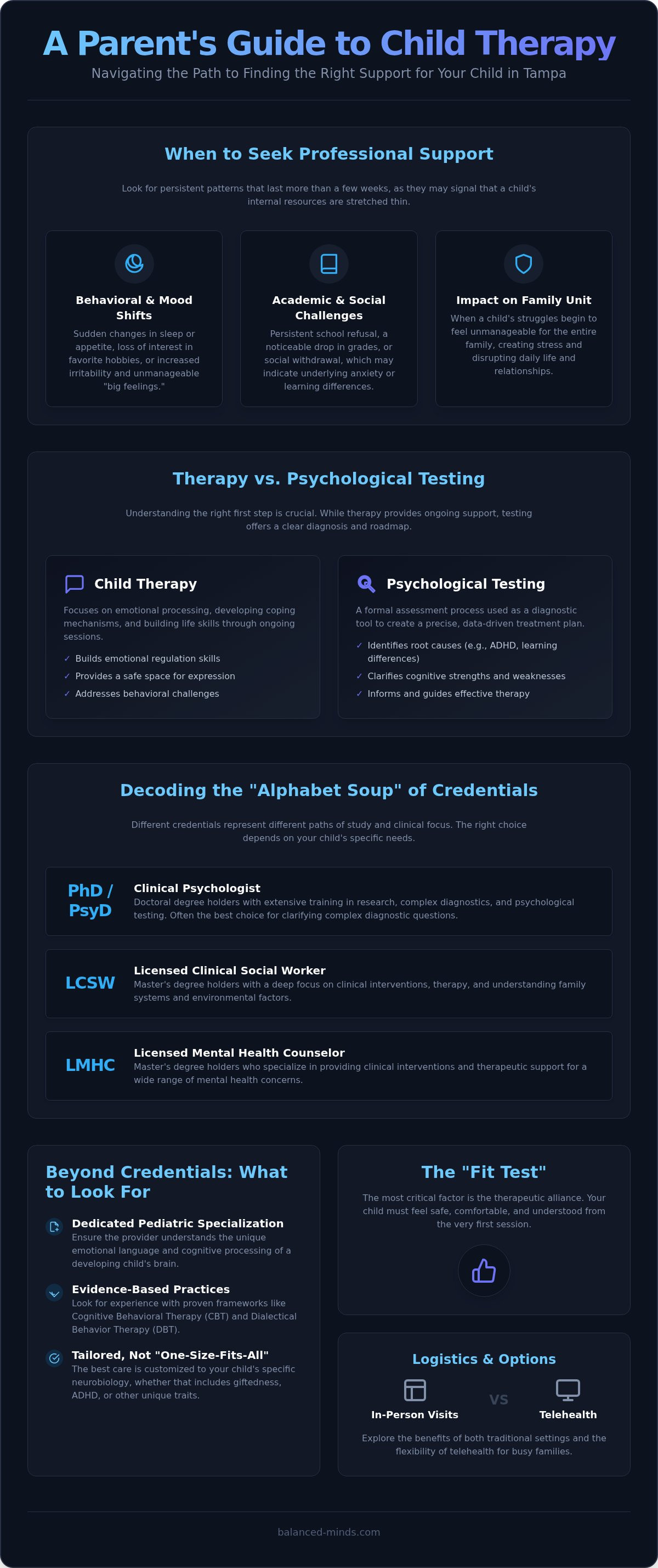
Sometimes the signs are quiet; other times, they're impossible to ignore. We encourage parents to look for shifts in the rhythm of daily life that persist for more than a few weeks. These patterns often signal that a child's internal resources are being stretched too thin. You might notice:
Sudden changes in sleep patterns, appetite, or a loss of interest in hobbies they once loved.
Persistent school refusal or falling grades within Tampa Bay schools, which might indicate underlying anxiety or learning differences.
Increased irritability or "big feelings" that feel unmanageable for both the child and the family unit.
The Difference Between Therapy and Psychological Testing
It's common to feel confused about whether your child needs ongoing talk therapy or a formal assessment. While therapy focuses on emotional processing and skill-building, testing provides the data needed to create a precise roadmap. If you're questioning if your child’s focus or behavior is related to neurodiversity, you might start by seeking a psychologist for ADHD diagnosis. A psychological evaluation is a diagnostic tool for learning and mood that clarifies cognitive strengths and challenges. This testing often informs the work of a child therapist tampa, ensuring the therapeutic process addresses the root cause of a struggle rather than just the symptoms.
Essential Credentials and Specializations for Tampa Bay Child Therapists
When you begin looking for a child therapist tampa, the array of letters after a provider's name can feel like a foreign language. It's helpful to understand that these credentials represent different paths of study and clinical focus. A PhD or PsyD indicates a doctoral degree, often involving years of research and specialized training in psychological testing and complex diagnostics. Licensed Clinical Social Workers (LCSW) and Licensed Mental Health Counselors (LMHC) hold master's degrees and bring a deep focus on clinical interventions and family systems. Each professional plays a vital role in the mental health ecosystem, yet the "right" choice depends on your child's specific needs.
Beyond the degree itself, the most vital factor is a dedicated pediatric specialization. Children's brains are rapidly developing; their emotional language and cognitive processing differ significantly from adults. We prioritize evidence-based practices like Cognitive Behavioral Therapy (CBT) and Dialectical Behavior Therapy (DBT) because they offer proven frameworks for managing anxiety and emotional regulation in younger populations. Choosing a professional who understands the nuances of giftedness or the specific hurdles of ADHD ensures your child receives care tailored to their neurobiology rather than a one-size-fits-all approach.
Doctoral-level psychologists bring a unique depth to the table, particularly when a child faces complex diagnostic questions that require a high level of clinical authority. Board certification in pediatric neuropsychology is a gold-standard marker of expertise, indicating the provider has undergone rigorous peer review and possesses specialized knowledge of brain-behavior relationships. When interviewing a potential child therapist tampa, ask about their specific experience with your child's age group. A therapist who excels with toddlers uses very different play-based modalities than one who specializes in the complex social transitions of adolescence.
Not every challenge requires clinical therapy focused on mood or trauma. Sometimes, a child needs practical, action-oriented tools to manage the demands of daily life. This is where ADHD coaching becomes invaluable. While therapy often explores the emotional "why" behind a struggle, coaching focuses on the "how" of executive functioning, such as organization, task initiation, and time management. A multi-disciplinary approach within a single practice allows for a seamless bridge between these two worlds. If you're unsure which path is right, our team can help you explore comprehensive psychological evaluations to find the most effective starting point for your family's journey.
Navigating Logistics: St. Petersburg, Tampa, and Telehealth Options
Living in the Tampa Bay area means we often measure distance in minutes spent on the bridge rather than miles on a map. When you're searching for a child therapist tampa, the logistics of the weekly commute shouldn't become another source of family stress. Consistency serves as the foundation for therapeutic success; when a child feels the rhythm of regular sessions, they develop the safety needed to explore complex emotions. If the drive across the Howard Frankland Bridge feels like a barrier, it can inadvertently lead to missed appointments or a sense of "therapy fatigue" for both parent and child.
We often recommend a hybrid approach to balance the need for clinical precision with the reality of a busy schedule. Comprehensive psychological evaluations, such as gifted testing or ADHD assessments, usually require in-person visits to our St. Petersburg office to ensure the most accurate observations and standardized testing conditions. Once we have established a clear diagnostic roadmap, follow-up individual therapy or ADHD coaching can often transition to a virtual format. This model preserves the integrity of the diagnostic process while respecting your family's time and energy.
The financial landscape of therapy in Florida also plays a role in your decision-making process. Many families find that private-pay practices offer a higher level of individualized care and significantly shorter wait times compared to insurance-based clinics. While navigating the costs of professional support requires careful planning, we view this as a long-term investment in your child's resilience. Choosing a child therapist tampa who prioritizes evidence-based care ensures that your resources are being used effectively to promote lasting growth.
Telehealth has transformed how we provide support, particularly for older children and adolescents who are tech-native and often feel more comfortable in a digital environment. Clinical research consistently shows that virtual therapy is highly effective for managing anxiety, mood disorders, and executive functioning challenges. By removing the "traffic barrier," we allow your child to enter their session from the comfort of their own home. This familiar environment often lowers their initial defenses, making it easier to build a genuine clinical connection without the added pressure of a traditional office setting.
Choosing a Local Practice with Deep Community Roots
There's a distinct advantage to working with a team that understands the local landscape of Tampa Bay. Whether your child attends school in the Hillsborough or Pinellas County systems, having a therapist who understands the specific academic pressures and resources available in our area is invaluable. We take pride in coordinating care with local pediatricians to ensure a holistic approach to your child's wellbeing. If you're exploring options on both sides of the bay, our guide on child psychologists in St. Petersburg offers additional perspective on finding a local partner who truly understands our community's unique needs.
The "Fit" Test: Assessing Clinical Connection and Comfort
The success of any intervention doesn't just rest on a provider's degrees; it hinges on the strength of the therapeutic alliance. This term describes the collaborative relationship between a therapist, the child, and the family. Research consistently shows that a strong alliance is one of the most reliable predictors of positive outcomes in mental health care. When you're searching for a child therapist tampa, you're looking for someone who creates an immediate sense of psychological safety, allowing your child to feel seen and understood without judgment.
A skilled clinician knows that a child's trust is earned through patience and authentic connection. For a hesitant or anxious child, this might mean starting with play-based activities or discussing shared interests before diving into deeper emotional work. We believe that parents are an integral part of this team. While your child needs a private space to process their feelings, you need a partner who values your insights and provides you with the tools to support growth at home. This partnership reduces the sense of isolation that often accompanies parenting a child who is struggling.
During your search, pay attention to "green flags" like transparency about treatment methods and a willingness to explain the clinical reasoning behind certain activities. Conversely, be wary of providers who over-promise quick fixes or dismiss your concerns. If you're ready to see how a specialized approach can benefit your family, you can get started with an initial intake to explore our team's clinical fit for your child's needs.
What to Expect During the First Intake Session
The initial meeting is designed to be a comprehensive look at your child's world. Typically, this session includes time for the therapist to speak with parents alone to discuss developmental history and current concerns, followed by a period of observation or interaction with the child. The intake is a collaborative discovery process where we work together to understand the nuances of your child’s emotional and behavioral landscape. From here, we set clear, measurable goals and establish a baseline to track progress over the coming months.
Questions to Ask Your Potential Tampa Therapist
We encourage parents to come prepared with questions that help demystify the therapeutic process. A transparent therapist will welcome these inquiries as a sign of your commitment to the journey. Consider asking:
"How do you involve parents in the treatment plan and how often will we check in on progress?"
"What is your specific experience with challenges like social anxiety or neurodiversity?"
"How do you handle school-related advocacy or communication with our child's teachers?"
Finding the right child therapist tampa is about more than just proximity; it's about finding a professional who mirrors your family's values while providing the high-level clinical expertise your child deserves.
How Balanced Minds Psychology & Wellness Serves Tampa Bay
Balanced Minds exists as a bridge between high-level clinical expertise and the warm, heart-centered care every parent seeks for their child. We've built a collective of experts who are deeply committed to evidence-based standards without losing sight of the human connection. This balance is vital when you're looking for a child therapist tampa who can interpret complex diagnostic data while providing a nurturing environment where a child feels truly safe.
Our range of support is designed to meet your family at any stage of the developmental journey. We provide a full spectrum of services, from comprehensive psychological evaluations and gifted testing to specialized teenage therapy. By integrating diagnostic rigor with therapeutic interventions, we ensure that every plan is tailored to the specific neurobiology and emotional landscape of your child. This holistic approach allows us to address the root causes of challenges rather than simply managing symptoms, fostering long-term resilience and wellbeing.
A Collaborative Approach for Pinellas and Hillsborough Families
We work closely with families across the Tampa Bay area to de-stigmatize mental health and promote a sense of shared humanity. Our team understands that a child's success is a collective effort, which is why we prioritize partnership with parents and coordination with local pediatricians. Whether we are addressing anxiety, mood disorders, or behavioral challenges, our focus remains on the "whole child." We look past labels to see the unique strengths and potential within every young person, ensuring that our interventions feel grounded and relevant to their daily lives in the Pinellas and Hillsborough school systems.
Getting Started with Your Child’s Healing Journey
Taking the first step toward professional support is a profound act of care for your family. We've created a low-pressure process that begins with a simple consultation, allowing us to listen to your concerns and explore how we can best serve your child. Our St. Petersburg office is designed to be a sanctuary, a calm and restorative space where families can find the guidance they need. For those who prefer the convenience of home, our telehealth options offer the same high-level clinical connection without the stress of a commute.
Finding the right specialist involves balancing clinical rigor with a genuine heart-centered connection. We've explored how understanding the "why" behind your child's behavior and demystifying professional credentials can turn a confusing search into a clear plan for growth. Whether you're seeking a child therapist tampa for emotional support or specialized diagnostic testing, the goal is to find a partner who values your child’s unique potential. This journey is about more than just managing symptoms; it's about fostering the emotional security your child needs to flourish.
We're proud to serve families in St. Petersburg and across Tampa via telehealth, ensuring that high-level care is always within reach. Begin your family’s journey toward wellness with Balanced Minds. You don't have to navigate these complexities alone; a brighter, more connected future for your child is possible.
Frequently Asked Questions
How do I know if my child needs a therapist or if it’s just a phase?
Distinguish between developmental growing pains and clinical needs by looking at the impact on daily functioning. If your child’s struggles with sleep, appetite, or social interactions persist for several weeks or seem to escalate, professional support can provide clarity. We look for patterns that interfere with their ability to learn or play. Early intervention often prevents these challenges from becoming more deeply rooted as they grow and develop over time.
How much does child therapy cost in Tampa?
Therapy rates in the Tampa Bay area vary significantly based on the provider’s level of education, specialized certifications, and the duration of the session. While we don't provide a flat fee here, most specialized pediatric practices offer a range of options depending on whether you're seeking an initial evaluation or ongoing individual therapy. We recommend contacting our office directly to discuss your family's specific needs and our current availability for new clients.
Will my child’s therapist tell me what they talk about in sessions?
Maintaining a sense of privacy is essential for building trust with your child, but we always keep parents informed of the overall progress and safety. A child therapist tampa will typically share the general themes and skills being worked on while keeping specific details confidential to protect the therapeutic alliance. If any safety concerns arise, parents are notified immediately to ensure a collaborative and transparent approach to the child’s wellbeing.
How long does the average child therapy process take?
The duration of therapy is highly individualized and depends on the complexity of the goals we establish together during the intake process. Some families find that brief, solution-focused interventions meet their needs in a few months; others benefit from longer-term support to navigate deeper emotional or neurodevelopmental challenges. We regularly review progress to ensure that the sessions remain grounded in your child’s evolving needs and promote a sense of attainable personal growth.
Do you offer online child therapy for families in Tampa?
We provide comprehensive telehealth services to families throughout the Tampa Bay area, offering a convenient alternative to in-person visits. Virtual sessions are research-backed and highly effective for many older children and adolescents, allowing them to engage in care from a safe and familiar environment. This flexibility is particularly helpful for busy families who want to maintain consistency in their child therapist tampa treatment plan without the stress of a long commute.
What is the difference between a child psychologist and a psychiatrist?
A child psychologist primarily focuses on talk therapy, behavioral interventions, and comprehensive psychological evaluations to understand a child’s emotional and cognitive world. In contrast, a psychiatrist is a medical doctor who specializes in the biological aspects of mental health and can prescribe medication. Our practice focuses on the therapeutic and diagnostic side of care, providing evidence-based tools and coaching to support your child’s development and long-term emotional resilience.
Can a therapist help with my child’s school-related anxiety?
Therapists are uniquely equipped to help children manage school-related anxiety by identifying the underlying triggers, whether they're academic, social, or sensory. We work with your child to develop practical coping strategies, such as mindfulness or cognitive reframing, to use directly in the classroom. Additionally, we can coordinate with teachers and school staff to ensure that the support your child receives in therapy is mirrored and supported within their daily educational environment.
How do I explain therapy to my child before the first visit?
We recommend explaining therapy as a positive, supportive experience where your child has a "feelings coach" to help them navigate big emotions. You might tell them that just like they go to a doctor for their body or a teacher for school, they're seeing a specialist to learn tools for happiness and confidence. Keeping the conversation low-pressure and focused on growth helps to reduce any initial anxiety they might feel about the visit.


