

Child Therapist for Depression in Tampa: A Compassionate Guide for Parents
Updated: 3 days ago
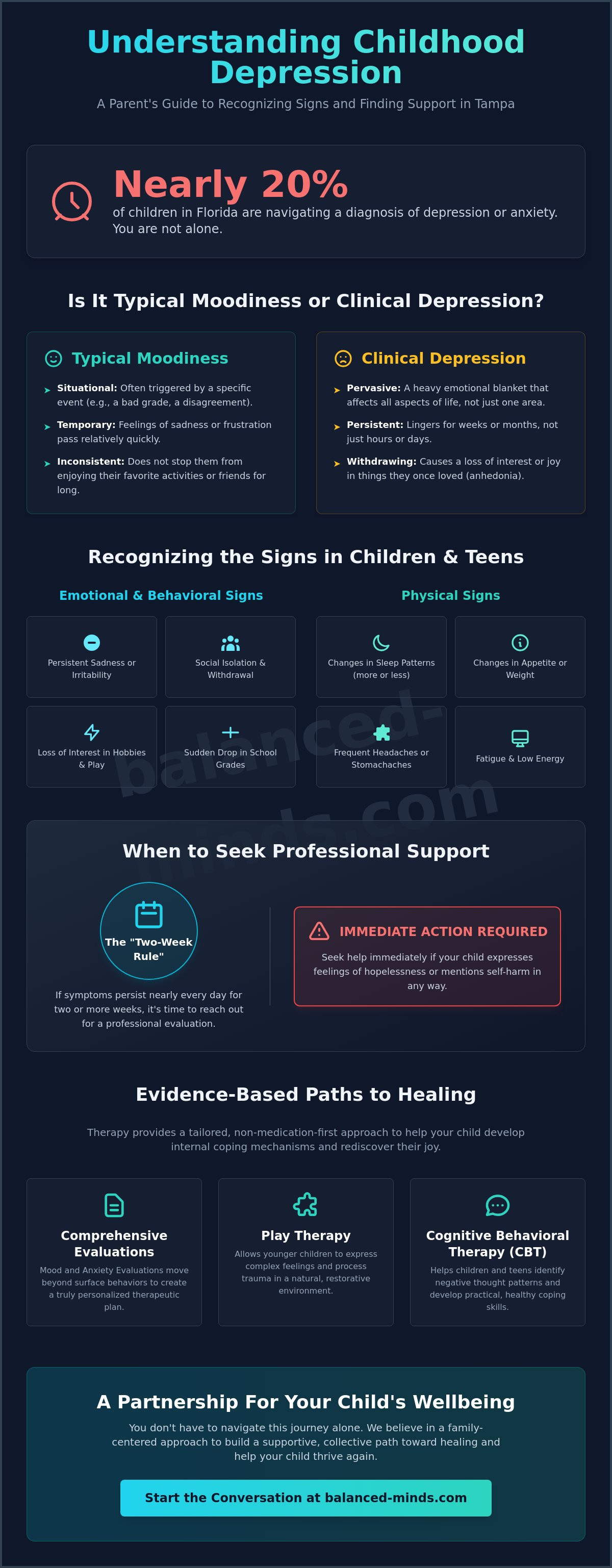
You watch your child walk through the front door after a long day at a Hillsborough County school, but the spark that used to define them seems to have vanished. It isn't just the typical teenage moodiness or a bad day; it's a quiet, persistent withdrawal from the things they once loved. When nearly 20% of children in Florida are navigating a diagnosis of depression or anxiety, it's natural to feel overwhelmed as you search for a qualified child therapist for depression tampa. We understand the deep ache that comes with seeing your child struggle, and we want you to know that you don't have to carry this uncertainty alone.
We believe that childhood depression isn't a problem to be fixed in isolation, but rather a journey we navigate together as a family. We're here to help you bridge the gap between worry and action. In this guide, you'll learn how to distinguish clinical symptoms from standard developmental changes and how to utilize the mental health timelines mandated by our local school district. We'll also provide a clear roadmap for your first therapy session so you can feel confident and prepared. Our goal is to help you build a therapeutic partnership that allows your child to rediscover their joy and thrive once again.
Key Takeaways
Discover how to distinguish between typical developmental mood swings and the persistent, chronic withdrawal that characterizes childhood depression.
Learn how specialized modalities like Play Therapy and CBT allow a child therapist for depression tampa to help your child express complex feelings in a restorative environment.
Explore how local Tampa stressors, from academic testing to social media trends, can influence your child’s mental health and daily functioning.
Gain a practical roadmap for the first therapy session, including compassionate ways to navigate the "I don’t want to go" conversation.
Understand the value of a multi-disciplinary partnership in family therapy to ensure your child feels supported by a collective journey toward healing.
Table of Contents
Recognizing the Signs: Is it Moodiness or Childhood Depression?
It's common for parents to wonder if their child's recent shift in attitude is simply a byproduct of growing up or something more profound. While every child experiences situational sadness after a disappointing grade or a conflict with a friend, childhood depression is different because it's persistent and pervasive. It doesn't disappear when the external problem is solved. Instead, it feels like a heavy blanket that muffles their typical energy and enthusiasm for life, lingering long after the initial stressor has passed.
One of the most misunderstood aspects of this condition is that it rarely looks like the sadness we see in adults. In the younger years, depression often disguises itself as intense irritability or behavioral defiance. You might find yourself constantly correcting what seems like "bad behavior," when in reality, your child is struggling with an internal emotional weight they don't have the words to describe. A specialized child therapist for depression tampa can help peel back these layers, identifying whether these outbursts are rooted in a clinical mood disorder rather than simple disobedience. We believe that recognizing this distinction is the first step in reducing shame for both the parent and the child.
We also see depression manifest through the body. Children often lack the cognitive maturity to say "I feel hopeless," so they say "my tummy hurts" or "my head aches." If your child is experiencing chronic physical complaints without a clear medical cause, or if you've noticed significant changes in their sleep patterns and appetite, their body may be signaling an emotional struggle. These physical markers are just as valid as emotional ones and deserve a compassionate, professional evaluation.
The Unique Symptoms of Depression in Children and Teens
In younger children, the most striking sign is often a loss of playfulness. They might stop engaging with their favorite toys or withdraw from the creative games they once loved. As they move into middle school, the stressors of our local Tampa academic environment often cause these symptoms to shift toward social isolation. You might notice a sudden, unexplained drop in grades or a refusal to participate in extracurricular activities they previously enjoyed. Pediatric depression is a persistent emotional and behavioral shift that disrupts a child's ability to engage with their world, meet developmental milestones, and maintain healthy connections with others.
When to Seek Professional Support in Tampa Bay
We generally recommend following the "two-week rule." If these changes in mood, sleep, or social behavior persist nearly every day for two weeks, it's a sign that your child may need additional support to process their experience. It's especially vital to seek help immediately if you hear your child express feelings of hopelessness or mention self-harm. These moments can be frightening, but they're also an invitation to provide the deep, heart-centered care your child needs. Starting a search for psychology near me can be the first step toward gaining clarity and finding a child therapist for depression tampa who can help your family find the path back to wellbeing.
Evidence-Based Approaches: How Therapy Helps Your Child Heal
Once we recognize that a child is struggling, the natural next step is to explore the most effective paths toward restoration. We believe that every child possesses an innate capacity for growth, and our role as a child therapist for depression tampa is to provide the specific, evidence-based tools that unlock that potential. Before we begin any therapeutic journey, we prioritize a thorough understanding of your child's unique emotional landscape. This often starts with comprehensive Mood and Anxiety Evaluations. These assessments allow us to move beyond surface-level behaviors and create a tailored plan that respects your child's developmental stage and personal history.
Our philosophy at Balanced Minds centers on non-medication interventions as the primary starting point for healing. While we recognize the complexity of mental health, we've seen how powerful it is for a child to develop their own internal coping mechanisms. By focusing on therapeutic skill-building, we help children and adolescents feel empowered rather than passive in their own recovery. This approach fosters a sense of agency that serves them well into adulthood, ensuring they don't just feel better today, but remain resilient tomorrow.
Cognitive Behavioral Therapy (CBT) for Young Minds
For many children and teens, depression is fueled by "thought traps," which are reflexive, negative ways of interpreting the world. CBT helps children identify these patterns and gently challenge them. In our sessions, we work collaboratively with the child to replace these heavy thoughts with more balanced, realistic ones. This isn't about "forced positivity," but rather about regaining control over one's narrative. This collaborative work is a cornerstone of child therapy in St. Petersburg and Tampa, helping young people build a toolkit for emotional regulation that lasts a lifetime.
Play Therapy: The Language of Childhood
Younger children often lack the sophisticated vocabulary needed to explain their internal world. In these cases, we use Play Therapy, where toys become their words and play becomes their language. By observing how a child interacts with sand trays, puppets, or art materials, a child therapist for depression tampa can identify themes of sadness, fear, or hopelessness that the child can't yet verbalize. While it might look like simple fun, play therapy is a rigorous clinical intervention. It provides a safe, symbolic space for children to process the Signs of depression in children and work through their emotions at a pace that feels psychologically secure. If you feel your child is struggling to find their voice, we invite you to explore how our individual therapy for children can provide the support they need to heal.
Navigating Life in Tampa: Local Stressors and School Support
Living in the Tampa Bay area often feels like a blessing, yet the "Sunshine State" lifestyle can paradoxically make it harder for a child to express their pain. When the world outside looks bright and active, a child struggling with depression may feel a profound sense of "otherness," as if their internal darkness is out of place in our tropical environment. This pressure to appear happy is often compounded by the rigorous academic landscape in Florida. High-stakes testing and the competitive nature of local arts and sports programs can turn a child’s sanctuary into a source of chronic stress. We understand that these local pressures aren't just background noise; they're significant factors that a child therapist for depression tampa must consider when building a plan for your child’s healing.
We believe in a holistic approach that extends beyond the therapy room and into the classroom. Depression doesn't stop at the school gates. It often manifests as a lack of focus, decreased motivation, or even "school refusal," where the anxiety of the school day becomes too heavy to bear. Integrating clinical therapy with school-based support, such as 504 plans or Individualized Education Programs (IEPs), is essential. By collaborating with educators, we ensure your child has the necessary accommodations to stay engaged with their learning while they do the hard work of emotional recovery.
Supporting Students in Pinellas and Hillsborough Counties
In our local districts, the relationship between mood and academic performance is undeniable. We often see students who are academically "Gifted" but struggle with an intense internal pressure to be perfect, which can mask an underlying depression. If your child is avoiding school or their grades are slipping, a child psychologist st petersburg fl can act as a vital bridge. We can attend school meetings with you and advocate for your child’s needs, ensuring that the school’s mental health plan, which mandates screenings within 15 days of a referral, is working in your child’s favor.
The Tampa Bay Social Environment
Social media and peer dynamics in our local community can also weigh heavily on a teenager’s sense of self. We encourage families to find balance by reconnecting with the restorative power of our local environment. Spending time at places like Curtis Hixon Park or Vinoy Park isn't a substitute for clinical care, but "nature therapy" can be a gentle, grounding complement to individual therapy. As you support your child, don't forget that your wellbeing matters too. Connecting with parenting near me resources can provide you with the community and tools you need to remain a steady, guiding presence for your family. A child therapist for depression tampa doesn't just work with the child; we partner with the whole family to create a home environment where everyone can breathe a little easier.
The Parent’s Roadmap: Preparing for the First Session
Deciding to seek professional support is a profound act of love, yet we know it often comes with a mixture of relief and trepidation. As you prepare for that first appointment, it’s helpful to remember that you aren't just an observer in this process; you are an essential partner. We view parents as the primary experts on their child’s history and daily life. Your insights provide the context that allows a child therapist for depression tampa to see the whole person, not just a set of symptoms. Together, we create a safe harbor where your child can begin to untangle their heavy emotions and find their way back to a sense of lightness.
To make the most of your initial visit, we recommend gathering a few key items that help us build a comprehensive picture of your child’s wellbeing. If you have recent school reports, previous evaluations, or relevant medical history, bringing these along can be incredibly helpful. These documents serve as puzzle pieces that help us understand how depression might be impacting their academic life or physical health. While we are eager to help, we also want to set realistic expectations for the timeline of healing. Emotional growth is rarely a straight line; it's a gradual process of building trust and learning new ways to navigate the world.
How to Talk to Your Child About Therapy
One of the most common hurdles parents face is the "I don't want to go" conversation. It’s natural for children to feel nervous or even defensive about seeing a specialist. We suggest using a gentle script to lower their defenses: "We’ve noticed you’ve been carrying some really big feelings lately, and we want to go see someone whose whole job is to help kids navigate those feelings." It’s vital to ensure they know they aren't "in trouble" or "broken." We emphasize that the therapy room is a confidential, non-judgmental space where they can be exactly who they are without fear of criticism.
What Happens During the Initial Evaluation?
The first session is primarily a "getting to know you" phase where our clinicians focus on building rapport and establishing a sense of psychological security. We move at your child’s pace, especially if they are feeling particularly withdrawn or hesitant. We use this time to understand their interests, their fears, and the unique strengths they already possess. The first session is about building safety, not just collecting data. If you’re ready to take this first step, we invite you to learn more about our comprehensive psychological evaluations to see how we can begin this journey of healing together. A child therapist for depression tampa is here to guide your family through the unknown with steady, compassionate care.
Balanced Minds: A Partnership for Your Child’s Wellbeing
Choosing the right child therapist for depression tampa is about more than finding a professional with the right credentials; it’s about finding a partner who sees the inherent worth and potential in your child. Our philosophy is rooted in the belief that healing is a collaborative process. We don't just work with a child in isolation. Instead, we wrap our support around the entire family system, ensuring that the progress made in our sessions translates into a more peaceful, connected home life.
One of the greatest benefits of working with our team is our multi-disciplinary approach. Because depression often ripples through a household, affecting parents and siblings alike, we offer specialized support that addresses these broader dynamics. Many families who begin their journey by searching for family therapy near me find that our integrated model provides the comprehensive care they’ve been seeking. Whether we are conducting a deep-dive evaluation or providing ongoing individual therapy, our goal is to create a linguistic and emotional environment that feels restorative and safe for everyone involved.
Our Compassionate, Professional Team
We pride ourselves on being a collective of experts who are deeply grounded in science but have never lost our sense of humanity. Our team specializes in Comprehensive Psychological Evaluations and specific Mood and Anxiety Evaluations, which allow us to pinpoint the root causes of a child’s withdrawal. We take a "whole-child" approach, recognizing that academic struggles or focus issues often overlap with emotional ones. To support this, we provide ADHD coaching and executive functioning coaching alongside our therapeutic services. If you have older children who are also navigating the complexities of adolescence, our teenage therapist near me services ensure that every member of your family has access to age-appropriate, empathetic guidance.
Next Steps for Your Family
We invite you to take the first step toward restoration by reaching out to us today. You can connect with our team through our secure contact form to discuss your child’s needs and learn more about our in-person and telehealth options for families in Tampa and St. Petersburg. Please remember that seeking help isn't a sign that something is "wrong" with your parenting; it’s a powerful act of love and a testament to your strength as a guardian. The Balanced Minds difference lies in our commitment to clinical excellence delivered with a gentle, steady presence. Let us be the child therapist for depression tampa that helps your child find their spark again and helps your family move forward with renewed confidence and hope.
Restoring Hope and Connection for Your Family
Navigating the complexities of childhood depression is a journey that requires patience, clinical expertise, and a whole lot of heart. We've explored how to distinguish persistent withdrawal from typical developmental shifts and the importance of advocating for your child within the local school system. By choosing a specialized child therapist for depression tampa, you are giving your child the tools to process their internal world through evidence-based approaches like CBT and Play Therapy. Our goal is to demystify professional support and make the path to wellbeing feel attainable for your entire household.
Whether you visit us for in-person care in St. Petersburg or connect with us through telehealth from anywhere in the state, we provide a steady, guiding presence rooted in science and delivered with genuine care. We believe that every child possesses the capacity for growth, and we are honored to support yours as they rediscover their spark.
Begin your journey toward healing; schedule a consultation with our Tampa Bay team today.
You've already taken the most difficult step by seeking information and understanding. We're here to ensure that the path forward feels steady, clear, and full of possibility for your family.
Frequently Asked Questions
How do I know if my child is depressed or just being a typical teenager?
Clinical depression differs from typical moodiness through its persistence and impact on daily life. While teenagers often experience emotional shifts, depression lasts nearly every day for at least two weeks and interferes with their ability to enjoy activities or maintain relationships. A child therapist for depression tampa can help you identify if these behaviors are rooted in a clinical mood disorder or standard developmental changes.
Can a child therapist in Tampa help with school-related anxiety and depression?
Yes, therapeutic support is highly effective for school-related struggles. we often work with students who feel overwhelmed by academic pressure or social dynamics in Hillsborough and Pinellas counties. We can help integrate clinical goals with school-based supports like 504 plans or IEPs to ensure your child has a supportive environment during their school day, allowing them to focus on both learning and healing.
What is the difference between a child psychologist and a psychiatrist?
The primary difference lies in the approach to treatment and professional training. Child psychologists and neuropsychologists, like those on our team, focus on individual therapy and comprehensive psychological evaluations to understand a child's internal world. Psychiatrists are medical doctors who primarily manage mental health through medication. We prioritize therapeutic skill-building and non-medication interventions as the first step in restoring your child's wellbeing.
How long does child therapy for depression usually take to see results?
Every child’s journey is unique, so there is no fixed timeline for recovery. Some families notice small shifts in mood or communication within a few weeks, while deep, lasting change often takes several months of consistent work. We focus on building a safe partnership where your child can develop long-term resilience rather than seeking a quick fix, ensuring the progress they make is sustainable.
Do you offer telehealth child therapy for families in the Tampa Bay area?
We offer both in-person sessions at our St. Petersburg office and telehealth options for families seeking a child therapist for depression tampa. Telehealth provides a flexible way for your child to receive high-quality care from the comfort of their own home. This can be especially helpful for busy families or for children who feel more at ease in a familiar, private environment during their sessions.
Will my child be forced to take medication if they are diagnosed with depression?
No, therapy does not mean your child must take medication. Our practice focuses on evidence-based therapies like CBT and Play Therapy to help children develop their own internal coping mechanisms and emotional vocabulary. While medication is a personal family decision, we believe in starting with therapeutic interventions that empower your child to understand and manage their emotions without relying on pharmaceutical support initially.
How much does child therapy cost and do you take insurance?
Costs for therapy vary based on the specific services your child needs, such as individual sessions or comprehensive evaluations. Many families utilize their insurance plans, where out-of-pocket costs may be limited to a co-pay. We recommend contacting your provider to understand your specific benefits, including potential out-of-network reimbursement through a superbill if you have a PPO plan that covers mental health services.
What should I do if my child refuses to talk to a therapist?
It’s common for children to feel hesitant, and we are trained to meet them exactly where they are. We don't force children to talk; instead, we focus on building rapport through play or shared interests during the initial intake phase. By creating a space that feels safe and non-judgmental, even the most withdrawn children often begin to open up at their own pace as trust grows.


