

Child Anger Management in St. Petersburg: A Compassionate Parent's Guide to Emotional Regulation
Updated: 3 days ago
What if your child's loudest outbursts aren't a sign of defiance, but a signal that they've run out of ways to cope? It's a heavy burden to carry when you're constantly walking on eggshells at home or feeling the weight of quiet judgment from other parents. We understand the deep exhaustion that comes from these daily battles. If you've been searching for child anger management st petersburg, you're likely looking for more than just a quick fix. You want a way to help your child feel safe, regulated, and understood.
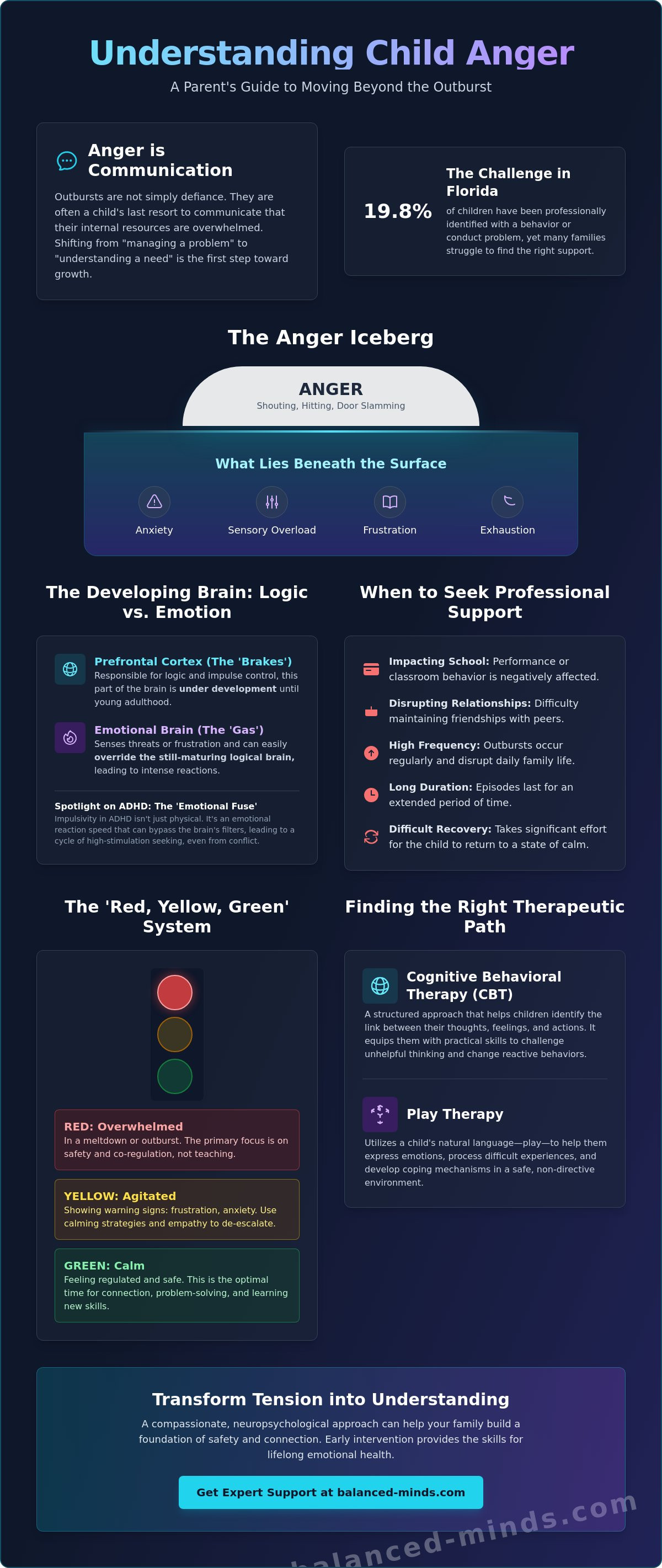
According to recent reports, 19.8% of children in Florida have been told by a professional that they have a behavior or conduct problem; however, many families still find it difficult to access the right support. We believe that every child possesses the capacity for growth when they're met with empathy and clinical expertise. This guide will show you how to move beyond the outburst and help your child build lifelong emotional regulation skills with expert guidance tailored for our local community. We'll explore practical tools to foster a calmer home and improve your child's experience in Pinellas County schools, turning moments of crisis into opportunities for lasting connection.
Key Takeaways
Learn why anger is often just the "tip of the iceberg" and how to distinguish between typical childhood tantrums and chronic emotional dysregulation.
Explore the neurological link between the prefrontal cortex and self-control to understand why children with ADHD or executive functioning deficits may struggle more with intense emotions.
Discover practical strategies for child anger management st petersburg families, including the "Red, Yellow, Green" light system for identifying and managing emotional escalation early.
Identify the core differences between therapeutic modalities like CBT and Play Therapy to find the most effective path for your child's emotional development.
Learn how a compassionate, neuropsychological approach can transform your home environment from one of tension to one of shared understanding and safety.
Table of Contents
Beyond the Outburst: Understanding Child Anger as Communication
The Root Causes: Why Some Children Struggle More with Emotional Regulation
Practical Anger Management Strategies for Your Home and School
Professional Therapy vs. Coaching: Finding the Right Fit for Your Child
Compassionate Child Anger Management at Balanced Minds Psychology & Wellness
Beyond the Outburst: Understanding Child Anger as Communication
When your child experiences a sudden, intense outburst, it can feel like the ground is shifting beneath your feet. It's natural to feel a sense of urgency to stop the behavior, yet we often find that the behavior itself is just the final expression of a much deeper struggle. In our work with child anger management st petersburg, we view these moments not as acts of defiance, but as a form of communication from a child who doesn't yet have the tools to express their internal state. By shifting our perspective from "managing a problem" to "understanding a need," we can begin to build a foundation of psychological safety that allows for true emotional growth.
The 'Anger Iceberg' in Pediatric Development
Think of your child's anger as the tip of an iceberg. While the shouting or door-slamming is what we see above the water, the majority of the weight lies beneath the surface in the form of anxiety, frustration, physical exhaustion, or sensory overload. Emotional dysregulation is a mismatch between a child's skills and environmental demands. When a child's internal resources are depleted, anger becomes their only available defense mechanism. We want to reassure you that these struggles aren't a reflection of your parenting; they're a reflection of a nervous system that is currently overwhelmed and seeking a way back to balance.
When to Seek Professional Support in St. Pete
It's often difficult to distinguish between a developmentally appropriate tantrum and chronic dysregulation. While most children test boundaries as they grow, "red flag" behaviors typically involve an intensity or frequency that disrupts daily life. If your child's anger is beginning to impact their school performance in Pinellas County or making it difficult for them to maintain peer relationships in the Tampa Bay area, it may be time to look closer. We've seen how these challenges can cause families to feel isolated, but you don't have to navigate this journey alone.
We encourage parents to track a few specific metrics: how often these episodes occur, how long they last, and how much effort it takes for the child to return to a state of calm. Anger management at a young age isn't about suppression; it's about providing the specific skills needed to navigate big feelings before they lead to a "shame cycle." Early intervention helps children understand their own minds, ensuring that temporary behavioral hurdles don't become permanent parts of their identity as they move toward adolescence. By identifying these patterns early, we can work together to replace reactive outbursts with mindful, healthy expression.
The Root Causes: Why Some Children Struggle More with Emotional Regulation
To understand why some children react with such intensity, we must look at the biological architecture of the brain. The prefrontal cortex, which acts as the brain's command center for logic and impulse control, remains under development well into young adulthood. When a child's "emotional brain" senses a threat or frustration, it can easily override the still-maturing logical brain. This biological reality is a cornerstone of effective child anger management st petersburg, as it helps us move away from seeing a "bad kid" and toward seeing a child whose internal wiring is simply overwhelmed by external demands. When families seek child anger management st petersburg, we often begin by exploring these unique neurological factors together.
ADHD and the 'Emotional Fuse'
For many families, ADHD is the hidden current beneath the surface of frequent outbursts. Impulsivity isn't just about physical movement; it's about the speed of an emotional response. A child with ADHD may experience a feeling and act on it before their brain has a chance to filter the reaction. This often leads to a cycle of seeking high-stimulation environments, even if that stimulation comes from conflict. Understanding Child Anger requires recognizing that these children aren't choosing to be difficult; they're often chasing the dopamine hit that intense emotions provide. If you suspect this might be the case, finding a psychologist for ADHD diagnosis can be a transformative first step in providing the clarity your family needs.
Executive Functioning: The 'Brakes' of the Brain
Executive functioning serves as the brain's braking system, allowing us to pivot when plans change or handle the word "no" with grace. When these skills are lagging, simple transitions, such as leaving a sunny St. Pete park or putting away a tablet, can feel like a personal loss. This lack of cognitive flexibility creates a "frustration-anger loop" where the child feels trapped by their inability to organize their thoughts or manage their time. Modern triggers like excessive screen time or rapid school transitions only add to the sensory load, making the fuse even shorter. Our comprehensive psychological evaluations can help pinpoint whether these lagging skills are the root cause of the tension in your home, allowing us to build a path forward based on science and heart.
Practical Anger Management Strategies for Your Home and School
When the heat of the moment arrives, having a structured plan can transform a chaotic encounter into a moment of connection. One of the most effective tools we recommend for child anger management st petersburg is the "Red, Yellow, Green" light system. This visual framework helps children identify their internal state before they reach a boiling point. Green represents a state of calm and readiness; yellow signals that frustration is building; and red indicates that the emotional "brakes" have failed. By teaching our children to recognize the yellow zone, we empower them to seek support or use a coping tool before an outburst occurs. Implementing these strategies is a core part of effective child anger management st petersburg, as it shifts the focus from control to connection.
Creating a dedicated "Calm Down Corner" in your home further supports this process. Unlike a traditional "time-out" which can feel like a rejection, this space should be a sanctuary filled with sensory tools like weighted blankets, fidgets, or soft lighting. It's a place for restoration rather than punishment. This shift reflects the vital concept of co-regulation. Since a child's nervous system is still developing, they often need to "borrow" our calm to find their own. When we remain steady and present, we provide the safety they need to navigate Dealing With Explosive Behavior without escalating the situation further.
Immediate De-escalation Techniques for Parents
In the midst of a meltdown, we often feel the urge to lecture or correct, but a dysregulated child can't learn a lesson until their nervous system is calm. We suggest using the "Low-and-Slow" method: lowering the volume of your voice and slowing your physical movements to lower the room's temperature. Start with validation-first responding by saying, "I see that you're really frustrated right now." This simple acknowledgment can often de-escalate a situation faster than any consequence because it tells the child they're seen and safe.
Navigating the Pinellas County School Environment
Supporting your child's emotional growth also requires a partnership with their educators. Communicating your child's regulation plan with teachers in Pinellas County schools ensures consistency between home and the classroom. For many children, formalizing this support through a 504 plan or an Individualized Education Program (IEP) provides the necessary accommodations to manage emotional challenges during the school day. Building a local support network is equally important, and you'll find specific resources for parenting near me to help you connect with other families on a similar journey. Collaborative problem solving allows us to move away from "do what I say" and toward a shared goal of "how can we solve this together?"
Professional Therapy vs. Coaching: Finding the Right Fit for Your Child
Choosing the path toward healing often feels like a journey through an unfamiliar landscape. For families seeking child anger management st petersburg, the decision between clinical therapy and skill-based coaching depends on your child's unique emotional architecture. While therapy focuses on the "why" and "how" of emotional processing, coaching often targets the practical execution of daily life. Both are valuable tools, yet they serve different purposes in restoring peace to your home environment. We're here to help you navigate these choices with a sense of clarity and hope.
Choosing the Right Therapeutic Modality
Cognitive Behavioral Therapy (CBT) is particularly effective for older children as it helps them build a conscious connection between their thoughts, feelings, and actions. It empowers them to catch a negative thought before it turns into a physical flare-up. For our younger ones who lack the vocabulary for their rage, Play Therapy remains the gold standard. It allows them to use their natural language of play to process big emotions in a space that feels safe and restorative. You can explore a deeper comparison of these methods in our guide to child therapy in St. Petersburg.
In some cases, traditional talk therapy might not be the most immediate need. If a child's volatility stems from the frustration of being unable to organize their world, ADHD Coaching or Executive Functioning Coaching can be more effective. These sessions focus on building the "muscles" of the brain, such as time management and organization, which reduces the overall stress that leads to anger. However, because a child's behavior affects the entire household, Family Therapy is often the key to changing the home's emotional ecosystem. It ensures everyone has the tools to support one another and maintain a steady, guiding presence.
Comprehensive Testing: The Roadmap to Success
We believe that effective support starts with a clear map. A psychological evaluation is often the essential first step in child anger management st petersburg because it uncovers what lies beneath the surface. Sometimes, "anger" in the classroom is actually a mask for an undiagnosed learning disability or processing disorder. When a child feels they can't keep up with their peers, they may lash out to protect their self-esteem. Moving from guessing to knowing your child's unique brain profile allows us to tailor an intervention that actually works. If you're ready to stop the guesswork, we invite you to learn more about our ADHD Evaluations and Comprehensive Psychological Evaluations to find the answers your family deserves.
Compassionate Child Anger Management at Balanced Minds Psychology & Wellness
We believe that every child is doing the best they can with the tools they currently have. At Balanced Minds Psychology & Wellness, our approach to child anger management st petersburg is rooted in the understanding that behavior is a window into a child's internal world. We choose to meet your child with deep empathy rather than restrictive labels; we see the person behind the outburst. This marriage of rigorous clinical standards and heart-centered care ensures that your child receives support that is both scientifically sound and profoundly human.
Our process is designed to be as comprehensive as your child's needs. We don't believe in one-size-fits-all solutions. Instead, we integrate individual therapy for children with parent coaching and comprehensive psychological evaluations. By looking at the neurological, emotional, and environmental factors together, we can create a roadmap that actually leads to a calmer home. When you step into our St. Petersburg office, you'll find a safe space designed for your family to heal. It's a sanctuary where the weight of judgment is lifted, allowing you to focus on the growth and recovery of your child.
A Partnership for Your Family’s Wellbeing
We recognize that a child's struggle doesn't exist in a vacuum; it affects parents, siblings, and the entire family rhythm. Because of this, we don't just "see" the child. We support the entire family unit through family therapy and coaching that empowers you with practical tools. To make this support as accessible as possible, we offer flexible options including in-person sessions in St. Pete and secure telehealth for families throughout the Tampa Bay area. Our commitment is to provide evidence-based care that never loses sight of the warmth and human connection that makes healing possible.
Take the First Step Toward a Calmer Home
The path toward emotional regulation begins with a gentle conversation. During your initial intake and consultation, we'll take the time to listen to your story and understand the specific challenges your family is facing. We also believe in the power of a unified support system; therefore, we frequently collaborate with local St. Pete schools and pediatricians to ensure your child's regulation plan is supported across all areas of their life. You don't have to navigate this journey alone. Schedule a consultation with our St. Petersburg child therapists today.
Restoring Peace and Connection in Your Home
Your journey toward a more harmonious household begins with the understanding that your child's outbursts are not a failure of character, but a request for help. By viewing these intense moments as a form of communication, we can shift from reactive discipline to proactive support. Whether you're implementing a "Calm Down Corner" or exploring the neurological roots of executive functioning, every step you take builds the foundation for your child's lifelong emotional health. We've seen how the right tools can turn daily conflicts into opportunities for growth and deeper connection.
If you're ready to move beyond the cycle of frustration, our team is here to guide you. We provide a steady, professional presence for families seeking child anger management st petersburg, ensuring that you never have to navigate these complexities alone. You possess the capacity to lead your family toward a brighter chapter, and we're honored to support your growth.
Frequently Asked Questions
Is it normal for my 7-year-old to have daily anger outbursts?
Daily outbursts at age seven usually indicate that a child is struggling with emotional regulation skills rather than just testing boundaries. While occasional frustration is typical for this developmental stage, consistent daily episodes suggest the child's nervous system is frequently overwhelmed. This is a common reason parents seek child anger management st petersburg to help their children develop healthier coping mechanisms and restore a sense of peace to the home.
How do I know if my child needs therapy for anger management?
You should consider professional support if your child's anger disrupts their ability to learn, maintain friendships, or participate in family life. If you feel like you're constantly walking on eggshells or if the outbursts involve physical aggression, a consultation can provide clarity. Seeking child anger management st petersburg helps bridge the gap between a child's current skills and the demands of their school or home environment.
What is the difference between a tantrum and a meltdown?
A tantrum is often a goal-oriented behavior that usually stops once the child gets what they want or realizes the tactic won't work. A meltdown, however, is a total loss of behavioral control due to sensory or emotional overload. During a meltdown, the child isn't trying to manipulate; they're experiencing a neurological "system crash" and require safety and co-regulation rather than traditional discipline or logic.
Can ADHD cause my child to be angry and defiant?
Yes, ADHD frequently manifests as emotional volatility because the brain's "braking system" for impulses is still maturing. Children with ADHD often act on intense feelings before their logical brain can intervene, which looks like defiance but is actually a struggle with executive functioning. We often find that addressing the underlying ADHD symptoms through specialized coaching or therapy significantly reduces the frequency and intensity of these angry outbursts.
How long does child anger management therapy usually take?
The duration of therapy is highly individual, but many families see meaningful shifts within 12 to 20 sessions. Some children benefit from short-term skill-building, while others require longer support to address deeper emotional patterns or neurodevelopmental factors. Our goal is always to empower your family with the tools needed to maintain progress independently, ensuring that the path to wellbeing feels attainable and sustainable over the long term.
Does insurance cover child psychological testing in Florida?
Coverage for psychological testing varies significantly between plans and providers across Florida. Many specialized practices operate on a private pay basis to provide more comprehensive care, though some may be in-network with specific plans like Aetna. We always recommend contacting your insurance carrier directly to verify your "out-of-network" benefits or "Good Faith Estimate" requirements, as this ensures you understand your financial responsibilities before beginning the evaluation process.
What should I do in the heat of the moment when my child is screaming?
Prioritize your own calm first, as your regulated nervous system acts as an anchor for your child. Use a quiet, steady voice and keep your body language non-threatening to lower the room's temperature. It's best to avoid lecturing or logical arguments during the peak of the outburst; instead, focus on ensuring physical safety and offering a quiet, supportive presence until the emotional storm passes.
Can family therapy help if only one child is struggling with anger?
Family therapy is incredibly effective because it addresses the emotional ecosystem of the entire household. When one child struggles with anger, it inevitably impacts siblings and parents, often creating a cycle of tension and reactivity. By working together, we can adjust the family's communication patterns and ensure that everyone feels supported. This collective approach often accelerates the struggling child's progress by creating a more restorative home environment.


